



News
Life after SEO: How newsrooms are adapting to the AI search shift


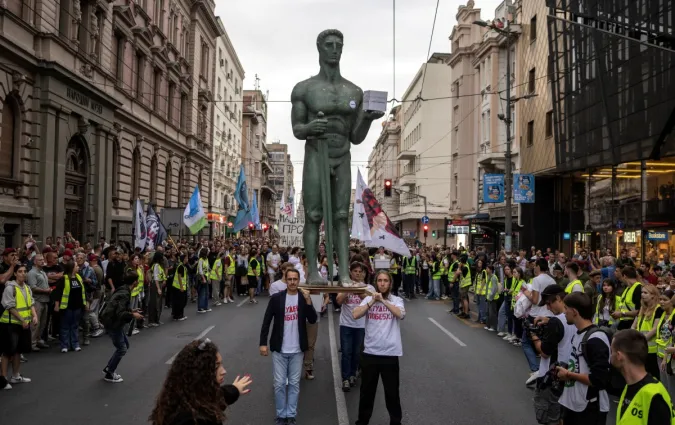
Mourners carry the body of Reuters cameraman Hussam al-Masri, killed along with other people in Israeli strikes on Nasser hospital in Gaza in August 2025. REUTERS/Stringer
2025 has been a devastating year for the profession, with audiences turning away from traditional news outlets, AI models transforming the news ecosystem, funding cuts from governments and platforms damaging newsrooms, and Israel harassing and killing dozens of Palestinian journalists in Gaza and the West Bank.
But we’ve seen silver linings too. Journalists have challenged lies on climate and health from people in power. Reporters have risked their lives to tell the truth about conflicts in Sudan and Syria. OSINT experts have exposed murder in Palestine, Kenya and Ukraine. Independent newsrooms have found an alternative to billionaires in reader revenue. Media managers have used GenAI to tackle old problems, create new strategies and reinvent their craft.
Our research team has documented these changes in eight reports, two factsheets and several peer-reviewed articles, and our reporters have complemented this work with more than a hundred pieces to help us understand how 2025 shaped journalism and how it might evolve in 2026. Here’s a piece with findings from our research, insights from our reporting, projects from our Journalist Fellows, and two important annual events.
Jump to: Pieces | AI and the future of news | Fellows’ projects | Surprising insights | Memorial Lecture | Climate | Essays | Leadership | Cool projects | Voices
1. On the rise of online platforms. Engagement with TV, print, and news sites continued to fall while dependence on online platforms grew in many of the markets covered by our Digital News Report. The United States saw social media news use go sharply up (+6 points) with no ‘Trump bump’ for traditional sources.
2. On GenAI’s impact on search. Across the six countries we covered in our recent report on generative AI, 54% said they saw an AI-generated answer to one of their searches in the last week. Among those who did, 33% said they always or often clicked links in the overview with another 37% saying they do so sometimes.
3. On news creators. According to our report on news creators, there is a set of markets (Brazil, Mexico, Indonesia, the Philippines, Thailand, the US) where news creators are having a very significant impact. By contrast, the impact tends to be much more limited in Japan and much of Northern Europe. | Read our report · Download PDF · Lee en español · Explore data by country · Our launch event
4. On women and newsroom leadership. Only 27% of the top editors across the 240 brands we analysed for our annual factsheet are women. This is a small increase from 24% in 2024. In all of these markets, most of the top editors are men.
5. On how people follow climate news. Our annual report on climate change and news audiences shows the use of climate news is in decline in Europe, Japan and the US, and stable in Brazil, India, and Pakistan. Declines are driven by two overlapping trends: reduced news access via TV and by people over 45. | Read · Download PDF
6. On AI adoption by UK journalists. Most of our respondents (56%) said they use AI professionally at least once a week, with younger journalists, those identifying as male and top managers using it more frequently. But practitioners tend to be pessimistic about AI, with 62% seeing it as a big threat to journalism, and only 15% see it as a big opportunity. | Read our report · Download PDF · Read a summary piece
7. On how people verify information. When asked how they would try to check if something is true online, many people in our global sample point to trusted news sources (38%), official sources (35%), search engines (33%) and fact-checkers (25%). People on the right are less likely to say they would go to a fact-checking site, official sources or Wikipedia.
1. On the impact of Trump’s cuts on journalism. As Donald Trump halted funding for newsrooms via USAID and other programmes, we spoke with 15 editors and experts from a dozen countries for a piece that explores how these changes are impacting public interest journalism across the world. | Read · Lee en español
2. On the state of global fact-checking. After Mark Zuckerberg announced he was ending Meta's fact-checking programme, we spoke with fact-checkers in Brazil, Croatia, Italy, Nigeria, the Philippines and Ukraine, to examine the potential impact of this decision for their work, their newsrooms and their audiences. | Read · Lee en español
3. On the threat to reporters in the West Bank. Journalists in this territory overcome multiple challenges to carry out their work. In a piece we published in October, four of them describe how they keep their reporting going despite military repression, restrictions on movement and settler attacks. | Read
4. On sexual abuse in Kenyan newsrooms. A study found that 60% of female journalists surveyed in the country have faced some form of sexual harassment. One of our pieces explored the stories behind these numbers with the help of three female journalists who’ve been harassed and two senior experts. | Read
5. On reaching marginalised audiences. We spoke to journalists and experts from Indonesia, Venezuela, the UK and the US to learn how specialised outlets cater to marginalised audiences, and what challenges they face, in a year that has seen a decline in grant funding for journalism worldwide. | Read
6. On reporting on science in the age of Trump. Both Donald Trump and his Health Secretary Robert F. Kennedy Jr have spread falsehoods related to paracetamol, vaccines, climate change, autism and more. So we spoke with five editors of science and health publications in the United States, South Africa, Kenya and Peru to learn how they see their role at this turbulent time. | Read
7. On news influencers in Kenya. When protesters stormed Kenya’s parliament, young people turned to news influencers to keep themselves informed. We spoke to researchers, experts and journalists to explain how the news ecosystem is shifting towards alternative sources. | Read
1. On AI and languages. As chatbots’ English-speaking default versions skyrocket in popularity, languages spoken by fewer people or with a smaller written repository are struggling for representation. For a piece we published in May, we spoke with six journalists from newsrooms working to narrow gaps. | Read
2. On AI and prose. Chatbots seem to have developed a distinct writing style. But is it really possible to identify prose written by an AI model? We spoke to linguistic researchers to find out how AI could be influencing the development of the English language and what this means for journalism. | Read
3. On AI and copyright. With news outlets either engaged in legal battles with AI companies or striking deals with them, what’s the role of existing copyright laws? To answer this question, we spoke with two experts on copyright law in Europe and the US, who provided some clarity on what to expect on this issue in the near future. | Read
4. On AI and journalism education. How is GenAI transforming the way journalism is taught? We spoke with professors from Cambodia, Peru, Serbia, Spain, the UK and the US to take stock of the state of journalism education in a world in which AI can create pitches for students, do their research, and even write news articles. | Read
5. On AI biases. Generative AI is trained on human-created output, so it tends to replicate human biases, reflecting prejudices and the overrepresentation of certain voices. So we spoke to journalists and newsroom leaders to get a sense of how they mitigate AI bias and design fair newsroom AI products. | Read
Our AI event in Oxford. In March, we hosted AI and the Future of News 2025, a day-long conference with experts and journalists from around the world. The event included discussions on how AI is used in newsrooms, how it’s being covered and how it’s impacting society as a whole. | Read a summary and watch

1. On change-centric journalism. During her time with us, our Paraguayan fellow Jazmín Acuña worked on a project calling journalists to embrace the desire to facilitate change in society, redefine their priorities and transform the way they engage audiences. | Read · Download PDF · PDF en español · Check out Jazmín’s site
2. On authorship in the age of AI. Our Austrian fellow Katarina Schell explored how newsrooms should rethink concepts like authorship in light of the rise of GenAI. “By providing a clear, layered account of the authorial process, we highlight our continued commitment to quality and ethics,” she wrote. | Read · Download PDF
3. On the News Atom. Our Indian fellow Sannuta Raghu proposed introducing “the News Atom”, a structured, semantic unit to show how any journalistic knowledge could be codified. “The News Atom provides a way for the industry to structure, define and embed its own meaning rather than having that meaning imposed by external systems,” she wrote. | Read · Download PDF · Check out her prototype
1. On events as a revenue stream. Almost half (48%) of the news leaders working for commercial organisations that we surveyed for our report on media trends said ‘events’ would be an important or very important source of revenue in 2025. This is much more than those saying ‘philanthropy’ (20%). | Learn more
2. On AI and mundane tasks. UK journalists who use AI daily are most likely (at 59%) to believe they work on low level tasks too frequently. This may be because they are trying to use AI to alleviate the burden of low level tasks without seeing the desired impact yet. | Learn more
3. On switching off news alerts. Almost half (43%) of those who don’t receive mobile news alerts say they have actively disabled them, either because they get too many or because they are not useful. | Learn more · Lee en español · A podcast episode
4. On GenAI use among young people. People aged 18-24 are almost three times more likely to use generative AI than those aged 55 and over (59% vs 20%). People in this younger group are also more likely to use AI chatbots to get news and information, with 42% saying they do this every week. | Learn more
5. On race and leadership. Just one-in-six of the 70 editors across 100 top news brands we track each year are people of colour, despite the fact that 44% of the general population in the countries we cover are people of colour. | Learn more
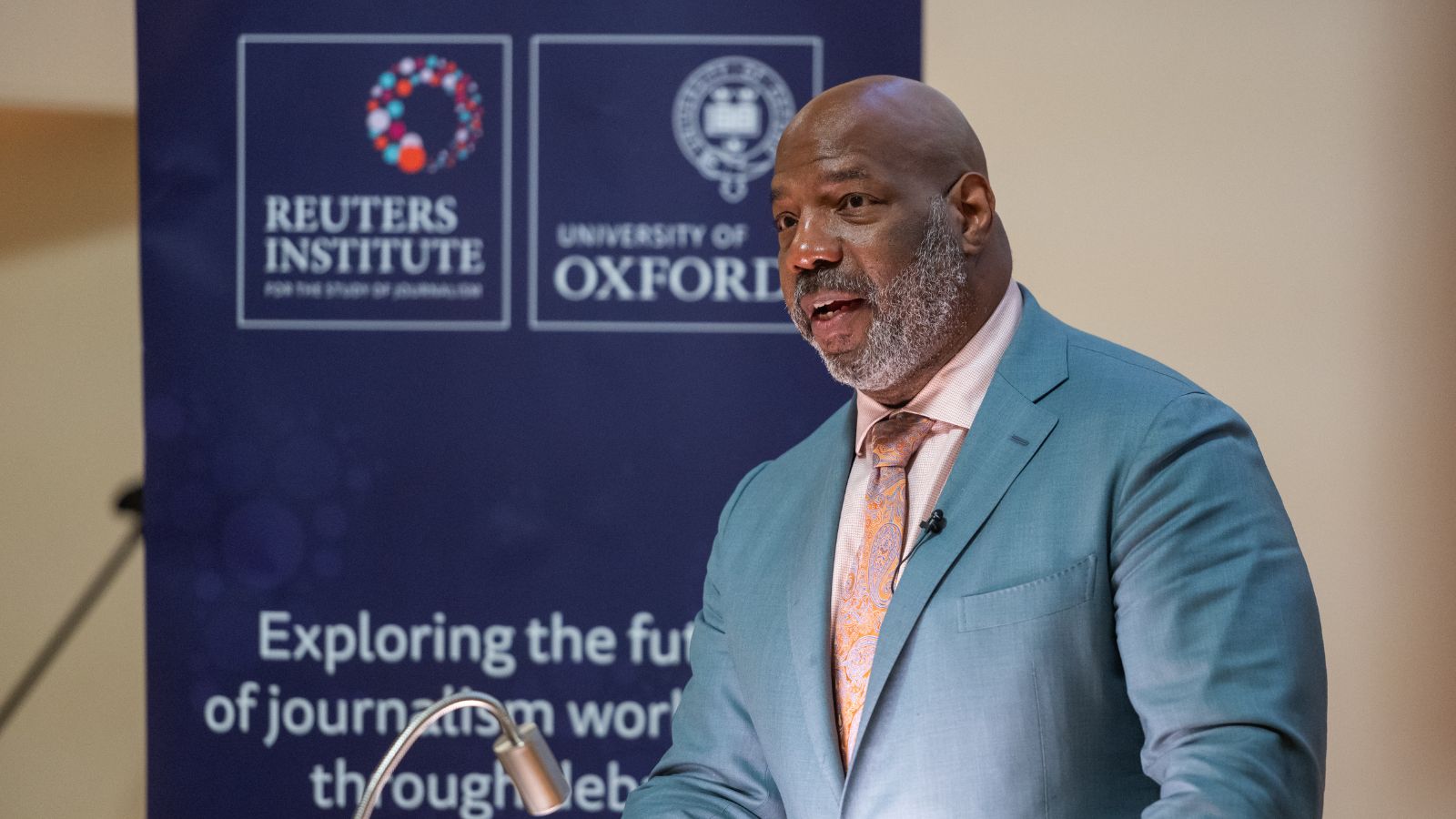
A timely event. This year’s Reuters Memorial Lecture featured Columbia Journalism Dean Jelani Cobb, who spoke presciently about Donald Trump’s threat to media freedoms. “The early days of the second Trump term have been greeted by a different and more troubling trend in the American press – capitulation,” he said. | Read and watch the lecture · Lee en español · Past lectures
The mental health toll of reporting on climate. In May we hosted an event on ground-breaking research by Anthony Feinstein and Jillian Mead on how reporting on climate change impacts journalists’ mental health. The event featured Bloomberg Green’s Sharon Chen, Filipino journalist Jhesset O. Enano and our own Diego Arguedas Ortiz and Mitali Mukherjee. | Read and watch · Oxford Climate Journalism Network
1. On the impact of GenAI on elections. Concerns about GenAI and elections are overblown in light of the available evidence, argue Felix Simon and Sacha Altay in a piece we published back in July. The article is an excerpt of a longer paper they wrote for the Knight First Amendment Institute. | Read · Read the longer paper
2. On AI’s impact on OSINT. As the rise of generative AI makes fabrication easier and detection harder, open-source investigations practitioners must evolve their methods, invest in contextual expertise, and adopt transparent workflows, argue Georgia Edwards, Zuzanna Wojciak and shirin anlen from WITNESS. | Read
3. On rethinking public subsidies for private publishers. Denmark is now creating a model to decide which private news outlets should receive subsidies and how those should be distributed. Our own Rasmus Nielsen explains how the model would work and the rationale behind it. | Read
4. On media literacy as a democratic tool. Empowering young people with OSINT skills would strengthen democracies without jeopardising free speech, argue Bellingcat founder Eliot Higgins and Nathalie Martin in an essay we published back in February. | Read
A monthly newsletter. Priscille Biehlmann, Tania Montalvo and Federica Cherubini have been in touch every other month in our newsletter with takeaways for media managers on topics such as learning from past projects, running a greener newsroom, and learning from other industries. They host meaningful programmes for media leaders from around the world here in Oxford and online. | Check out our programmes

1. On delivering news to teens. The German non-profit newsroom Correctiv created Salon5, a newsroom aiming to deliver news to young people. Unlike other news organisations, Salon5 truly produces news content that’s made by teenagers, for teenagers. | More on the project
2. On covering immigrant communities. Independent news site Documented has emerged as a critical voice in the past few years. The outlet aims to help migrants navigate the rapidly shifting landscape of immigration coverage in the United States. | More on the project
3. On reporting on Africa’s longest river. InfoNile is a network of reporters covering stories about the environment and communities in 11 countries. It has published over 400 data-driven, investigative stories and trained over 250 journalists. | More on the project
4. On reaching young Indonesians. ‘What Is Up, Indonesia?’ (WIUI) harnesses social media to reach young people through engaging formats and a healthy dose of memes. With a newsroom of 14 journalists under 30, the outlet has amassed half a million followers on Instagram and other platforms. | More on the project
5. On reporting on Sudan’s civil war. The Ayin Network is an outlet that supports grassroots journalists who tell the stories of people afflicted by the conflict and the geopolitical dynamics driving it. | More on the project · A piece on a documentary on Sudan
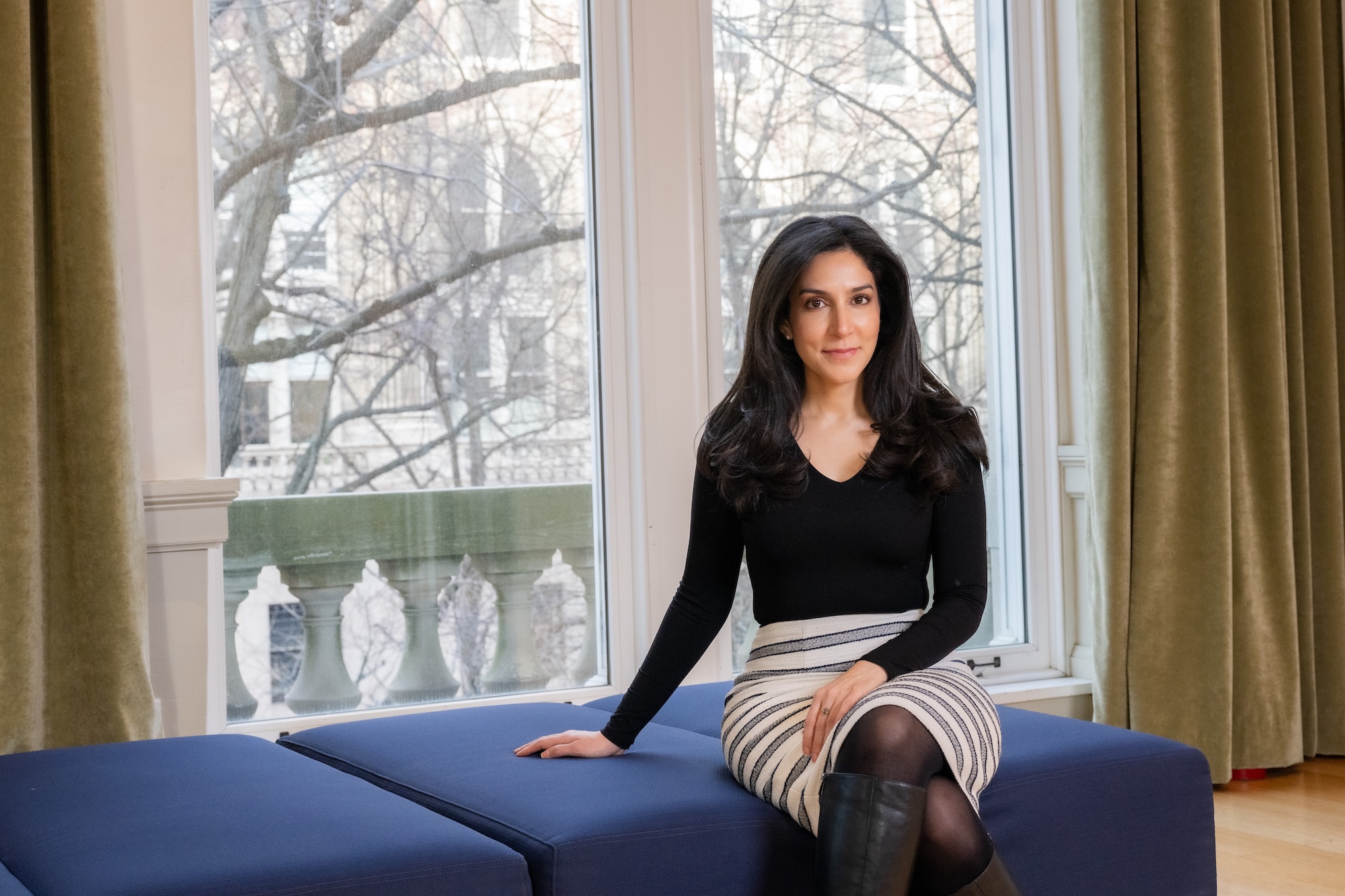
1. From Azmat Khan, Pulitzer Prize-winning investigative journalist. “The tactics being pioneered in Gaza – complete information blackouts, attacks on journalists with impunity – risk becoming the new normal unless the international community wakes up to what’s at stake.” | Read
2. From David Enrich, New York Times investigations editor. “The lawyers behind these [libel] cases [against news organisations] are quite open about being inspired by Trump. They saw his tactics and thought this made juries willing to consider cases that, not long ago, would have been lost.” | Read
3. From Sipho Kings, co-founder of The Continent and The Friday Paper. “This bet that we made, where we based our entire system and business model on convincing Meta and Google to share our journalism, has given them all of our content, and it’s gotten rid of so much curation ability.” | Read
4. From Karen Hao, AI expert and journalist. “There should be scepticism for any company. I do take issue with the fact that people are being uniquely sceptical of a Chinese company [such as DeepSeek], but they don’t hold US companies to the same degree of scepticism.” | Read
5. From Christian Esguerra, Filipino journalist and news influencer. “I see social media as a universe expanding. We don’t even know the limits of it. We don’t know where it ends. We know it’s polluted by so many content creators with so many shenanigans. So why not put more journalists there? By providing more factual information, we are improving the level of public discourse.” | Read
In every email we send you'll find original reporting, evidence-based insights, online seminars and readings curated from 100s of sources - all in 5 minutes.