


News
How BBC Eye built a multi-agent AI system to sift through ten thousand Russian social media posts

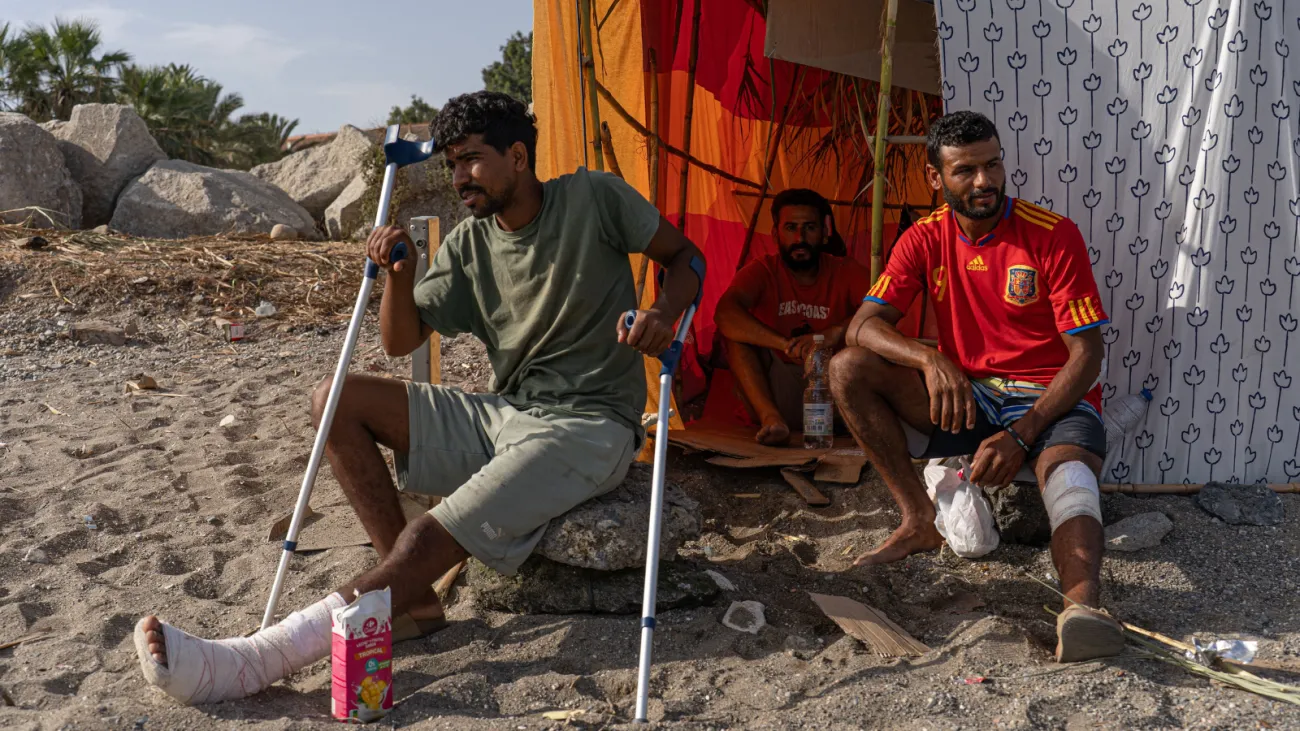
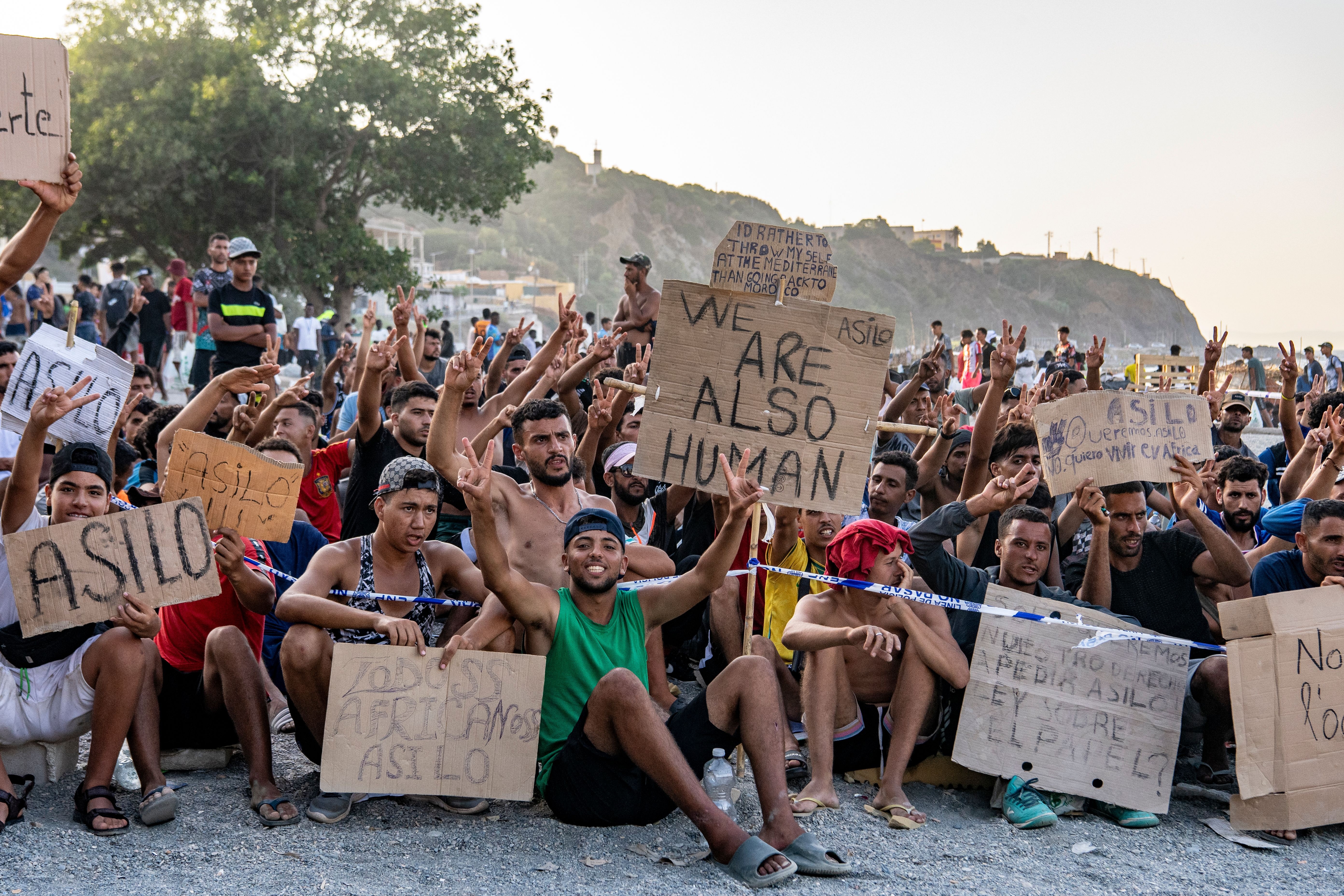
Hundreds of migrants living in a makeshift settlement at Trampolín Beach in Ceuta. | Claudio Palma / JNA Press/Sipa USA.
The global news agenda has been dominated in recent years by a handful of major stories: the rise of Donald Trump, the wars in Ukraine and the Middle East, the rising cost of living, and the impact of both immigration and climate change.
Against this backdrop, the Digital News Report 2026 examined how audiences rate the news coverage of each of these major stories. While many of our respondents were unhappy about how the media reports on many of these issues, immigration stood out as the area of greatest dissatisfaction.
This dissatisfaction cuts across countries, levels of trust in news, and political affiliations. In France, both those who trust the news and those who do not are critical of immigration coverage. In the UK, dissatisfaction spans the political spectrum, underscoring just how difficult it is to cover such a contentious issue.
To understand what lies behind this dissatisfaction, I spoke to three immigration reporters and a researcher who has studied media narratives around this issue. Together, they shed light on the considerable challenges involved in reporting on migration in the UK and across Europe. They also aim to answer an important question posed to newsrooms: how should they cover a divisive topic when so many people think they are doing a bad job at tackling it?
In late July, at least 70,000 people crossed into Ceuta, the small Spanish exclave on Africa’s northern coast. The episode was preceded by a torrent of rumours and misleading claims on social media, including false messages suggesting that migrants would be welcomed into Spanish territory. According to the Spanish fact-checking organisation Maldita, those narratives helped convince people it was time to cross.
As the story spread internationally, some of the coverage quickly adopted threatening language. Migrants were described as having “stormed”, “invaded”, or “breached” the border. News reports described those entering as “pouring” and “flooding” into the exclave.
Many of those who entered the city went back to Morocco. But thousands are still roaming Ceuta’s streets at the time of this writing, with immigrant reception centres operating at capacity, law enforcement investigating multiple alleged sexual assaults against underage migrant girls, and doctors warning about a healthcare crisis.
Ceuta’s crisis offers a stark example of a broader problem. Few issues have occupied the news agenda as persistently as immigration. From Europe’s asylum debates to English Channel crossings, migration has consistently become front page fodder. Yet the intensity of the coverage and the nature of the topic can also make it unusually vulnerable to sensationalism, political framing, and narratives that blur the line between perception and reality.
That tension helps explain why audiences across the board are so dissatisfied with immigration reporting. Blanca Garcés-Mascareñas, a senior research fellow at the Barcelona Centre for International Affairs (CIDOB), has spent years studying the production and impact of migration narratives.
She argues that immigration itself has become increasingly politicised in two intertwined ways. It has grown more prominent in public debate, as positions around it have become more polarised and difficult to reconcile. In this kind of environment, migration is not just a policy issue but a battleground through which wider fears, grievances, and ideological conflicts are expressed.
“It’s a context in which discussions are becoming increasingly emotional and are more closely tied to fears,” Garcés-Mascareñas told me. “They stem from real concerns, but are exploited in very specific ways. As a result, we see a growing gap between reality and perceptions.” Data shows, for example, that people tend to overestimate how many immigrants actually live in their country.
People want simple explanations to complex issues, said Garcés-Mascareñas. The result is a tension between an issue that demands nuance and context and the way both audiences and even newsrooms are favouring simpler narratives.
“As a journalist, if you try to explain the reality and the complexity behind it, you are always going to disappoint [a part of your] audience that expects simple explanations,” said Garcés-Mascareñas. “We tend to think it is far-right voters who are looking for these simple, emotional explanations. But those on the other side are also looking for simple explanations, just different ones.”
That gap between what is happening and how it is perceived is one of the reasons that make immigration such a difficult story for journalists to cover.
Ismail Einashe is a British-Somali journalist who has covered migration and refugee issues across Europe and the UK. He argues that immigration has become a proxy for much broader debates about identity and belonging.
“My view is that the media itself is partly at fault,” Einashe told me. “The way migration has been covered has reduced it to a binary. In Europe, we tend to see migrants framed at two extremes: either as vulnerable bodies or as dangerous ones. That has reduced the complexity of human movement across Europe and its borders to these simplistic categories. In the process, we’ve lost sight of human beings.”
While immigration itself has become increasingly politicised, the journalists I spoke to for this piece argue the media contributed to both that politicisation and the dissatisfaction surrounding its coverage. In their view, immigration reporting is shaped not only by broader political polarisation, but also by the commercial and organisational pressures facing the news industry itself.
As someone who’s covered the subject for the past decade, Einashe argues that immigration coverage has become narrower and more hostile. There is less space for reporters to document migration firsthand and convey its complexity, he says, while political narratives increasingly shape how the story is framed.
“The space afforded to reporters like me, working across Europe to try to tell the story as it is, has got a lot smaller, and I think the framing has become much more problematic,” explains Einashe, who co-edited the book Lost in Media: Migrant Perspectives and the Public Sphere. “Politicians amplify viewpoints often based on fear and prejudice, those get covered in the media, and then this ends up on social media, where [they feed] misinformation and disinformation.”
Garcés-Mascareñas points to another pressure shaping coverage: the click-driven economics of digital media.
Following the 2015 migration crisis, her research found that repeated coverage of suffering and deaths at borders began to produce fatigue among some audiences. At the same time, controversial far-right voices continued to attract attention and clicks from part of the audience, creating a perverse incentive for news organisations across the board.
“It’s a major dilemma for the media,” she said. “Covering controversial voices, such as those from the far right, generates clicks. But that can lead to over-coverage, which in turn can exaggerate their importance and give a platform to far-right voices.”
These commercial pressures are compounded by a more fundamental problem: despite immigration’s prominence on the news agenda, specialist immigration reporting remains relatively rare.
Years of newsroom cuts have hollowed out some dedicated beats, while many outlets have never had an immigration correspondent in the first place. That leaves a complex issue in the hands of political or breaking-news reporters who may lack the subject knowledge needed to capture the phenomenon with the kind of nuance it deserves.
Nejma Brahim is one of the few journalists specialising in migration in France, where she covers the issue for Mediapart. She told me French newsrooms have very few dedicated immigration journalists across print, television, and radio, and argues that this lack of expertise has consequences for the quality of coverage.
“Journalists who aren’t well-versed in these topics are being sent out into the field and don’t always have a firm grasp of them,” she said. “As a result, they don’t have the right skills or frame of reference, and that can affect how they cover these issues. Sometimes, their coverage doesn’t accurately reflect the situations that should be highlighted.”
Nicola Kelly is a journalist who specialises in UK immigration and asylum and the author of the book Anywhere But Here: How Britain's Broken Asylum System Fails Us All. Kelly has observed that newsroom cuts, tighter budgets, and growing time pressures are keeping more journalists at their desks. The risk, she argues, is that immigration becomes increasingly reported through the prism of Westminster politics rather than through firsthand observation and direct contact with the people and communities affected.
“So much of the focus [in the UK] is now on Westminster – on policy, on what [Reform UK leader] Nigel Farage is saying, on what [the Greens leader] Zack Polanski is saying, on what Labour is saying,” Kelly said. “There’s very little reporting that involves getting out and about. I find that really problematic: journalism is moving back towards Westminster and away from reporting on the ground.”
Often absent from immigration coverage are the voices of migrants themselves, despite being the people most directly affected by immigration and asylum policies. Addressing that absence means putting people back at the centre of the story, said Kelly, who years ago began telling editors she was reluctant to cover migration without speaking to someone directly affected by the issue.
Too often, Kelly told me, immigration coverage is built around expert commentary, government policy, and sources that can be contacted quickly from a newsroom desk. Speaking to new arrivals, as well as the communities receiving them, offers a fuller picture of how the phenomenon is actually experienced.
“If you’re only covering expert voices and policymakers, it’s very dry and there’s no human lens on the issue,” Kelly said. “But also I don’t think it’s as accurate a representation of the ways these issues are actually being experienced.”
Einashe, who wrote a book about the migrant experience through the lens of art, argues that immigration coverage needs to move beyond political framing and reconnect audiences with the humanity of migrants and refugees. Doing so, he told me, would help people better understand why people move and the realities they face.
“This has reduced the complex human movements across Europe and its borders to binaries and, in the midst of that, you’ve lost the human,” he said. “My job as a journalist is to try to rescue the humanity and dignity of the person who’s moving, so that audiences can be fully informed and understand what’s happened to people. That’s where the media is failing.”
If dissatisfaction with immigration coverage transcends political leanings and national borders, what can journalists do to improve their coverage of such a contentious issue?
One challenge is that migration is particularly susceptible to misinformation, misleading statistics, and distorted perceptions. Take the UK’s small-boats debate. Channel crossings, irregular migration, asylum, and overall immigration are often discussed as the same phenomenon. They are not.
Small boats are the most visible route of irregular entry into Britain, but they account for only a small part of the asylum system and a much smaller share of immigration overall. Yet their visibility – reinforced by a steady stream of dramatic images and daily arrival figures – has turned the boats into a powerful shorthand for a far larger and more complicated migration story.
Brahim has encountered a similar challenge in France when reporting on high-profile crimes committed by migrants, particularly those subject to deportation orders. Individual cases attract enormous attention and have an outsized influence on public perceptions of immigration.
She points to the murder of 12-year-old Lola Daviet by an Algerian immigrant who was under orders to leave the country. The case shocked France and was heavily politicised by the right and far right.
“The problem is that they tend to lump all immigration together, based on what represents only a small minority of migrants in France. There are times when the news is so intense, the controversy so intense, that we have to find the educational tools to explain to people that this doesn’t represent the majority, that these are indeed complex situations,” Brahim said.
Both examples illustrate the same problem: the most dramatic or politically salient parts of the immigration story can easily represent the whole. Statistics can be stripped of context, exceptional cases can be presented as indicative of broader trends, and particular images or narratives can become disproportionately influential in shaping how audiences understand migration.
For Brahim, the fundamental principle of immigration reporting is including the voices of migrants themselves. Yet too often, she says, the debate takes place around migrants rather than with them, dominated by politicians, officials, and advocacy groups.
Countering those distortions requires more than putting a human face on the story. It also means grounding immigration reporting firmly in facts and evidence rather than political rhetoric: scrutinising official statistics, consulting specialist researchers who understand how to interpret them, and drawing on multiple sources to verify claims.
“When we talk about figures, when we give precise facts, it’s difficult to challenge them,” Brahim told me. “We shouldn’t be satisfied with the talking points coming from political representatives, because they’re not always entirely accurate. When we do our job properly, we often realise that what was presented to us as the truth was not necessarily so.”
In every email we send you'll find original reporting, evidence-based insights, online seminars and readings curated from 100s of sources - all in 5 minutes.