


News
How BBC Eye built a multi-agent AI system to sift through ten thousand Russian social media posts


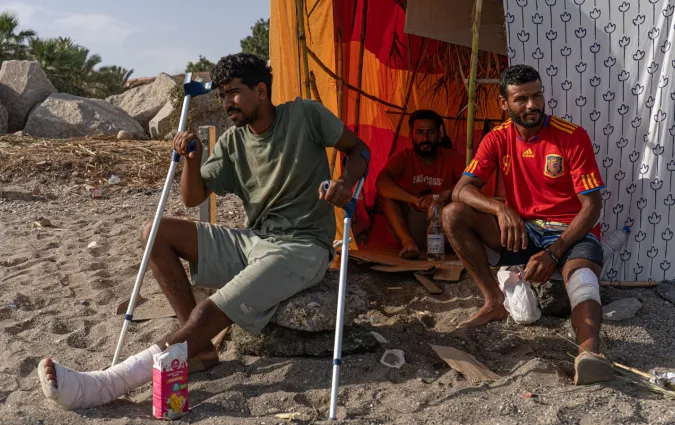
A woman reacts inside her brother's home, which was damaged by an airstrike, in Tehran, Iran. Majid Asgaripour/WANA
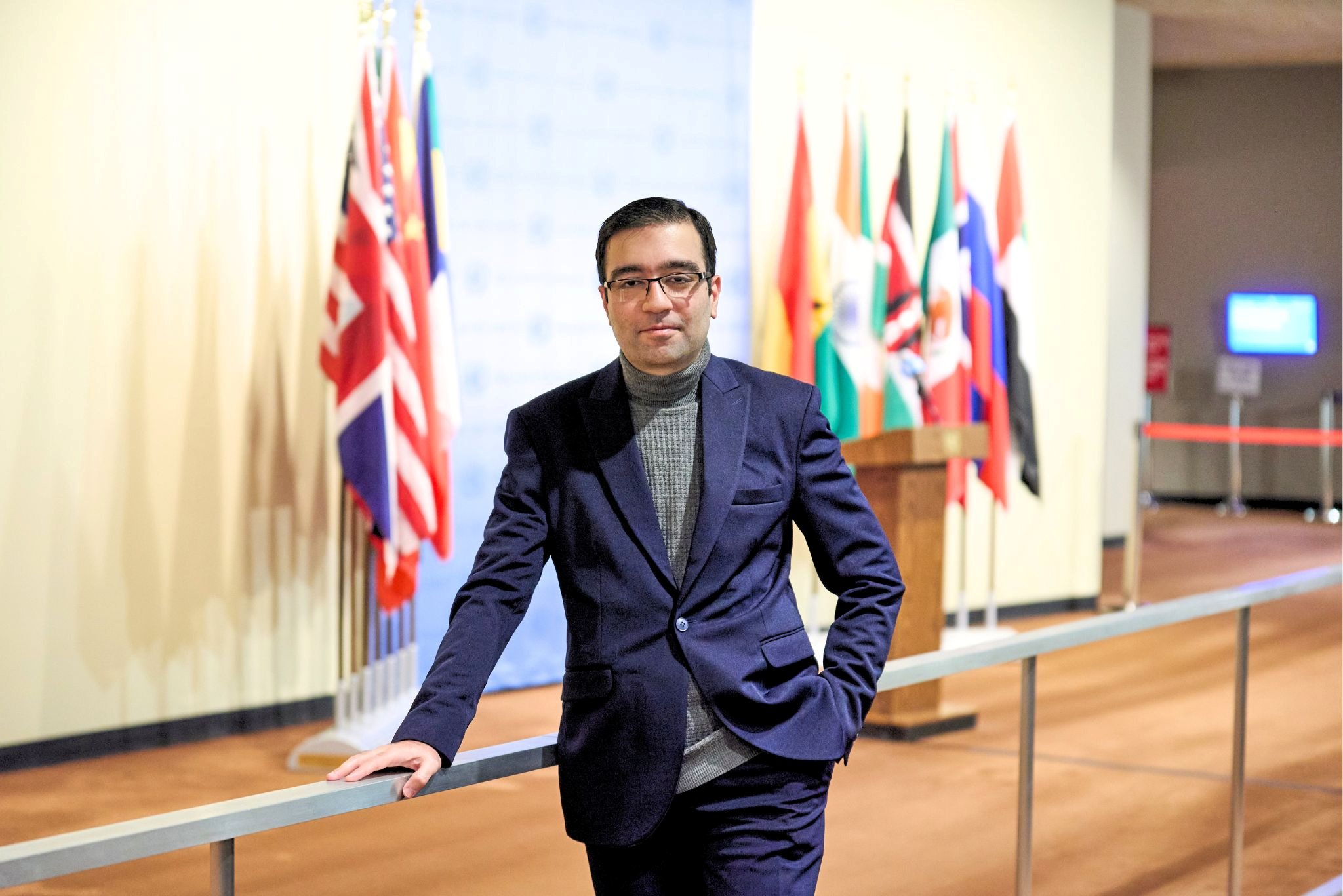
Kourosh Ziabari’s introduction to journalism came early, in the newsroom his parents ran in northern Iran.
In 1991, his father founded the weekly magazine Hatef, meaning messenger in Persian and Arabic. It became the oldest continuously-published weekly after the 1979 revolution, covering local news, municipal politics, agriculture and fishery in Guilan Province, as well as folk culture, world literature and social issues.
Ziabari began writing opinion pieces in primary school, edited by his parents, often spending evenings – and even the night – in the newsroom before his career grew to span domestic and international reporting.
The publication, a family-run newsroom staffed largely by young reporters, ran uninterrupted for more than three decades. Ziabari’s mother, a calligrapher who initially assisted with production, developed an interest in journalism and eventually became the magazine’s editor-in-chief, helping turn it into a family enterprise. It became a training ground for young reporters, many of whom went on to national prominence. It ceased operations in 2024 after his father’s death. Ziabari’s mother is now exploring ways to preserve its legacy.
Now based in New York, Ziabari covers Iran, human rights and global affairs for outlets including Foreign Policy and New Lines Magazine. He has reported on the United Nations as a fellow of the Dag Hammarskjold Fund for Journalists, among other international programmes.
His reporting on the current war has ranged from political analysis to on-the-ground work. After Israel killed Ali Larijani, a senior Iranian official, Ziabari was among the first to place the killing within Iran’s internal power dynamics. Writing in New Lines Magazine, he traced Larijani’s arc from nuclear negotiator to parliamentary speaker to a presidential hopeful sidelined by the Guardian Council, arguing that his death removed one of the few figures able to engage across factions.
His coverage took him to Los Angeles, where he spent ten days examining how a politically fractured Iranian diaspora was reckoning with a war affecting both their homeland and their lives in the US. Hard-line voices, he found, often drowned out a more divided community, while asylum seekers described exploitation by more established diaspora figures.
The reporting also surfaced patterns that had received little attention. Drawing on data analysis, Ziabari and fellow journalist Meghnad Bose documented a sharp spike in ICE arrests of Iranians in the week following U.S. airstrikes in 2025, with detentions rising from single digits to more than 180.
As the war reshapes both Iran and the diaspora communities watching from abroad, I spoke to Ziabari about what the media keeps missing, from the stereotypes that flatten a complex society to the voices that get platformed as “the Iranian perspective”, and the questions he wishes more reporters would ask. This interview has been edited for length and clarity.
Q. For journalists still working inside Iran, what does navigating censorship and surveillance look like during wartime, and how does that shape what gets reported and what doesn’t?
A. Journalists are dealing with multiple layers of restriction. One is access. Many cannot reach sources overseas, consult experts or even access basic databases. It’s not just major platforms like Instagram or Telegram that are blocked. By some estimates, millions of websites are inaccessible, including news sites, forums and even cultural platforms. That limits the knowledge base they can draw from.
There are also more subtle forms of censorship, often inside the newsroom. A reporter writes something and an editor tells them it is too sensitive and needs to be rewritten. In other cases, there are informal warnings before publication. Journalists may be contacted by officials and told not to pursue a story, without any formal process.
There can also be direct pressure, including threatening calls. Journalists understand that continuing with certain stories could lead to legal action. This creates a climate of self-censorship, where many stories are never pursued in the first place.
Even before the war, there was already a strong structure of viewpoint discrimination in place. In public media or outlets with government ties, certain topics were effectively taboo: civil liberties, normalisation with the US, or abandoning compulsory hijab. Those views would simply not be platformed.
What is often missing in Western coverage is that many democratic, progressive and centrist voices in Iran, including journalists and academics, have paid a real price for advocating for better relations with the West. Some were arrested or imprisoned. Yet these voices have often been ignored because the spotlight has gone instead to louder and more hard-line diaspora opposition.
Q. How has your dual experience of reporting both from Iran and in the West shaped the way you read international coverage of the current war?
A. Coverage of Iran has long been shaped by a number of factors, including limited access. International reporters are not able to travel there freely or frequently because of restrictions imposed by the government. Many bureaus closed down in recent years, so the number of foreign correspondents has been dwindling.
That means an accurate, nuanced portrayal of the situation has been undermined. Even the brighter side of the story, including Iranian civil society, arts and culture, is often missing because there are no professional reporters from major outlets on the ground. Those who rely on Iranian reporters and publications have to navigate questions of credibility, and verification can be challenging.
In a climate where much of Iranian media is subject to surveillance and censorship, it becomes difficult to form a clear and comprehensive picture.
Q. What other factors are shaping how international media covers Iran?
A. Western media are still captive to stereotypes that have shaped coverage of Iran for years.
Because of the unfavorable political relationship between Iran and major Western powers, especially the US and Britain, coverage of Iran often becomes a smaller-scale reflection of those state relationships. Iran is portrayed in negative terms, using clichés and tropes that can be dehumanising, reductionist and unrepresentative of reality.
Many of those tropes remain unchecked. The excuse is often that the Iranian government behaves badly, which then becomes a justification for consistently negative coverage of the country. But that logic is not applied elsewhere. Iran is not the only authoritarian state in the world, or even in the Middle East. But political alliances often shape which abuses receive sustained attention and which ones do not.
Having lived in Iran and later covered it from elsewhere, including Britain and now the US, I have seen how this reliance on clichés and stale terminology affects the way some mainstream outlets cover the country. You can read commentary today and, if you removed the date, it could easily have been written 10 or 15 years ago. Sometimes these pieces simply rehash old frustrations about whatever is going wrong in the Middle East and find a way to pin it on Iran.
Of course, politically speaking, Iran has not been a responsible or constructive actor in the region. But it is not the only one.
Q. Can you expand on the narratives you find reductive or inaccurate?
A. One example is the constant description of Iran simply as a dictatorship or authoritarian state, without acknowledging the internal complexities of its political system. Even under the current structure, there have been elections whose outcomes were deeply unfavorable to the Supreme Leader and to hard-line elements of the establishment.
Presidents like Mohammad Khatami and Hassan Rouhani, for example, were reformists who pushed against powerful institutions and sought engagement with the West.
In the case of Ali Larijani’s assassination, many outlets failed to mention that he was one of the pragmatists in the system and had been disqualified twice from running for president, in part because of his support for the 2009 Green Movement [a wave of protests challenging the disputed re-election of then-president Mahmoud Ahmadinejad].
There is also a tendency to portray Iran either as a secularising society or as a monolithic Muslim country, with little nuance in between. Or to refer to protesters as if they are the only authentic expression of Iranian society, while ignoring the fact that there are also genuine supporters of the current establishment. Some of the people who take to the streets to mourn military commanders or political leaders are not being paid to do so. They are there because their values align with the system. That does not excuse the government, but it is part of the reality.
Q. How much of this coverage reduces Iran to its government, and what does that miss about the country and its people?
A. The distinction between the people and the government often gets blurred, but so does the fact that the leadership has supporters. That is one reason it has remained in power.
There is also too much reliance on diaspora commentators and exile broadcasters who have been predicting the regime’s imminent collapse for years. During protests in 2009, 2017, 2019, and the 2022 Women, Life, Freedom movement, there were always voices saying that if people kept protesting for another week or two, the regime would collapse. That never happened.
At the same time, some diaspora figures have been elevated into something like political decision-makers for Iran, even though they are not on the ground and are not directly shaping reality in a country of 90 million people. They appoint transitional councils in exile, but the impact remains confined largely to their own circles. Sometimes they are so consumed by their distance from the country that they genuinely believe what they are doing abroad is transforming realities at home.
Q. Iran has a young, urban, digitally connected population with complex views on both the war and the government. How visible is that in what Western audiences are actually reading and watching?
A. Iranians were early adopters of Twitter, and before that, blogs were hugely popular. Even with censorship and blocked platforms, Iranians remain digitally connected and active.
But that complexity is largely missing from media coverage. We are not seeing how people actually live or how they try to recreate different ways of life based on what they observe elsewhere. Instead, coverage often returns to standard talking points: that Iran is repressive, it mistreats women, it is intolerant of Western culture. Some of those points are true, but they do not capture the full texture of daily life.
If you spend time on Iranian social media, you see a more complicated reality. You see coffee shops, parties, weddings, events, music and fashion. You see young people trying to create spaces of joy, expression and normalcy despite restrictions. I once reported on a coffee shop in Rasht that was eventually shut down because the women running it did not wear compulsory hijab and because authorities viewed the atmosphere and music as symbols of Western culture. But the point is that the place existed, and it thrived for a time.
If we don’t engage with these everyday experiences, our understanding becomes incomplete, sometimes even ignorant. I saw a commentator in the US claim that schoolchildren killed in an airstrike were better off dead because they would otherwise have to wear full face coverings, which is simply not true in Iran.
Q. Who tends to get quoted or platformed as ‘the Iranian perspective’ in Western media, and who gets left out?
A. In line with the standard framing of Iran as a negative, gloomy place, those who reinforce that image are most often platformed. Voices that use more extreme or exaggerated analogies, sometimes even derogatory ones, tend to become the most visible experts.
Often, this begins as criticism of the government, which is valid. But over time, it can turn into a broader habit of disparaging the country and its people. And as those commentators gain more visibility, they learn that more extreme descriptions attract more attention. In that process, nuance, accuracy and reason are often lost.
I’ve seen, for example, commentators compare Iran to the Taliban, which oversimplifies a very different context. Then the same comparisons escalate, to ISIS and beyond. At that point, the goal is no longer understanding, but attention. This creates a cycle where more extreme voices dominate the discourse, while more measured, research-based perspectives are sidelined.
Q. Which outlets or journalists are doing the best work on Iran at the moment, and why?
A. Since the civilian toll of wars is the most important element of any conflict, I am reluctant to endorse media outlets that are putting the stories of casualties and the cost of the war on the back burner in order to foreground non-urgent ideological discourse or settle scores with an unpopular government in Iran.
But I have read persuasive pieces in outlets such as The New Republic, TIME Magazine, The New Yorker, and The New York Times, and I’ve also seen reliable reporting on Al-Jazeera, CNN, and BBC World. In Iran, Shargh Daily, printed in Persian, is a newspaper that has consistently been a remarkable pro-reform outlet, reflecting the voices of Iran’s urban middle-class. Photographers in Tehran such as Abedin Taherkenareh, Davoud Ghahrdar, and Erfan Kouchari are working round the clock documenting the destruction of Iranian cities under US-Israeli bombardments.
In the absence of consistent reporting on how this war of aggression is inflicting unwarranted damage on people’s businesses, properties, and Iran’s infrastructure, scholars such as Assal Rad are adeptly using their social media platforms to amplify these stories, often using visuals and multimedia materials.
Q. If you could give Western correspondents or newsrooms one or two concrete things to do differently when covering Iran, what would they be?
A. First, read as many diverse voices from Iran (and about Iran) as possible. Do not take any argument for granted, even if it comes from a distinguished scholar or commentator. These are not sacred texts. They can be questioned, challenged and scrutinized.
It is also important to recognise that Iran, like any country, is made up of people with different views. No individual represents the whole. Given how much misunderstanding exists, journalists need to approach common claims with scepticism.
The second is to engage more directly with Iranians. That means speaking not only to experts, but also to ordinary people, whether inside the country or in the diaspora. Without that, it is difficult to understand the full picture.
Q. Is there a question you wish international journalists would ask about Iran that almost nobody is asking?
A. One question I wish journalists would ask, and it takes some courage, is whether the way Iran is portrayed is only a result of political tensions, or whether it is also shaped by unconscious biases about people we see as different from ourselves.
Are we accepting the dehumanisation of Iranians because of these hierarchies we construct in our narratives? If some of these stereotypes are driving coverage, is it only about politics, or is it also about how we perceive Iranians as people?
So the deeper question is whether Iranians are being treated as equal human beings in global coverage. During the war in Ukraine, some Western journalists emphasised that Ukrainians were “like us.” We do not see the same language used for Iranians. As people in Iran are experiencing war, sanctions and economic hardship, are we granting them the same level of humanity and dignity?
Correction: The coffee shop that closed down was located in Rasht, not Karaj as this article previously stated.
In every email we send you'll find original reporting, evidence-based insights, online seminars and readings curated from 100s of sources - all in 5 minutes.