


News
Five takeaways from the Future of Media Technology Conference: How publishers are rethinking audience engagement


In this episode of Future of Journalism we explore findings around the public's relationship with climate news. We discuss findings from our recent report that uses survey data from eight countries to gauge how people get their climate news, what institutions they trust, their attitudes towards the role of politicians and AI, and what they expect from journalists.
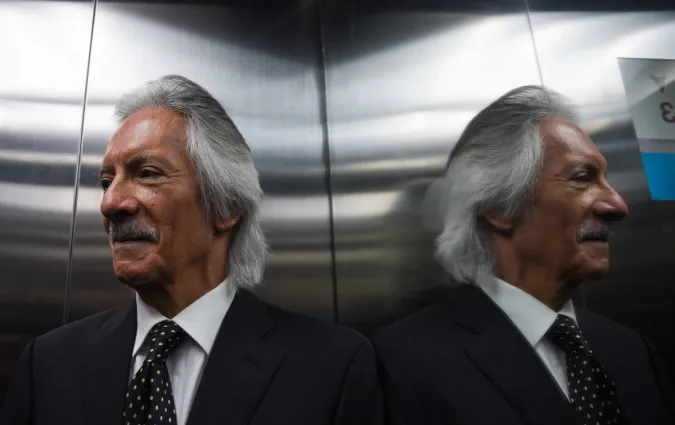
Waqas Ejaz is a Postdoctoral Research Fellow with at the Reuters Institute and the lead author of Climate change news audiences report 2025: Analysis of news use and attitudes in eight countries.
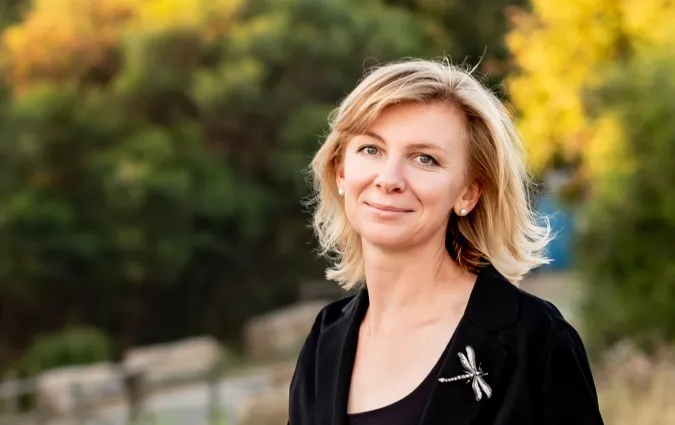
Our host Mitali Mukherjee is the Director of the Reuters Institute. She's a political economy journalist with more than two decades of experience in TV, print and digital journalism. She is the co-author of the Climate change news audiences report 2025.
Trends in climate news use and interest | Trust in climate news and information | Attitudes towards political action on climate | Perceptions of AI’s role in tackling climate | What audiences want from climate news
Mitali: One of the overall trends from last year's report was where we marked that we were seeing stagnation in terms of both attitudes, but also engagement with climate information. One year on, have we seen any major shifts? Is there something different that we've found this time?
Waqas: Yeah, so last year, what we were talking about was some sort of climate perception inertia, that's how we termed it, which was basically things were not getting much better, but they also were not getting much worse. So there was a stagnation in that sense. What we did kind of see the shift last year was only in the US where we started to see a bit of a dip in terms of how people try and consume news, their weekly consumption. This year, that change that was instigated in the US, we are now seeing that this is no longer sort of a flat line. We are looking at a gentle, but clear downward slope in how often people actually come across climate news across these eight countries. About 47% now say they saw, read or heard anything about climate change in the last week. And two years ago, that figure was closer to 55% so we have lost a noticeable chunk of weekly exposure in a very short time. So that's one of the major shifts that we have seen in the data that we published.
Mitali: And this year's report has been, you're the lead author on it, Waqas, and it's also been co authored by Dr Richard Fletcher and me. And I know in past years, we've always talked about how different some of the streams look in different countries, just looking at this shift of engagement lens, you know, line out for people listening what the differences were in terms of countries.
Waqas: I mean, although the aggregate seems like there is a dip in all those eight countries, or at the aggregate level, this is how the picture looks like. But it's really not evenly spread. The decline is concentrated in richer, higher emission countries, like the UK, US, France, Germany and Japan, the weekly exposure in these countries has dropped, sometimes quite sharply, actually. France is down 15 percentage points. The US by 11, UK by seven percentage points since 2022. Meanwhile, Brazil, India and Pakistan are more or less flat. So this isn't a universal, people everywhere are switching off story. It is a Global North problem in particular, and I think that's why this feels like a big deal, because these countries where the climate story is fading from people's weekly media diets are precisely the ones that have outsized responsibility and capacity when it comes to emissions and policies. So I think if those publics are encountering less climate coverage that has knock on effects for pressure on politicians, how informed debates are, and for how normal or urgent climate action feels.
Mitali: So just to scratch that a little bit further. Waqas, do we know what's driving the decline across countries? I mean, crudely put, in a supply-demand situation, you know, where is the greatest stress?
Waqas: Yeah, I think that's very interesting, because my intuition was that other things would also see some sort of a dip or change or shift, so to speak. But the data points to two very clear drivers, and together, they explain almost the entire decline that we just talked about. The first driver is basically TV. TV has long been the single biggest source for climate information, particularly for older audiences, but since 2022 TV is the only climate news source that shows a consistent drop. Weekly use of TV for climate information falls from 31% to 25% and in every country where TV use goes down, overall climate news exposure goes down in almost the exact same pattern. It's like a shadow. TV drops, engagement drops. And the second driver is age, specifically the older audience. People over 45 used to be the most reliable news consumers for a very long time, but in the last three years that we have been tracking this, their weekly exposure has fallen by 10 percentage points. Meanwhile, the younger groups, we can talk about them switching off the news, but at least when it comes to climate change, their consumption has been steady. So it's not some generational youth switching off story. It's actually the opposite. The decline is led by older groups who rely heavily on TV, which is the platform scaling back climate content the most.
Mitali: And we do know this. Yeah, sorry. I was just going to say Waqas. We do know this from other data, from other research that we've done about how younger audiences tend to access the news via social media. So there's definitely sort of a connection both between the age, that demographic that you point to, and television as the gateway to which they access this news. I want to move on to another metric which we have tracked consistently over the years with our climate research, which is trust. And you know, how much rather people say they trust the news media when it comes to climate news.
Waqas: I mean, again, this is, this is pretty significant to sort of mention that if we one could argue that if people are not coming across the news, probably there are other metrics as well that are worth looking into, and trust is being one. But it's not the same story as it was with the news exposure. So trust in news on climate is surprisingly steady. It hasn't plunged in the way climate news use has across these eight countries. Around half of people say that they somewhat or strongly trust the news media on climate. But the range is quite wide actually. At the top end, you have Pakistan at 72% of people and India and Brazil also sitting comfortably above, let's say, 55%, around that percentage point, whereas on the other side of the spectrum is France, where trust is just 36% and places like UK, US, Germany and Japan, where the level of trust in news media regarding climate change hovers around low to mid 40s. But if we look over time, the picture hasn't changed across countries and across years.
Mitali: And if news organisations were to think about who the best partners or stakeholders would be to have conversations around climate, Waqas, how much trust do people have in other institutions on climate?
Waqas: I mean, this is in that sense, the story is very clear. We have a clear hierarchy, and journalists aren't at the top of it.
Mitali: Actually, at least we're not at the bottom, Waqas
Waqas: If that's the solace you want to have, then sure. Scientists are by far the most trusted group, with about 71% of people saying they rely on them for accurate climate information. So that's being and that's been inching upward over four years. Then in the middle, you have got the news media, environmental activists, institutional, international institution, like the UN and even people you know personally who score surprisingly higher, 56% higher than government or political actors at the right, at the bottom, without competition, are politicians and political parties trusted by only about 23% at an aggregate level, and the gap between the scientists at the top and the politicians at the bottom has actually grown over time from 43 percentage points in 2022 to 48 percentage points this year.
Mitali: And that's both interesting and heartening to see in terms of the fact that audiences still seem to trust those who are sort of subject experts while looking for more climate information, one of the themes that we were keen on diving deeper into in this year's report, Waqas was around kind of political action or politics. COP30 is not the biggest story for audiences, but it is a big story for those who track climate just in terms of policy changes. And we saw the sort of complete absence of the US as a country and Donald Trump as its leader at this recent summit in Brazil. What did we find in terms of this range of approaches that politicians have taken towards climate just within this year, and just as an extension of that, how are people rating the performance of their political leaders when it comes to climate change?
Waqas: Well, the short answer is not well. Across all eight countries, only about one in three people feel confident that their political leaders are getting climate decisions right, whether that's setting priorities, making the right choices, or setting a good example globally. And more than half say that they are not confident at all. So when you see somebody like Donald Trump skipping COP30, it's not happening in a vacuum. It reflects a broader pattern. People already feel their leaders are not stepping up to climate action. And these kinds of high profile moments just reinforce the gap between the expectation and the action.
Mitali: And just to map this across two intersections, Waqas, what sort of differences, if you could share that with people listening, did we see across countries and across demographics as well? Because we talked a bit about younger and older audiences,
Waqas: The overall differences we see in countries regarding their politicians, being performing on climate change are quite revealing, actually. So India stands out as the only country where confidence actually outweighs the doubt. We can talk about why this is the case. Roughly six in 10 Indians think their leaders have their climate priorities, making good decisions and setting a good example. Pakistan is the next positive, so to speak. But we do have the other end of the spectrum, which has been the consistent story throughout the report, where we have countries like France, Germany and Japan, where confidence drops to about between 17 to 28%t, some of the lowest levels in the study. So the one thing is that the picture of this uniform disappointment is not, you know, consistent across these countries.
And regarding the demographic changes or patterns, we have two very clear sort of findings that jump out. Firstly, age. Confidence drops steadily as you go up the age ladder. So about half of 25 to 34 year olds express confidence in their leaders’ climate decisions. But by the time you hit 55 and above, it falls to around one in four. So the older you are, the less impressed you are with the political climate leadership. And the second and not surprising finding, or sort of the demographic explanation that we get, is from political orientation. So people on the right are noticeably more confident than those on the left. So the right sits in the low to mid 40s. The left sits across closer to 30 to 33%. So that’s, partly because those who believe the climate threat is urgent expect more from politicians, and they judge harshly when they don't see it. So that's the main key findings regarding the political leadership on climate change.
Mitali: Let's talk about another newish theme for this year's report, and I personally found the findings quite interesting, which is around AI and climate change, specifically in terms of how people view AI's impact on tackling climate change. Just sort of walk us through what people think you know, again, the variances that we saw across our eight countries.
Waqas: Yeah, so AI is being perhaps the most frequently mentioned topic across all domains that we now know. So this is one of the most fascinating addition in this year's, because the public basically looks at AI and climate change and says, Well, what we have found is something that in the connection of AI and climate change, a significant amount of people across these eight countries, the headline is that they're not sure yet. Across these eight countries, you have uncertainty as the dominant mood, so to speak. About a third think that AI will be beneficial, about a quarter think that it will be harmful, and the rest cluster in the middle, which is basically, ‘I don't know’ or it ‘AI will do neither’. It will not be beneficial or harmful. So the level of hesitation kind of tells you the conversation around AI's and environmental impact hasn't really settled in the public mind, but the national differences are huge. India and Pakistan are the real optimists here. Around half think that AI will be beneficial for tackling climate change. France is the polar opposite in this case, it's the only country where more people think AI will be harmful than helpful. And if we just, you know, double down regarding the demographic difference, we kind of see a pretty consistent pattern where younger people are more positive about AI's potential. Older people are more uncertain. Men are slightly more optimistic than women. And when it comes to the ideological orientation, people on the left, right and centre, all are clustered around the same level of what I would say, cautious optimism towards AI's role in tackling climate change.
Mitali: Just thinking about that subject, specifically, Waqas, how do audiences respond when we ask the question about how they feel the news media is informing them about how AI can, in turn, impact climate change. Do they feel like they're being informed sufficiently?
Waqas: Not really. And this is one of the clearest signals in the entire AI section, when only about one in three people thinks that the news media are doing a good job explaining AI's climate impact, or potential climate impact, and that's across various different dimensions that we basically ask, how AI could help, how it could harm the environment, whether the coverage is balanced, and what solutions exist to reduce AI's carbon footprint. So it's not a single missing piece, it's a wider information gap. But again, this is not sort of the aggregate story. Again, we have a lot of variance and differences across countries, as I have been mentioning throughout, and this story doesn't change much. We have the Global South countries where they are positive, and then we have Global North countries where we are more harsh in their valuation when it comes to the media's role in explaining. So there's a mismatch. The public is unsure about AI's climate impact for sure, and they don't feel the media are helping them make sense of it. So it's like everyone got handed a new tool, but no one got the instruction manual, actually, and that includes the media as well, because they are probably also struggling with how they can make sense of both using it and connecting the usage with its impact on climate. So I think what the data kind of says is that everybody's seeking a little help in untangling these two together.
Mitali: And it does sort of lead us to a broader point about audiences and what they're looking for, where consistently over the years, we found users pointing to the need for more sense making. They feel quite well served on things like breaking news and, you know, the more political side of news, just with climate news, what is it that people see they need from the news media?
Waqas: I think it will be slightly helpful if we kind of explain what we wanted to do this time around. So we looked into, as you have framed, what people want from climate news. So it's helpful to sort of unpack what we call the user needs model. So it's basically a way of asking, what jobs are people trying to get done when they seek out news? So it's a famous, very well used theoretical construct. So we wanted to implement that. And to the best of my knowledge, I think this is, this is done for the first time in relation to climate coverage.
The framework says people turn to climate news for four broad things, which is ‘knowledge’, ‘understanding’, ‘feeling’, which is basically inspiring them emotionally, and giving them practical solutions or advice, ‘doing’ is the fourth sort of need. So when we talk about users' needs, we are talking about which of these functions the public finds most useful and whether current climate coverage actually delivers on them. And the findings are, I think we could say, that we kind of make sense of what the findings are. For example, 81% of people want clear, timely information about what's happening. And a similar kind of percentage want the explanation. They want people, the journalists, to educate them and deepen their knowledge. 78% of people said that they want journalists or the media coverage to give them perspective, which means that they want to understand the bigger picture. And a similar percentage want practical guidance about what can be done. So those four needs, so the clarity, context, comprehension and usefulness completely dominate what people are expecting from climate coverage. On the other end of the spectrum, people do value more emotional needs, like being inspired or feeling connected. But what we can see, they appear secondary, and the primary expectation remains ‘make this complex issue understandable and relevant to my life.’
Mitali: Waqas is rightly pointing to the user needs model that was first talked about at the BBC by Dmitry Shishkin, which was essentially mapping out what audiences need from the news. And just to kind of close that arc in terms of what we were starting with, climate news, specifically Waqas, where are the biggest gaps in terms of what people need and what they'd like to get from the climate news. By extension, that means they're not getting it right now to be clear.
Waqas: This is where things get really interesting, because the biggest gap aren't where journalists often assume they are. Or at least, this is why my sense is the single largest sort of unmet need is ‘inspire me’, so people want more hopeful, solution oriented stories, things that show progress or pathways forward, and they feel they are not getting that at all. And right behind that is ‘give perspective’, audiences want help making sense of the bigger pictures, which includes, for example, understanding causes, consequences and context and that. And they think they don't, they don't think that the coverage is doing that especially well. And then you get those smaller gaps in the core informational needs, which is to ‘update me’, to ‘educate me’, and ‘help me’. So even the basics are not fully satisfied. The smallest gap is for ‘connect me’, but I think it's still an unmet need. And in fact, all the needs that we mentioned are sort of unmet from the user's point of view. But I think we should caveat it a bit. A lot of people actually do not really know how the climate news industry, or the news industry on climate change, kind of works, how the news comes about. So I would take this as sort of with a pinch of salt. I don't want to make journalists feel uncomfortable, as if they are in public view [as if] they are being seen not doing anything, which is, I don't believe this, but I think it just reflects how people have high expectations from journalists, or especially on climate change. They want clarity, context, and as along with that, they want hope.
Mitali: And I think a good way to think about our findings is to treat it like a compass, not like a critique, and this is what we hear anecdotally from journalists as well in news organisations, which is that some of these local community stories about people coming together to do something for their neighbourhood in terms of climate are always hugely popular. Again, looking at red threads is very useful. So talking about, you know, easing up the cost of your power utility bills, or thinking about red threads like housing and how climate affects, that is always very interesting. And let's talk a bit more, finally, about, what people value in terms of the roles that they feel journalists and journalism can fulfil in climate coverage, Waqas, and hopefully that's useful for the news media as well to take away as insights.
Waqas: I mean, most of the work that we do is from the citizens’ point of view, so we always try to do or embed some of the findings that journalists can walk away with, so something that they think that they can use in their climate coverage. So this time around, we were curious to sort of classify different rules that we think climate journalists are sort of paying at least in the public's eye and based on their own assessment from different pieces of research that we have done. These five roles were people seeing them as educators, impartial guides, curators of the information, watchdogs and advocates. And what's actually striking is just how the expectations are across all eight countries, more than 80% of people say the key roles journalists play in climate coverage are important, and these roles cover the full spectrum, not just informing, but explaining, curating, scrutinising and even advocating.
So the appetite for comprehensive climate journalism is very strong, as we have just talked about, regarding the user need but when you ask how well these roles are being performed, I think again, the picture kind of looks very similar to what we have seen in the user needs model. Around four-in-ten think that the media do a good job explaining climate causes or offering solutions, which is to be fair better than a lot of people might assume. Where evaluation kind of drops is the watchdog space. So only about 35% think journalists hold governments accountable effectively. And similar numbers feel that the media aren't scrutinising environmentally harmful practices, strongly enough. So there is a clear tension. I would say people think climate journalism is enormously important, as we have seen from their needs, that the climate journalists are fulfilling, but they don't think that it is fully living up to its responsibilities. But this is more like a very abstract space, I would say it again. But for me, the takeaway is that at least there is recognition among people that whatever climate journalists are doing, they are doing an important job.
Mitali: Waqas, thanks very much for joining this conversation today.
Waqas: Thank you very much.
In every email we send you'll find original reporting, evidence-based insights, online seminars and readings curated from 100s of sources - all in 5 minutes.