

News
Anatomía de una campaña de odio: Así fue la ofensiva en redes contra José Rubén Zamora y su familia


An Iranian woman, Samaneh, tries to connect to the internet to check on her visa status for her migration process, after a nationwide internet shutdown since January 8, 2026, following Iran's protests, in Tehran, Iran, January 25, 2026. Majid Asgaripour/WANA (West Asia News Agency) via REUTERS
Iranians marked the first days of 2026 with nationwide protests against the regime. Initially driven by worsening economic conditions, the protests grew into a broader challenge to Iran’s clerical leadership. According to independent reporting, this was the largest uprising since the Islamic Revolution which transformed the country in 1979.
On 8 January Iranian authorities imposed a near-total internet shutdown. This left most people in the country effectively cut off from each other and the outside world. Although restrictions appear to have eased slightly in recent days, connectivity remains patchy. Experts say the partial rollback may reflect the growing costs of maintaining the regime’s most severe internet blackout to date.
Even so, most Iranians are still largely offline, making it much harder for journalists in exile to verify events inside the country. To find out more about what reporting under these conditions is like, I spoke with four Iranian media professionals in exile and one Iranian media outlet. We discussed the impact of information control and repression, and the role of exiled media in Iran today.
This is not the first time the Iranian regime has implemented an internet blackout. The first full, nation-wide blackout occurred during nationwide protests in November 2019 and it was a week-long. The regime upped the ante in 2025 with a nearly two-week internet shutdown during the short war between Iran and Israel. Therefore, the current blackout is considered the longest and most severe: it’s not only the internet that has been cut, but also telephone lines.
Negar Mortazavi is a US-based Iranian journalist, editor and host of the Iran Podcast, and a Senior Fellow at the Center for International Policy (CIP). She describes how the Iranian government has been strengthening their internet infrastructure in the past six years so they can shut it down again if needed, while reducing the internal damage, including losses to businesses and online services.
Mortazavi explains how cutting communications serves two main goals. First, it makes it harder for coordinated groups, including alleged agitators or armed cells, to organise and to communicate with any outside backers. Second, it limits information sharing by preventing people inside Iran, and international media, from learning what is happening on the ground.
“There’s no way they can stop coverage from reaching the media outside. Eventually it has to come out, but they can delay it,” she said. “Then there’s also information sharing inside the country. If people don’t have access to satellite television and communications are cut, it’s difficult for them to know protests are going on, especially if they’re in small towns or rural areas.”
Rieneke Van Santen is the Executive Director of Zamaneh Media, an Iranian media organisation in exile based in Amsterdam. She said that they are used to dealing with high levels of censorship, but stresses this is the worst they’ve seen so far.
“People in Iran are completely isolated,” she said. “[The government] has been building a policy and a strategy around communication and the internet to further isolate people and censor them.”
Asal Abasian, an Iranian freelance journalist based in Paris who frequently contributes to the BBC, echoed that while Iran has imposed shutdowns before, the current approach stands out because it combines multiple tactics at once: broad blackouts, targeted throttling, platform disruptions, cyberattacks, and coordinated disinformation, which makes the repression more sophisticated and comprehensive than before.
“The state has become more adept at combining digital repression with legal and extralegal pressure – summoning journalists, freezing assets, or threatening relatives – creating a climate of compounded fear,” Abasian said.
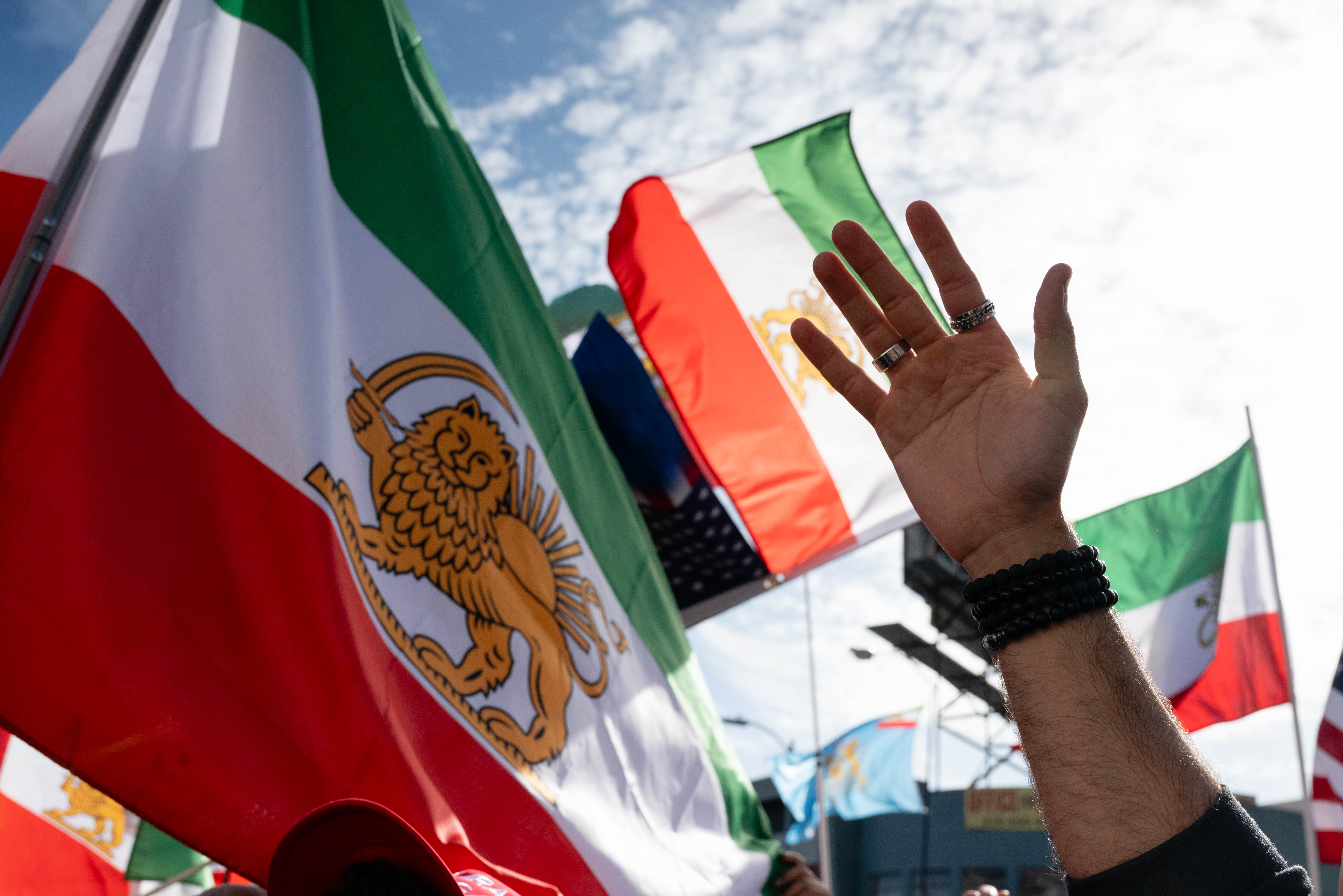
The blackout has made the task of reporting on Iran during this pivotal moment a significant challenge for journalists in exile. Abasian, who does research on Iran for the Committee to Protect Journalists, said that exiled reporters depend on encrypted tools, diaspora networks, satellite imagery, and open-source verification, while building long-term trusted relationships with sources to manage risk.
“Inside the country, reporters risk arrest, interrogation, or professional bans,” Abasian said. “Outside, exiled journalists grapple with digital security threats, online harassment, and psychological pressure stemming from threats against family members still in Iran. Verification becomes especially difficult amid deliberate information blackouts and the flooding of social media with state-backed narratives.”
Omid Rezaee is an Iranian journalist writing for the German newspaper Zeit, with over 10 years of experience reporting for Persian media. Unsurprisingly, he said it has been extremely difficult to reach people inside the country during this time.
“I know the political scene. I know civil society activists. I have a huge network all across the country, but the blackout means I have no access to any of them,” he said.
During the first days of the shutdown, Rezaee explains, neither he nor other journalists in exile had any independent information, so they were forced to rely on state media, which is unreliable. A few rare phone calls from people leaving the country, and limited satellite access, helped them get a rough picture of what was happening inside the country, but not enough.
“With that kind of internet shutdown, exile journalism just shuts down because you’re completely cut off. It is a new experience. I guess if it happens more often, we’ll find ways to adapt, but for now it’s just unbelievable,” Rezaee said.
Roozbeh Bolhari is an Iranian journalist based in the United States who has worked for outlets like Radio Farda, Voice of America, and now Iran International. Bolhari similarly describes being unable to communicate with the extensive network of sources he has in the country.
“It is very difficult. I barely had any connection with them during this time. Even now, as we’re talking, I’m worried because no one has any information about them,” he said.
Bolhari explains that the current unrest feels bigger and longer than past protests, and many people are afraid to speak. As some connection has been slowly re-established, some people have reached out to Bolhari to describe what they have been experiencing.
“Some of them are very cautious about sharing what happened or what they experienced during the protests,” he told me. “There are warnings that the government is tightening its monitoring of conversations and what people write. Some activists outside Iran are trying to guide people on how to write, how to talk, and how to send information out safely.”
Even though these journalists are outside Iran, the relative safety of the West has not made them immune to transnational attacks coming from all sides: from intimidation and cyber harassment, to threats to relatives in Iran and in some cases physical attack plotting.
Mortazavi told me that in the past few days she has experienced relentless online harassment, including coordinated smear campaigns from bots and trolls, and even a physical threat for an in-person event she was scheduled to attend.
“It’s ongoing, and it’s a challenge for those of us trying to cover things from the outside when communications are blocked. We may be somewhat safer from the regime, but our sources inside Iran are in danger,” she said. “Simply being in touch with us can be treated as a crime. So we worry about putting people at risk, and also about our own safety because these threats are meant to intimidate us.”
These methods of transnational repression are not only carried out by the Iranian state and its proxies, but by a variety of state and non-state actors.
The UN, the UK government, and the Canadian government have identified the Iranian intelligence services and third-party agents hired by the regime as responsible for many attacks against journalists. But journalists in exile also report harassment from parts of the anti-regime diaspora, including activists or opposition supporters who accuse journalists of being sympathetic to the regime.
“These smear attacks don’t just come from emotional individuals. They sometimes come from bought accounts and troll accounts with very clear agendas,” said Mortazavi, who added that the mental weight of these attacks have led her to sometimes self-censor herself to avoid violent backlash. Some of her colleagues, she said, have stopped doing in-person events entirely due to fear of physical violence.
Rezaee says he has experienced so much digital harassment that it almost feels normal. For him, these come in the form of daily phishing attacks and attempts to hack social media and email accounts.
“This is happening all the time for us and nobody even mentions that any longer because it's just daily life,” he said. “I wouldn’t say it affects my work but it’s a mental load and does affect my life.”
Rezaee explains this atmosphere leads to deep mistrust within the diaspora and it becomes difficult to reach people because "nobody knows if you are a spy," which hampers the ability to gather information and communicate with sources.
When professional journalists are silenced or intimidated into silence, explains Rezaee, information vacuums are filled by political stakeholders and conspiracy theorists who do not rely on facts but gain influence because fact-based journalists are sidelined.
“These kinds of internet shutdowns stop the information flow, and people who don’t report based on facts win,” he said. “We lose our instrument as journalists because we don’t have the facts to counter them.”
Despite these shutdowns, journalists abroad are still trying to do what they can to communicate with people inside the country, report on what is happening, and inform people inside the country.
According to Van Santen, 70% of Zamaneh’s audience is located inside Iran, and reaching out to them is indispensable to the outlet’s mission. Many Iranians use VPNs or mirror sites to access blocked websites like Zamaneh’s. But, when the entire internet was restricted, van Santen and her team decided to revert to old-school methods of broadcasting.
"We’ve started a daily news radio broadcast via shortwave radio so people can still listen to our programmes,” she told me. “Shortwave is very difficult for the regime to obstruct. They can try jamming it but won’t be successful in totally obstructing the signal.”
Van Santen told me that information is often obtained from individuals who physically travel out of the country, carrying footage and reports on their phones to be shared once they reach safety.
Rezaee said that tech savvy Iranians can sometimes get around these restrictions and get information outside. He said he has been able to make contact with these people. But if he hadn’t, he was thinking of other ways of reaching those in Iran.
“I was about to fly to Turkey or to Azerbaijan, go to the border, just to talk to people crossing. That was really on my mind, because those people come out with information,” he said. “The idea was to go to the airport in Istanbul where many Iranians arrive, and just talk to people. Even if only 5% of them talked to us, we would have something.”
In every email we send you'll find original reporting, evidence-based insights, online seminars and readings curated from 100s of sources - all in 5 minutes.