

News
Journalists across Africa are struggling to stay afloat under the weight of their own stories


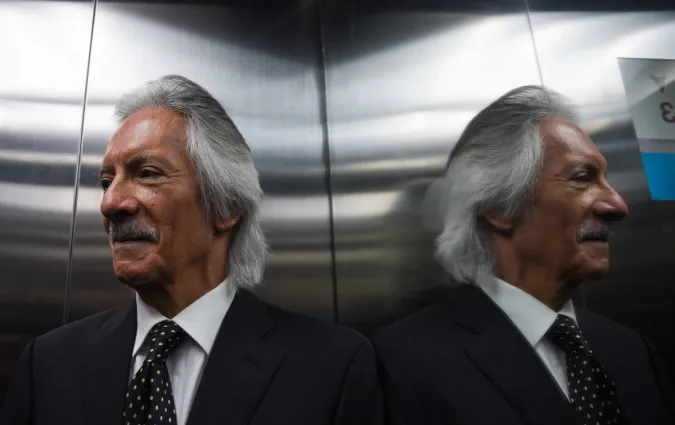
Salvadoran journalist Carlos Dada, co-founder and editor-in-chief of El Faro.
Carlos Dada is one of the most respected Latin American journalists worldwide, but he can’t practice journalism in his own country.
Founder and editor-in-chief of the Salvadoran newspaper El Faro, Dada now lives in exile. Harassment by President Nayib Bukele forced El Faro to move its headquarters to Costa Rica, and Dada and his colleagues to leave as well.
As a reporter, Dada has written excellent feature stories like this long article, which sheds light on the assassination of Archbishop Óscar Romero, a murder which shook El Salvador in March 1980 and was the prologue to the country’s civil war (1980-1992).
As the leader of El Faro, Dada has edited and published dozens of investigations that have exposed the corruption of governments of all colours, and their negotiations with gang leaders who have murdered thousands of Salvadorans since the end of the civil war.
This brave and rigorous work has earned Dada countless accolades, from the Maria Moors Cabot Prize from Columbia University in 2011 to the World Press Freedom Hero award from the International Press Institute in 2022. Unfortunately, it has also led to him being spied on by his own government and receiving death threats, in an episode that affected most of his newsroom.
A few years ago, Dada saw a spying drone enter his apartment for a few seconds before heading out. He liked to write with the windows open, looking out at the San Salvador volcano. Thousands of miles away from those windows, he faces the biggest challenge of his career: leading a team of reporters scattered around the world, covering his own country from afar.
Carlos Dada was in Oxford on Monday 9 March 2026 to deliver the Reuters Memorial Lecture, the most important event hosted by the Reuters Institute each year. A few weeks before the event, I spoke with him about El Faro's history, the threats against its reporters, and how they continue to work under incredibly difficult conditions. Our conversation has been condensed for brevity and clarity.
Q. El Faro was founded in 1998 as an exclusively digital newspaper. Why?
A. We love being told that it was kind of visionary and groundbreaking… but that’s actually not true. My partner Jorge Simán and I were returning from exile. El Salvador was emerging from the civil war, and we thought that this new democratic era needed a different kind of journalism: one that was more like the one Jorge and I had seen in other countries, especially in the United States. It was the correspondents from US newspapers who were telling us what was happening in El Salvador at the time.
But here’s why we were not really visionaries. As far as we know, El Faro was the sixth digital-born newspaper launched in the world, and the first one launched in Latin America. But we only launched an online newspaper because we didn't have enough money for a print edition. In fact, we were so visionary that in our first editorial, we promised our readers that we would have a printed edition as soon as we could.
Q. What was journalism like in El Salvador before El Faro?
A. Journalism was still shaking off the kind of practices seen during the Civil War: reproducing military reports or political press releases. There was no room for investigative journalism or experimentation. No one published the kind of long-form articles El Faro would become famous for.
But many of those journalists were aware that the time had come for a new kind of journalism, and my generation began to take over other newsrooms too.
Q. Spain went through a similar process a few years earlier after the end of the dictatorship.
A. That parallel is very accurate. This kind of effervescence permeated all of society, not just journalism. It was a wonderful moment in El Salvador in other fields too: culture, the arts, society… Unfortunately, we now see that era as a parenthesis. We don’t know how things will evolve in the next few years. But we do know what we’ve left behind: those years of democracy and freedom of expression.
Q. What obstacles did you have to overcome in those early years?
A. The biggest challenge was learning to do the kind of journalism we wanted to do. Every generation in El Salvador has been cut short by coups and revolutions, and this resulted in the absence of a journalistic tradition. We had no mentors, so we had to learn through trial and error. We had a big advantage: in the beginning, no one read us, so the price we had to pay for our mistakes was much lower. But we always evaluated our work very critically, as if the entire world were reading us.
Q. Do you still assess your work in the same way?
A. Of course. We do it in a weekly meeting that we still hold today. We all get together to discuss what we’ve done wrong and what we could improve, and this turns into a very rich journalistic dialogue that has helped us grow.
Q. I've read that Nayib Bukele tried to buy El Faro before entering politics.
A. That’s right. I knew him and his business partner, Peter Dumas, and one day they invited me for coffee. Bukele was already planning to enter politics at that time, but I didn’t know it. They told me that they liked El Faro a lot and that they wanted to buy it. I told them that I was grateful, but that El Faro was not for sale.
They both told me, very generously, that they weren’t interested in taking over the newspaper's newsroom and that I could remain as editor. They were only interested in buying 51% of the company. I thanked them for their generosity and simply changed the subject. Dumas is now the head of the intelligence services and is responsible for having spied on dozens of journalists from El Faro.
Q. I imagine you’ve thought a lot about that conversation in the past decade. Why do you think Bukele wanted to buy El Faro?
A. Bukele’s conception of power is based on controlling media platforms. El Faro already had a certain prestige back then. Bukele himself said El Faro was the only newspaper worth reading in El Salvador. When I refused to sell it to him, Bukele started a television channel. I’ve thought a lot about that conversation. My impression is that even then, Bukele saw he needed a credible platform to promote his political project.
Q. Bukele was one of the first politicians to use Twitter as a campaign tool. He started doing it even before Trump. How did you experience the emergence of this kind of political leadership?
A. When Bukele entered politics, people perceived him as a breath of fresh air. The country was still dominated by the same political elites who had been involved in the civil war, and Bukele reached out to a generation that spoke a different language.
In Bukele's first presidential campaign in 2019, he held only two public rallies; the rest of his campaign was conducted on social media. One of the country's leading intellectuals said, "Trolls don’t vote," and argued that it was impossible for this man to win the election. We never heard from this intellectual again.
Bukele knew things about Salvadorans that that older generation didn’t know. He even won his first election in 2019 in the first round. He received more votes than all the other candidates combined.
Q. How do you report on a politician who has that direct access to the public through social media?
A. We had an advantage over our colleagues in daily newspapers and television. We have never paid attention to daily news. We report on longer stories we decided to investigate ourselves.
This came to be a blessing with Bukele’s arrival, because one of his key strategies is to dominate the news agenda. When he has a minor problem, he shifts everyone’s focus elsewhere, creating another political event. We understood his modus operandi very early on. When Bukele wants to direct your attention here, it’s because he’s hiding something elsewhere.
Q. El Faro has investigated Bukele's negotiations with criminal gangs. Many leaders in the region ignore this and imitate Bukele’s rhetoric and policies. How do they cope with the dissonance between what El Faro reveals about Bukele and this public image?
A. It’s very frustrating, but it’s part of the job. I often say that Watergate was the worst thing that could have happened to journalism.
Q. Why?
A. Because it makes everyone believe that if they do a good job, things will change immediately, and this is the exception, not the rule. Journalism is always frustrating, but even more so in a country like El Salvador and under a dictatorship as peculiar as Bukele's.
In El Salvador, there is no longer any political opposition. Critical voices have been silenced one by one through imprisonment, threats, or coercion. We are not alone, but we are not many. That is why things often don’t work out.
When someone publishes something important, this should be subject to public debate and people should hold power to account for it. But when you don’t live in a healthy society, when citizens are oppressed by the dictatorship, journalism’s impact is not as big as it should be.
That said, it’s important to acknowledge that Bukele has dismantled criminal gangs in many communities of the country. This is true and is probably the most significant change for the people in those communities. That shouldn’t hide the price we are paying for this, and all the lies behind what’s presented as an undeniable triumph. But that fact is still true: many communities who lived under the yoke of criminal gangs no longer do. If you look at the polls, this is Bukele’s only achievement and the one that underpins his overwhelming popular support in El Salvador.
Q. Your journalism has been less impactful than you’d like. But you have still seen some small impact…
A. Of course. The most visible one came in May 2025. We decided to launch a magazine, and we opened the first issue with an interview with two leaders of Barrio 18 [one of the main criminal gangs in El Salvador]. We decided to publish this as a video interview, something we don’t usually do. These two gang members explain how they were released by the government and explain the details of the agreement.
They say, for example, that officials from Bukele's government told them: “Do whatever you want, but we don’t want to see any bodies. Without a body, there is no crime.” ¡
This phrase went viral, and it had a tremendous impact. Six million live in El Salvador, and that video was seen by more than two million people. This is insane, and it’s the first time Bukele and his team have been completely caught off guard. They didn’t know how to deal with this because it was so big, the snowball effect was so massive…
Q. How did they react?
A. Until then, every time we published a news story about their negotiations with the criminal gangs, they said we were making it up. But there’s one thing undeniable about that video: we are speaking with two gang members who are free and could be in jail. This first fact neutralises their usual reaction.
Q. What happened next?
A. Repression got worse and forced many people into exile. Not just the El Faro’s journalists but so many independent reporters and human rights defenders.
But our investigations have also had a huge impact in the United States. Part of the secret agreement between Bukele and the gangs was to illegally and secretly release their top leaders. At El Faro we documented these releases. These were leaders whom the United States was trying to extradite. In the end they were captured in Mexico and transferred to the United States, where they are still awaiting trial.
This story is still relevant because Bukele's friendship with Trump has led the Justice Department to request the dismissal of these cases. Big US media outlets are still reporting on this story.
Q. El Faro has suffered brutal repression from Bukele in recent years. How has this repression evolved since 2019?
A. Bukele broke with us on 9 February 2020. On that day, he took over the Parliament surrounded by soldiers, and we condemned his actions in an editorial under the title Maneras de dictator (Dictatorial ways).
Since then, Bukele has shown clear signs he doesn’t like what we do. First, they banned us from press conferences and fabricated an episode of sexual assault [which both El Faro and the alleged victim strongly deny]. Then, Bukele showed my picture on national television in the middle of the pandemic and accused me of money laundering.
Then came the tax audits, and we feared the government would seize El Faro and transform it into a platform for spreading fake news. That’s why we decided to move the company to Costa Rica. We continue to face those tax evasion lawsuits in El Salvador, but Bukele can no longer touch El Faro because we put it out of his reach.
Then came everything else: the police visited our houses, we saw people waiting outside, strange people sitting in the cafes where we met our sources. Drones came flying in through our windows, and we were spied on with Pegasus. Up to 22 of the 30 journalists of El Faro had Pegasus on our mobile phones for a year and a half. That espionage was defined by the Citizen Lab from the University of Toronto as “obsessive.” The amount of money they invested in this is difficult to explain.
Q. You presented a lawsuit against NSO, the Israeli company that manufactures Pegasus, and that case is still in court, right?
A. Yes. We presented a lawsuit against NSO in California with the help of the Knight First Amendment Institute from Columbia University. In previous trials, the company has said that it only sells its software to fight terrorist organisations.
A judge dismissed the case, arguing that we should file the complaint in Israel or El Salvador. But our lawyers have filed an appeal that is still pending. For us, the lawsuit itself is already a great victory, because it has put the people who attacked us on the defensive and has shown that we are not cowering and trembling with fear, but fighting back. This is very important to me.
Q. Journalists in Nicaragua and Venezuela have had similar experiences. Is there anything you can learn from them?
A. We are in constant contact with our Nicaraguan and Venezuelan colleagues, who have learned to cover a country from exile. For us, this is a big challenge, and we feel an obligation to take what our colleagues have learned and build upon that knowledge so we can pass it on to other colleagues who may find themselves in this situation in the future.
Q. What is the biggest challenge you face right now? Keeping your sense of reality?
A. Absolutely. Our main risk is becoming a newspaper of exiles for exiles, and the first step to avoid that risk is recognising that we need to maintain contact with our country. We need to continue being useful to those who live there. Otherwise, El Faro has no purpose.
The most important thing journalism can do in a dictatorship is to tell the truth. Truth is a big word. But truth in journalism requires applying a method to explain things happening outside our own minds. The problem for people in exile is that they continue to live in a country that no longer exists: the country they left behind.
Q. How do you explain these standards in an environment with so many partisan and self-interested voices?
A. I don’t know how to answer this. I don’t want to sound complacent, but we are not in a popularity contest against these regimes. I understand it’s important that our work has an impact. But I’m getting a little tired of hearing everywhere that this impact is more important than the work itself.
Even traditional allies of journalism are saying this. Even they are now arguing that impact is more important than the work itself. This means they are not interested in helping us have a greater impact, but rather in replacing us with figures who don’t need to rigorously apply journalistic methods and who can therefore say things with greater immediacy and visibility.
At El Faro we are now doing journalism without resources because a dictatorship has cut off our financial channels. We are doing journalism from exile, and we are being asked to ensure that the work we are struggling to do has a huge impact. And since it is not having the impact that some of our traditional allies would like to see, they now want to replace us with what they call content creators.
As I said, I don’t want to sound complacent. At El Faro we’ve never shied away from experimenting. For example, we were slow to get into TikTok. But I told a team of young people: “Show me a project with our DNA on TikTok and we’ll create an account there.” And these talented young people presented a project which I believe is allowing us to do exactly that.
Q. Journalism in Latin America has suffered a huge funding crisis in the last two years. How has this affected El Faro?
A. The USAID cuts were very painful for Latin American journalism. At El Faro our own constitution prohibits us from receiving any money from the United States government. But the cuts ended up affecting us indirectly. For example, many of our colleagues who lost their USAID funding knocked on the few remaining doors, and suddenly there are fewer resources available for more people.
Q. You often say that you conceive of your work with a certain historical perspective: the importance of recording what happened in this period for posterity.
A. That’s important. But judging by the way the world is going, there’s little doubt about how short-sighted humanity is. We’ve forgotten where these fascist populist movements lead. And we know this perfectly well because it’s in the history books!
The first lesson of history is that every period ends, and that’s important for us. Because when this period of our history ends, I would like to believe that our journalism will remain, and that requires us to remain committed to rigour and not fall into the vulgar exchanges to which we are invited every day. That is the only way to keep our legacy safe.
Q. Journalists in the United States are now facing a dark period. What advice would you give them?
A. During our early years, we constantly looked at journalism in the United States and Europe for inspiration. Now, I think we operate in different worlds.
Journalism in the United States has ceased to be an inspiration for many of us. And not just because of what happened in Gaza but also because, faced with the threat of Trumpism, many media outlets have chosen to capitulate.
What would I say to journalists in the United States now? I would tell them two things: first, don’t quit because you’re necessary; then don’t make any concessions, because making concessions is even worse than quitting.
I would also tell them: pay attention to the tweets, but not too much, because Trump’s tweets (like Bukele’s) are often a distraction. Finally, I would tell them not to normalise what shouldn’t be normalised, because this is another fundamental part of these leaders’ strategy: to normalise what seemed scandalous to us a few years ago.
Q. Has the internet given journalists more or less than it has taken away?
A. I don’t believe technologies are moral. What’s moral is how we use them and how we regulate them. The internet has been one of the greatest revolutions in human history. Without the internet, El Faro wouldn’t exist. The internet has put entire libraries in the palm of our hands and made our lives easier in many ways. It’s what has allowed us to know what’s happening in Gaza despite the media blackout. The problem lies elsewhere.
The problem isn’t just how we use the internet, but how we allow it to be used. This has to do with who enables things: those with economic power – the owners of these tech companies – and those with political power, who are the ones who regulate them or refuse to regulate them. This is what has turned the internet into a nefarious space that is leading us toward this terrible global nihilism. We are becoming disconnected individuals. It’s impossible to build better societies this way.
In every email we send you'll find original reporting, evidence-based insights, online seminars and readings curated from 100s of sources - all in 5 minutes.