

News
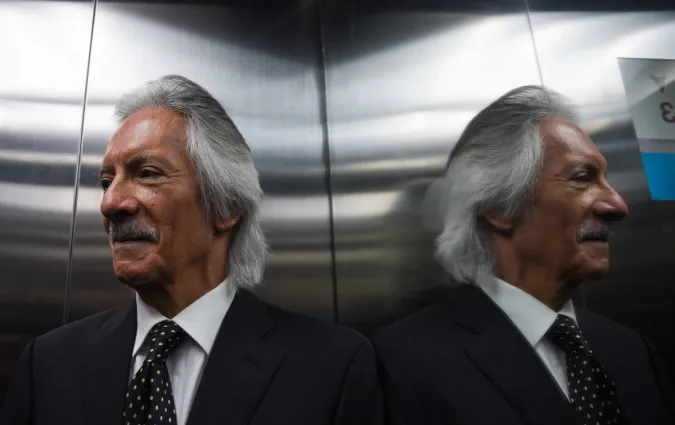
Anatomía de una campaña de odio: Así fue la ofensiva en redes contra José Rubén Zamora y su familia


A woman with a mock-up of a gunshot bullet wound on her forehead looks on during a rally in support of nationwide protests in Iran, in Rome, Italy, January 13. REUTERS/Francesco Fotia
On 8 January, thousands of accounts sharing scenes from the streets of Tehran went dark. After 12 days of escalating anti-regime protests, the authorities had cut internet connection, isolating Iranians from each other and from the outside world. At the time of this writing, the blackout has not yet been lifted.
And yet some news has trickled through, with reports of shooting in the streets and mass casualties of protesters, killed by regime security forces. There are still many unknowns, including the number of the dead. According to UN Special Rapporteur Mai Sato, the victims number at least 5,000, but could be as many as 20,000.
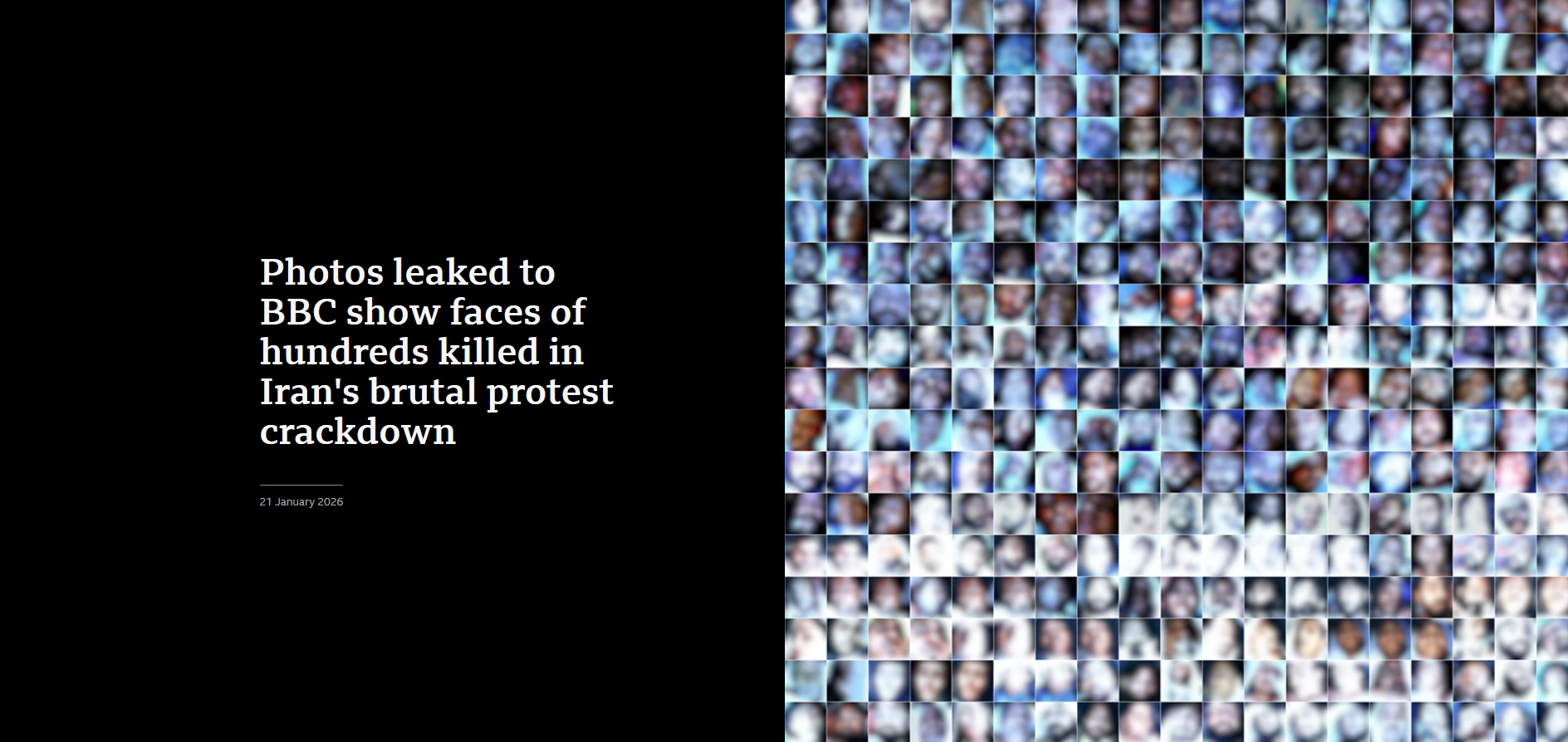
In this information vacuum, the work of journalists using open-source techniques is crucial in extracting reliable information from the few images available on social media. A BBC News investigation led by BBC Verify confirmed hundreds of likely victims of the regime's protest repression from photographs leaked from a Tehran mortuary.
One of the authors was Shayan Sardarizadeh, a senior journalist at BBC Verify. I spoke to Sardarizadeh to ask how his team carried out the mortuary investigation, how they’re reporting on Iran in the midst of an internet blackout, and how his work has changed since 2023. Our discussion has been edited for brevity and clarity.
Q. How did you go about your investigation?
A. A few days before the story was published, a couple of videos came out showing the mortuary in South Tehran, where we think most of the people who were killed in the protests were taken. In those videos, you see bodies laid out in the open in the courtyard of the mortuary, as well as inside a couple of warehouses.
It gives you an idea of the number of people killed. But these were just the bodies of people killed in Tehran and its suburbs. We counted approximately 186 bodies in one video and about 178 in another. Since then, more videos have come up. We published a story about those videos and the number of bodies we were able to confirm. Then we got a message from somebody who said they could show us photos that were captured in that mortuary. I can’t say more than that, because we could put somebody at serious risk.
Q. What happened then?
Once we got hold of those photos, we started looking at them and tried to see whether they matched what we’d already seen. All of those bodies had serious injuries, which were consistent with what we were hearing and seeing in other videos that we verified, of protesters being directly shot at. Most importantly, many of them had a piece of paper on them with a date (9 January), and this matched with what we knew, because 8 and 9 January are the two nights that were the climax of these protests, and when most of the security forces’ killings of protesters happened. So it made sense that these were people who most likely were protesting the night before, and then had been shot at and died at the scene.
The overwhelming majority of them had names on them, but the names were not immediately legible. About 28 of them did have names that we could read. And then we tried to compare those names with some names which emerged over the past few days on social media of people who have been killed or had burials. At the point of publishing, we had found a match for five of them, and now we have more.
At the end of it, from the very little that we could see of those bodies and the surrounding areas, we matched that with another piece of video that we had verified before, filmed inside the mortuary, and putting all of those together, we were pretty confident that those photos were genuine and showed the bodies of people inside that mortuary in South Tehran who most likely were killed during the protests.
The number of photos that we received was 392, but the actual number of individual people that we were able to verify was 326, and that’s because some of the bodies had such serious injuries and were so disfigured that it was impossible to identify them. When loved ones would come into the mortuary to try to identify the bodies, they would take multiple photos, particularly the ones where the severity of the injuries meant it was very difficult for the loved ones to identify them. They would take photos from multiple angles. We had several individuals who had two or three photos taken of them.
Q. How did you handle coming into close contact with these distressing images?
A. The images were graphic and distressing, and every member of the team had to look at them. It’s not nice. But in this particular team, we handle quite a lot of graphic material. And there’s a built-in process about how we work with it.
A lot of the videos and images we work with are from conflicts, such as Gaza and Ukraine, mass shootings, and terrorist attacks. Videos of those incidents are shared on social media, and then the team will have to try to authenticate them. So we are used to that. But it’s a story that needs to be told. We look at those images so normal people don’t have to, and we can relay the story to them.
Q. What’s the process you follow to support members of the team when you’re working with large quantities of distressing material?
A. First of all, we made sure everyone was okay with working with this material. As I say, the majority of people in this team work with that type of material all the time. We made sure that one person was not looking at all of the bodies. And then we tried to limit the time that people had to look at those particular photos.
And then, after the story was done, we made sure to give ourselves a little downtime, try to clear our heads and get back to work. But, we are not the story. It’s our job. We do this for a living. We are more than happy to cover these sorts of stories, as long as it's an important story that people need to be informed about.
Q. Aside from that particular story, how are you getting information from inside Iran during the current internet blackout?
A. Up to 8 January, we were getting quite a lot of visual evidence of these protests and how the authorities were responding to them. Since then, the flow of videos has come to an almost complete stop.
There are brief periods, half an hour to an hour, when some people in Iran can connect to the internet. As you can imagine, there’s quite a lot of footage that people still have on their phones that they haven’t been able to post. So they use those brief periods of respite to share as much as they can, send us new videos, eyewitness accounts, and information.
And then there’s a very small minority of people who have access to Starlink [a satellite internet service operated by Elon Musk’s SpaceX]. Those people are a tiny minority, because getting hold of Starlink terminals and being able to afford them is not easy, although, apparently, it’s now free [the company reportedly waived monthly subscription payments for users inside Iran]. They also take an enormous risk, because owning Starlink connections in Iran is a crime. You could go to prison for about two years.
Once this blackout is lifted, we anticipate there’s going to be a torrent of videos. There’s a lot that we don’t know about. What happened on those two or three fatal nights, from 8 to 10 January? A trickle of videos is coming through. As soon as we get them, we work with them and verify them.
But it’s become really difficult now to know the specific dates of these videos. Up until 8 January, we were keeping track of all the new videos that were coming through daily. Since then, it's become very difficult. Sometimes, the people who send us the videos give us additional information to help us. But we can still tell that these are recent videos that don’t look like the previous rounds of protests.
Q. What are the main misleading narratives you’re debunking right now?
A. The main one has been old or unrelated videos. At the peak of the protest, we were seeing videos from previous waves of protests in Iran or unrelated footage from other countries in the Middle East. This was shared by people I usually call ‘engagement farmers’, those who see a massive story that has quite a lot of interest, and then try to get on top of it and share unverified information, just because they're looking for clicks and clout.
The other aspect is that some people are using AI to enhance videos, make them a bit more dramatic. This is not necessarily misleading, in the sense that these are incidents that actually happened. People are just trying to make them a little more shareable for social media, which I can understand. But sometimes, AI can change the nature of the photo and make it a bit different to what it actually was.
The reality of what's been happening in Iran is horrific enough. So it’s best to just stick to what the real footage and images are showing, even if they are low-resolution. Using AI to turn them into something more high-res, more shareable, might actually alter and change some of the facts of that video or image.
Q. You are originally from Iran, right? Has this affected the way you carried out this work? Does it feel more personal?
A. I was born and raised in Iran and have lived in the UK for a long time. So yes, I’m Iranian-British. It does feel more personal. But at the same time, you have to be a professional, and you cannot let your emotions get in the way of doing professional journalism and telling the story.
What matters is the story and the people who are protesting and who’ve been killed. And you have to try and tell those stories without getting too emotional about it, obviously comply with the editorial policies of the BBC, and do it impartially and fairly. I’ve tried to do that. As I say, there’s a personal element to the story, but I’ve been covering protests in Iran since 2009, and I think over the years, I've got used to doing the job professionally while I’m at the job.
Q. Since you last spoke with us in October 2023, has anything changed in the world of fact-checking and verification?
A. A massive change. AI is now a major element when there’s a breaking news story. Back in 2023, although AI models existed, they were not as advanced as they are now, and they were not as easily accessible to everybody as they are now.
These models have become much better at producing very realistic, convincing videos, images and audio. It’s also become much easier for everybody to access them, often free of charge or for not that high a cost. The old videos, the out-of-context or unverified claims, those are all still there, but I think AI is now adding another massive element to the world of online misinformation and fact-checking. And it’s only going to get bigger. There’s no question about that as these models become even better and much more accessible to people around the world.
Q. What’s an example of this?
A. A good example is the 12-day war between Iran and Israel in June 2025. That was the first example of a major global conflict where we were seeing more misinformation being produced using AI than in traditional ways.
The number of AI-generated videos and images we were seeing that looked very convincing and misled people on platforms like TikTok, Facebook, X or Instagram, with millions and millions of views… That marked a new era in the way AI-generated content is being used in the wake of a major breaking news story, particularly when news organisations, especially Western news organisations, do not have immediate or easy access in a country like Iran.
As these models get more realistic, I expect it will become much more difficult to be able to distinguish AI-generated content from real content. And the problem will become bigger for all sorts of journalism, too.
Q. Has the way you work with different platforms changed, too?
A. In 2023, I was looking at all the major platforms like TikTok, Instagram, X and Facebook, and I still do. Obviously, it varies from story to story. For instance, in relation to Iran, Instagram is by far the most popular platform. If you want to get information from Iran, you have to be on Instagram. Iranians don’t tend to use Snapchat as much as Western audiences do.
So it depends on where the majority of the audience is from and what the platforms of choice are. But in general, to do this job well, you need to monitor all the major platforms that have tens or hundreds of millions of views. All of them are influential and reach huge numbers of people. But as I said in 2023 at the peak of the Gaza war, the best use of our time is to focus on content that is viral and reaching huge numbers of people.
If a video on TikTok has 2,000 views, I’m not sure it’s a good use of our time to focus on that, rather than a video that has 5 or 10 million views. And there are plenty of examples of very viral content on these platforms during breaking news.
Q. Some journalists working on news from Iran in the UK have received threats from the regime. Has this been a concern for you and your team?
A. Yes. All the Iranian journalists who work at the BBC have dealt with those types of threats, and it's something that’s been going on for quite a long time. It’s unfortunate and unjustifiable- But unfortunately for people who are Iranians or Iranian-British who work at the BBC and report on Iran, that’s something that’s been going on for a long time.
In every email we send you'll find original reporting, evidence-based insights, online seminars and readings curated from 100s of sources - all in 5 minutes.