


News
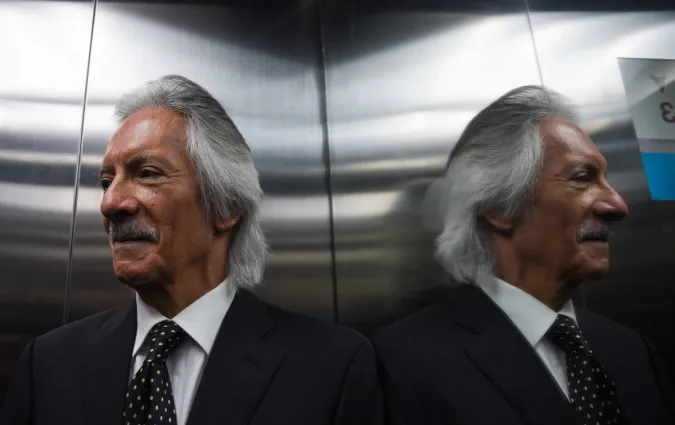
Anatomía de una campaña de odio: Así fue la ofensiva en redes contra José Rubén Zamora y su familia


The Reuters Institute's director, Mitali Mukherjee, with Simon Robinson, executive editor of Reuters, Emily Kent Smith, editorial director of podcast network Goalhanger, and Kamal Ahmed, executive editorial director for the UK and Europe at Fortune
How can news organisations best understand, relate to and serve audiences in a changing news environment? In light of the findings of the Digital News Report 2026, three prominent media managers explored this question and more in a panel discussion at our London launch event.
Over 100 editors, researchers and media executives attended the event, which took place in London on Tuesday 16 June at Reuters’ headquarters. It featured a presentation by lead author Jim Egan and a panel moderated by the Institute's director, Mitali Mukherjee, featuring Simon Robinson, executive editor of Reuters, Emily Kent Smith, editorial director of podcast network Goalhanger, and Kamal Ahmed, executive editorial director for the UK and Europe at Fortune.
A central theme of the report this year is the growing “platformisation” of news consumption. For the first time, social media and video networks are, on average across the markets covered, more popular than both TV and owned news websites and apps as news sources. The significance of this shift is underscored by the diminishing influence of institutional journalism and the rise of a fragmented alternative media environment that includes news influencers and personalities. While these trends are increasingly pronounced on a global level, they are moving more slowly in places where news brands still maintain strong audience connections.
Against this backdrop of a fractured news ecosystem, a recurring theme of the panel was how to maintain and strengthen those audience relationships. Part of the answer lies in strategies that recognise audience fragmentation and accept that not all audiences want the same news proposition.
Goalhanger has been highly successful at understanding its varied audience through a portfolio of “The Rest Is…” offerings covering entertainment, politics, history, and more. Kent Smith suggested that one reason for Goalhanger’s success is that its offerings are off-beat, audience-specific, and not widely served elsewhere.
“Someone listening to hours of The Rest is History is an incredibly informed person, but they're perhaps not a news junkie,” she said. “All of our shows are almost individual mini-businesses and empires, so The Rest is History is a very different business to The Rest is Science, to, for example, The Rest is Entertainment, and they have extremely different audiences.”
Fortune, by contrast, is built around a very specific niche audience: one motivated by business success and by staying ahead of the curve, Ahmed said. Strategically, that means rejecting mass-volume, breaking-news coverage and instead optimizing the specialist touchpoints that their business-minded audience values.
“We have a really clear proposition to our audience, and then what we call full service provision,” said Ahmed. “Earned media is only part of what we do, so that's the material you see on Fortune.com and in the magazine, but we also do partnerships, events, and very importantly, newsletters, which we see as a way of giving people in communities specific material that is for them.”
For Reuters, the challenge of differentiation stems from the fact that it is a global, generalist brand, Robinson said. But the organisation is now beginning to think in terms of multiple audiences and communities rather than a single monolithic public. The strategic shift is from serving “everyone” to identifying and serving many distinct smaller publics, while preserving standards and trust.
“The mass audience offerings are harder to do because you can get anything that you want and a much deeper version of it online now,” explained Robinson. “Finding the more niche audiences and really dividing the audiences one by one is becoming more important.”
The speakers also discussed platform and product differentiation as a way to cater to slightly different audiences, or to the same people in different ways.
Fortune does this through its legacy magazine, website, but also partnerships, events and newsletters. Goalhanger also has a diverse range of revenue streams, from a multi-tier subscription model to events to branded t-shirts. “We’re platform-agnostic and eyes-optional,” Kent Smith said, describing Goalhanger’s strategy of being present on all main audio-visual platforms, and of producing video-podcasts that can still be easily consumed only by listening. “We need to be where our audiences are and we need to be able to give them choices and not restrict them,” she explained.
“We get deep engagement by the written word, but it would be silly for us to ignore video and audio,” Ahmed said. The reverse is also true, with Goalhanger now working to develop written offerings like newsletters to accompany the flagship podcasts.
“Social media is a very important part of what we do, but it's only one channel to our audience, and it's very difficult to monetise,” Ahmed said of Fortune. “We have nearly a million followers on Instagram, we're growing incredibly rapidly on third-party platforms, but actually, the .com, events, newsletters, and the magazine with subscriptions is where real value is,” he added.
The challenge of monetising social media content is particularly important given young audiences’ news habits. Legacy media organisations have tended to hope that the young audiences who watch their content on TikTok will eventually pay for a subscription once they can afford it, Robinson said. While this may be the case for some young news consumers, “I don't think it's going to happen in the way that we're used to historically,” he said. Robinson, who will soon take over news at Australian public broadcaster ABC, pointed to the same issue: “I don't think that people who are consuming videos on social media are going to turn into that mass audience who watch the 7pm news every night.”
The rise of personality-led brands and news creators is a major theme in this year’s Digital News Report. With more than a quarter of our global sample now getting news each week from creators, newsrooms are grappling with how to respond to this growing trend. Our data suggest these creators are widely seen as more entertaining and easier to understand than traditional news media, even as they are regarded as less trustworthy and impartial, news brands have a clear opportunity to experiment with audience development.
The popularity of news creators can also be seen as a good sign for the news industry, suggested Egan. “You might argue that given the hyper-competitive environment people are instantly in when they're on social media and video networks, actually news is doing quite well, given the range of more instantly gratifying other options that people have and ways of spending their time,” he said.
Goalhanger has excelled in creating a direct connection with audiences. Kent Smith said she recently received feedback from listeners that the Rest is History podcast feels like having a pint with experts. Kent Smith finds that people turn to creators when they want analysis from someone they feel they have that direct connection with.
“What a lot of what audiences are looking for right now, I think is authenticity, depth, and things they can't find elsewhere, so I think we have a real edge on that,” said Kent Smith. “For example, the people that watch our videos want to see [Rest is Politics presenter] Rory Stewart work out in real time how he feels about something.”
However, this can be a tricky field for some legacy news brands. Reuters, for example, is also relatively new to audience-facing content, having long been a B2B service.
“The challenge for us is to maintain our own journalistic standards, but to figure out clever ways of appealing to people where we're more relatable, maybe even more entertaining, and more accessible. If you can pull that off with the trust, then you're onto a winner,” said Robinson.
He also noted that legacy and public service media brands see an uptick in trust and engagement in times of crisis, such as during the COVID-19 pandemic or when there are natural disasters. “In those situations it's a question of life and death, and so engagement is very high, and also trust is quite high because you know the information matters,” he said.
“How do you take that and build out the awareness that actually news does have an impact on us individually and so trusted news is something to be sought out?” Robinson asked, in a question that resonated within the room and around the world as well.
In every email we send you'll find original reporting, evidence-based insights, online seminars and readings curated from 100s of sources - all in 5 minutes.
