

News
Anatomía de una campaña de odio: Así fue la ofensiva en redes contra José Rubén Zamora y su familia


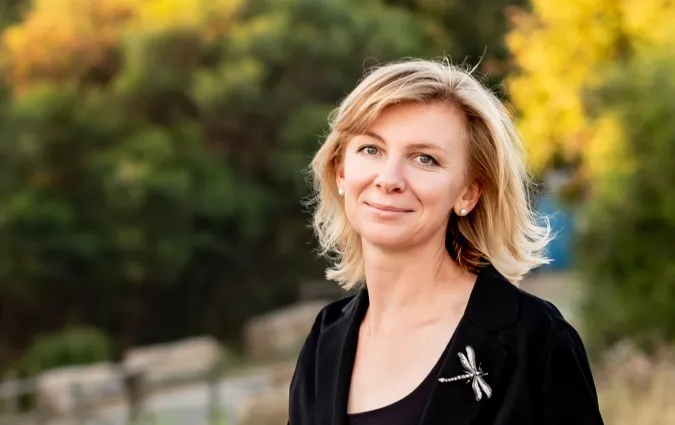
Kaitlin Yarnall, the National Geographic Society’s chief storytelling officer.
As shrinking newsroom budgets make ambitious reporting harder to sustain, a 137-year-old organisation stands out as a funder of global journalism. The National Geographic Society continues to support one of the world’s largest grantmaking programs for journalists, photographers and filmmakers.
Founded in 1888 as a nonprofit, with its very first issue of the magazine coming out the same year, the National Geographic Society was a grant-giving organisation and a media enterprise from the very beginning. Over the decades it added television, international channels, books and travel, growing into a sprawling media company while never losing its nonprofit status.
Today, the Society owns the iconic yellow border and the National Geographic brand, while the Walt Disney Company holds the license to run its consumer-facing media. Part of the profits from that partnership flow back into the nonprofit, helping fund its grants, research, and storytelling work.
The Society supports storytellers and researchers working on issues ranging from land, oceans and wildlife to histories and cultures, planetary health and space.
At the center of that effort is Kaitlin Yarnall, the Society’s chief storytelling officer. Yarnall joined National Geographic as an intern more than two decades ago, arriving as a trained cartographer, and rose through the ranks as the organisation expanded from a publishing powerhouse into a global network of independent storytelling.
Today, Yarnall leads the Society’s philanthropic work, supporting what she said is a network of roughly 600 active storytellers working across photography, film, writing and emerging formats. According to the Society, since its founding, they have awarded more than 15,000 grants ranging from about $10,000 to $100,000 to “explorers”, National Geographic’s term for the scientists, educators, researchers and storytellers it supports to investigate and document the world, across 140 countries. I’ve been a National Geographic Explorer myself.
Yarnall’s mandate spans both strategy and execution, overseeing the teams that fund storytellers – journalists, photographers, filmmakers and other creators focused on science, culture and the natural world – manage the Society’s archives and mapping work, and produce projects aimed at driving real-world impact. It is also, in part, a curatorial role, identifying the right person to tell the right story and ensuring that work reaches audiences through publications, exhibitions, screenings, or community platforms rather than remaining unpublished.
At a moment when newsrooms are contracting and freelance journalists are navigating an increasingly precarious information economy, Yarnall argues the Society’s work has never been more necessary.
I first encountered that work in 2017, at a National Geographic training for journalists in Kenya, where I met Yarnall. That meeting led me to apply for a grant to document two endemic and threatened snake species in Kenya, a project later published by National Geographic. In the years since, I have participated in several of the Society’s programs, including the inaugural Field Ready mentorship program, which pairs emerging storytellers with National Geographic production teams. Through the program, I assisted on a scene for Super/Natural, National Geographic’s Disney+ wildlife series narrated by Benedict Cumberbatch that explores the extraordinary ways animals experience and navigate the world.
I spoke with Yarnall about what it means to fund storytellers at a time of industry contraction, how the Society chooses which projects to support, and why the future of global storytelling may depend as much on who tells the story as on where it is published. This interview has been edited for length and clarity.
Q. Journalism globally is under significant financial pressure. How do you see the Society’s role in supporting independent storytellers today?
A. What we do is crucial. We are the world’s largest funder of individual storytellers, and I see that less as something to brag about and more as a reflection of the state of the industry. There are organisations that put more money into the field, but they fund institutions like television or radio stations or newspapers. We give grants to individuals.
I firmly believe that good stories are told by people. Platforms and distribution matter, but as those are shrinking and changing, the information economy is increasingly held up by contributors, freelancers, filmmakers, writers, and photographers. They need support, and that’s really the premise of what we do.
We over-index on visual storytellers, like photographers and filmmakers, largely because of our legacy and brand, but we also support writers and composers.
Q. What kinds of projects tend to stand out in the selection process?
A. We receive thousands of applications and we can fund less than 1% of them. I feel awful for all the people who put together amazing proposals, but we just can’t fund them all.
Sometimes, we’re looking for very specific types of stories. Recently, for example, we had a big request for proposals around freshwater stories in partnership with the Hilton Foundation. We were also interested in particular geographies, looking at specific regions in Sub-Saharan Africa, so that adds another layer of selection.
But even in our more open calls, I’m looking for originality. I’m also looking at the storytellers themselves. Is this person the right one to tell the story? Do they have the experience, the tools, the knowledge to do it?
And then above all else, it’s excellence. That’s what defines our brand through visual storytelling, but it’s also what makes the best stories and helps them go somewhere. What I don’t want is for us to fund work that just ends up on hard drives. We want the projects we support to have a home.
So while the right of first offer goes to National Geographic Magazine, the channels, and our digital platforms, we also ask applicants about their distribution plans. What are their hopes for the story? Sometimes that might be deep community storytelling in the place where the story is happening, or it could be exhibited. I really want to see that the storyteller has thought through how the story will live in the world.
Q. What gaps in the global storytelling ecosystem are the Society’s training and mentorship programmes trying to address?
A. I can point to specific parts of the world where we’d love to see more representation. I’m always looking for new talent from Southeast Asia, North Africa, and the Middle East.
You can also look at it in terms of the kinds of stories being told. Within fields like natural history, for example, I’d love to see different kinds of stories and perspectives.
In general, we’ve made a lot of progress in changing the kinds of storytellers and stories we support. A big share of the storytellers we fund are now telling stories from within their own regions and communities, which is really important.
Q. There’s an ongoing debate about who gets to tell certain stories, particularly around conservation in the Global South. How is that conversation shaping the Society’s approach to storytelling?
A. We believe that everyone’s story matters, and perspective is really important. I believe storytellers from all over the world should be telling stories about where they live and their communities.
At the same time, I’ll also defend storytellers from the Global South telling stories about the Global North, and vice versa. I think those perspectives can be really interesting, and I don’t want to limit who can tell which stories.
What we always look for are deep connections and deep roots. We don’t want people parachuting in and out. If you’re telling a story about a place or community you’re not from, we look at who you’re working with on the ground. How are you getting that perspective? How do you know you’re really understanding what’s going on? We always look for local collaborators and local field team members.
We also fund larger projects that are trying to build storytelling capacity in some of these regions. Africa Refocused is one example. It’s a partnership with the Nature, Environment and Wildlife Filmmakers, and it’s really about expanding storytelling on the African continent. We’re also partnered with Santiago Wild, which is doing something similar in South America, through our explorer Martín del Río. And we support Green Stories, a film incubator in India developing environmental storytelling across Asia.
We’re trying to put real support behind initiatives that are building capacity and capability across the Global South. We’re now bringing those programs together. There’s a film lab where filmmakers from Latin America, Africa, and Asia come together as a cohort and move across the Global South telling stories.
Q. Many of the issues your storytellers cover like climate change and biodiversity loss are becoming increasingly politicised. Has that changed how stories are reported or received?
A. I’d say our position hasn’t really changed. We’re a science-driven organisation. I often say our foundation is science and our superpower is storytelling.
Some of the pitches and applications we see have changed, though. The angles are shifting. There’s a bit more nuance coming through in how people are approaching these topics.
But in terms of what we fund and where we go, we’re staying the course. I wish I could say the situation is improving and that we don’t need to fund as many of these stories, but that’s not the case.
What we really like to fund are solution stories. Those are really compelling. Stories of resilience, stories of people responding to these challenges, and thinking through some of these big, existential crises.
Q. What have you learnt about the support storytellers need beyond funding?
A. We often hear from our grantees that the monetary support is exciting, but the other kinds of support are just as important, if not more.
One big thing is community. When you become an explorer, you enter into a network and connect with lots of different people. I’ve heard from many storytellers that this is one of the things they love most. They get to connect with scientists and others in the field. So if you’re working on a story about snakes, for example, you suddenly have access to some of the best herpetologists in our network, and that becomes really valuable.
We also bring people together. We have events and meetups at our headquarters, but also regionally. We have explorer hubs in Nairobi, Delhi, and Mexico City where people can gather and share ideas.
There’s also a lot of training and capacity building. That ranges from public speaking to leadership. We have equipment loan programs through our technology lab, so people can borrow cameras or other gear.
In many ways, we treat our explorer community like a talent network, almost like an agency. We also provide elevation opportunities. For example, someone might come to us looking for a speaker on a topic like snakes in Kenya, and we can connect them with the right person.
And once you’re an explorer, you can remain part of the community. We have some funding opportunities that are only available to our explorers.
Q. Documentary film, podcasts, and data-driven storytelling are all expanding. Where do you see the most interesting experimentation happening right now?
A. From a technology perspective, I’m interested in what people are doing in immersive spaces. Not necessarily VR headsets, but physical storytelling spaces. Projection mapping [a technology that projects custom video onto buildings and other real-world surfaces to turn them into dynamic visual displays], for example, is getting cheaper and easier to set up.
So what does it mean when immersive storytelling moves into public spaces? We’ve all seen those large-scale visual takeovers. [Examples include the Immersive Van Gogh Exhibit, which projects animated versions of Van Gogh’s paintings across walls and floors, the Festival of Lights Berlin, known for projection-mapped displays on landmarks and historic buildings, and the Vivid Sydney, which transforms parts of the city through large-scale light, music and projection experiences.]
It used to be reserved for high-end tech or very specialised environments, but now it’s becoming more accessible. As the barriers to entry come down, we may see a lot more experimentation in how stories are experienced collectively.
At the same time, I’m fascinated by audio. I keep waiting for the podcast bubble to burst, and it just hasn’t. People really love audio storytelling. There’s so much out there, but audiences still find the good stuff. It reminds me of when cameras became widely available and people thought it would dilute photography. It didn’t. People still seek out quality.
Audio is similar. We could turn this conversation into a podcast right now, but production value matters, and audiences respond to excellence. Still, what stands out most is that good stories rise above everything else. When it’s just someone in your ear, the storytelling carries the weight. Strong narratives, thoughtful editing, and careful production all matter, but ultimately it comes down to the story.
And there’s something almost primal about audio. It’s one of the oldest forms of storytelling. We’ve always told stories out loud, whether around a fire or to help someone fall asleep. That connection still holds. What’s changed is that now we can access it anywhere. That combination of deep roots and modern accessibility is what makes the medium so powerful.
Q. Looking ahead, what role do you hope the Society will play in shaping the next generation of global storytellers?
A. I think the storytellers I have the huge privilege to work with and to support are some of the best eyewitnesses we have. They are like ambassadors for us as global citizens. They show us what’s happening in the world. They bring us solutions. They bring us stories of hope.
Yes, they tell us what we stand to lose, but they also show us what we stand to gain and why we have to fight for some of these things.
So I hope we continue doing what we’re doing, but on a larger scale. I want to see more storytellers everywhere, especially in places where representation is still limited. I want to know what’s happening in Vietnam through a National Geographic storyteller. I feel like I have a sense of Nairobi because there are great storytellers there, but how do we build that level of storytelling everywhere?
Part of it is me speaking as an audience member, but it also matters for those communities. How do we build that kind of excellence locally? How do we keep investing time, resources and support into the places that need it most? That’s what I hope we keep pushing toward.
In every email we send you'll find original reporting, evidence-based insights, online seminars and readings curated from 100s of sources - all in 5 minutes.