


News
Life after SEO: How newsrooms are adapting to the AI search shift

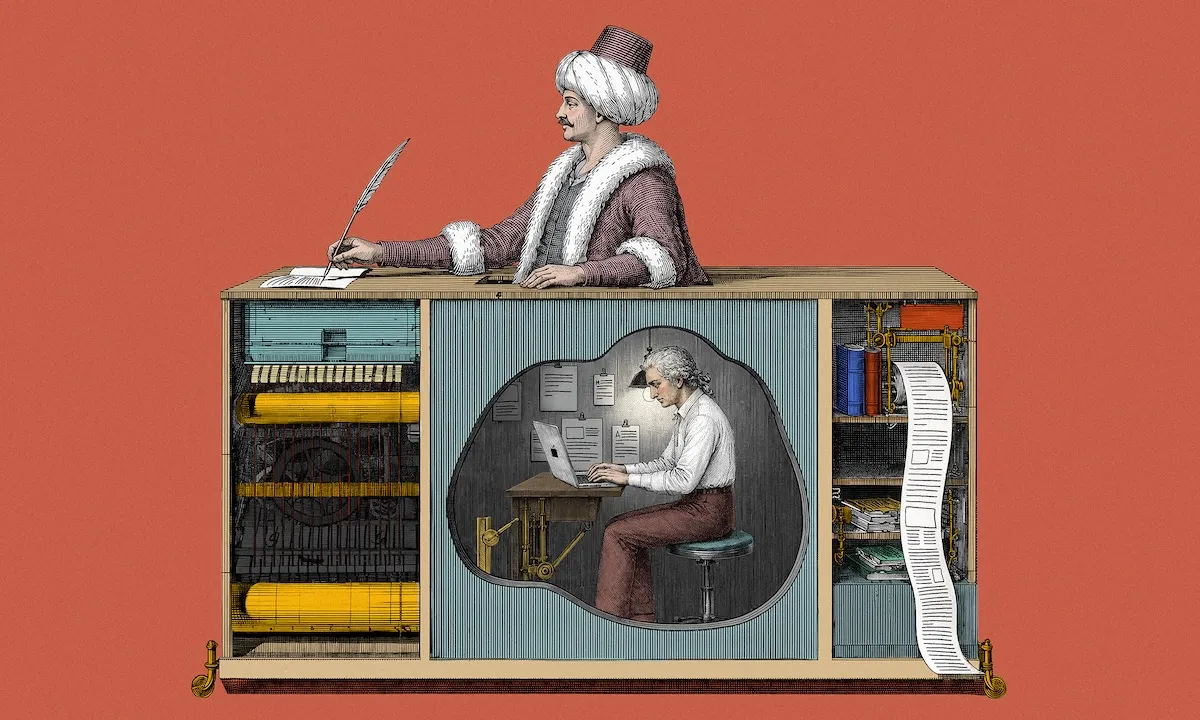
Illustration by Alfredo Casasola.
When looking to employ people to train their systems, AI companies are effectively looking for people to do editorial work: judging whether text is clear, accurate, well-structured, and natural.
Many AI training job descriptions ask contributors to ensure the “accuracy, clarity, and natural flow” of AI generated chatbot responses. Others ask them to “write detailed top-tier original content that demonstrates great creativity” to improve the performance of models. Some even seek applicants with professional writing experience such as journalists and editors.
Essentially, companies are looking for people who can write well, edit carefully, and make judgment calls about tone, audience, and quality – skills journalists use every day.
With Generative AI adding to the difficulties facing freelancers, it is no surprise that several journalists have been lured to use their skills to train the models that are restructuring their industry. I spoke to four freelance journalists in Canada, India, Germany and the United States who have taken these kinds of jobs. They explain why they did it, what this kind of work entails, and how they see their future in the world they are helping to create.
Darius Osborne was doing everything right to set up his journalism career. He wrote for his university newspaper, he worked in newsrooms as an intern over his summer breaks, and he even got a couple of scholarships while at Howard University in Washington DC.
But after he graduated he didn’t get an entry-level journalism staff role at a newsroom. The best job he could get was as a data labelling analyst for Meta.
“The process of applying for journalism jobs is completely horrible”, he said. “I was scrambling after college and I was just applying, applying, applying. I turned out to be one of the more blessed people.”
The process he describes led to a few freelance roles for outlets in the United States, but he was also recruited by Meta to work at training their AI model.
This job essentially consists of reviewing AI-generated videos, prompts or hooks, and labelling whether they meet quality standards by checking for clarity, visual artifacts, surreal-looking errors, or inappropriate content. While this job isn’t in journalism, Osborne said it’s allowed him to have the financial stability to continue freelancing in his free time.
“I feel like I’m not using journalism skills at all,” said Osborne. “It’s a job, like everybody else has to have, to be able to support themselves. Sometimes people aren’t able to work the exact job they hoped to get right out of college, but my goal is to work and stabilise myself until I get to that point.”
This is not a unique circumstance. In Canada, Khaleda Khan spent four to five months searching for entry-level media work after graduating in late 2024 before joining xAI as a trainer for the company’s AI chatbot, Grok.
Similarly to Osborne, throughout university she spent her free time freelancing and interning for major publications in the country. When she graduated, she was looking for any entry-level opportunity in media when her brother sent her a posting that matched her writing, research, and multilingual skills.
For the six months Khan was at xAI, her job centered on improving AI systems through a mix of transcription, linguistic review, and quality control or “being an editor of a robot.” For example, she corrected Grok’s transcription data across global accents, worked to train Grok to speak and understand languages beyond English (including Hindi and Urdu), reviewed AI-generated videos for visual and creative errors, and helped refine model outputs by identifying unnatural phrasing or tone issues.
Basically, she explained that they helped Grok’s goal which was to be maximally truth-seeking by checking sources carefully and avoiding misinformation, but a major challenge was handling breaking news and preventing hallucinations. A big part of her work involved tracing how the model arrived at its answers and correcting it when it made up facts, especially on high-stakes topics like politics, crime, and news.
“There were a lot of transferable journalism skills that I was really able to use in my everyday duties and I was surprised because the person who hired me also had a reporting background,” she said. “There were not really as many people in tech as there were people in the humanities. There were a lot of writers there.”
But these are not jobs that are just luring journalists that are trying to get on their feet. Bisma Farooq has been a freelance journalist in India for the past five years.
Even though Farooq gets a healthy amount of freelance work, it has not been enough to pay her bills. As she was looking for alternative ways to supplement her income while continuing her journalistic pursuits, a friend recommended AI training as a way to earn extra money, and this drove her to apply for a job as an AI training and data annotation for Invisible Technologies.
“Once I entered this, I had an existential crisis: What am I doing? What is this?,” she said. “It felt like I was talking to robots, and I thought, this is not my field, so why am I here? I went through that crisis, and somehow I started working there because I needed to pay my bills. I eventually kept working, but it did not sit well with me.”
She described the work as very technical, which she found very distinct from journalism: image anonymization, data annotation, language detection in Urdu and English, and flagging for incorrect language. The job was commission based: the more tasks you performed, the more money you could earn. She found the grind of competing for assignments and the lack of creativity to be exhausting. She is still enrolled in the service, but she is not working at it.
“I did not go with it. Your creativity goes down and your thinking ability goes down,” said Farooq. “It is very different from journalism. It is not what you would expect the job to be.”
Bettina Blass has been a freelance journalist in Germany since 2003. She has been noting a significant decline in writing assignments, which she attributed to the rise of AI. She got involved with the German AI startup tisix.io after they posted on LinkedIn that they were looking for a German journalist to help them in their work.
For a year and a half, Blass worked with the startup on an AI editing tool that automatically turns incoming press releases, police alerts or community notices into journalistic news articles. To achieve this, she had to write the rules or the prompts for the AI model to do this.
“Journalism is always written in the form of an inverted pyramid. As a journalist, you know that, but the AI tool does not, so you have to teach the tool to understand these things,” Blass said. “You need to know the basics of journalism in order to teach an AI tool how to write that way.”
In terms of pay, both Khan and Osborne found that taking these jobs with tech companies not only offer the financial stability that freelancing cannot, but that the salaries are more lucrative than journalism’s. However, Blass and Farooq had the opposite experience, working hourly for a startup and task-dependent, respectively. They both said their journalism freelancing work was usually better paid than their AI work.
“Journalism does not pay the same way. You are supposed to know the intrinsic value of what you do, and that is something you have to reassure yourself of, instead of seeing it reflected in your pay rate,” said Khan.
People across the industry are sharply divided over the role AI should play in journalism. Some think newsrooms should embrace this powerful technology while others think they should stay away from it. The journalists I interviewed for this piece grappled with the irony of using their skills to build a tool that might eventually eliminate the jobs they would be hired to do.
When Khan found out that her contract with xAI was not going to be renewed after six months in the company, she suddenly found herself caught off guard by how quickly AI had transformed the rules of the game.
“While I was working there, I was thinking, ‘Am I helping make something that will replace me?’ I still wonder about this,” said Khan. “I didn’t know I was going to be a freelancer competing with this. I didn’t know it was going to happen so quickly.”
Osborne says he often thinks he is training his replacement. But his decision to work in AI was a pragmatic trade-off between ethical concerns and the need for stability. He also views AI as a tool that can be used responsibly.
“As a journalist, I do have some problems with AI,” he said. “I also know we are moving into a different job market, and if I find myself stuck again and need a job, I now have experience in AI that can help me support myself.”
Moreover, his daily work has convinced him that AI is still far from matching the quality of human journalism. Being a human working in training AI, Osborne has realised that these tools are not as self-supporting as one is led to believe. There is still a lot of human labour that goes into these technologies.
“If this whole thing were a vehicle, AI would be the car and humans would be the gas,” Osborne told me. “We are definitely the fuel behind the whole thing. I do think it’s scary to imagine getting to a point where AI could be self-replicating, but I can see how far away we still are from that.”
Blass, the German journalist, believes that journalists should adapt their roles to AI, change how they work, or even consider different careers, rather than fight the machine. She also stresses that AI still needs a lot of human support to function. It is prone to biases, errors and hallucinations, so an imminent replacement is unlikely.
“AI won’t go back in the bottle so, as a writing journalist, it makes much more sense to learn now at the beginning of AI, how badly it will reach us,” she said. “I see it's no magic. Without humans who are working with it and who are training the tools, AI wouldn’t exist.”
Most media managers are no longer divided over whether AI should be adopted, but rather over the extent to which it should be embraced. The larger ethical and philosophical questions now concern what is natural, what should be automated, and how far machines should be pushed to resemble humans. Having worked closely in the innards of this technology, the journalists I spoke to generally agreed that AI cannot fully replicate the creativity, judgment, and human perspective that are central to journalism.
“After going through this AI training, I feel that the human touch – the real emotions and real feelings of a real journalist – will never be replaced by a machine. Robots will never replace that,” said Farooq.
Most significantly, however, none of the journalists I spoke to rejected AI outright. On the contrary, they said that being involved in training the technology and understanding how it functions at its core had made them more comfortable with seeing AI as an inevitable and lasting tool. They saw AI as something that can handle routine tasks, but cannot and should not replace the intellectual value of journalism.
Both Blass and Khan argued that AI is well suited to tedious work such as routine sports scores or press releases, which could free human reporters to focus on higher-impact journalism. In their ideal (and perhaps idealistic) vision, AI will reshape journalism in ways that are positive and collaborative, rather than purely disruptive.
“Journalism is already in this weird transitional phase, where not many people are reading, but people do want content, and journalism is not the same as content,” said Khan. “It is going to revolutionise how we use AI for audiences, not just how we use it in journalistic practice itself and, as a result, we may need to bridge the engineering and editorial mindsets.”
In every email we send you'll find original reporting, evidence-based insights, online seminars and readings curated from 100s of sources - all in 5 minutes.