


News
Anatomy of a hate campaign: How a few powerful actors targeted an editor to frame journalism as a crime

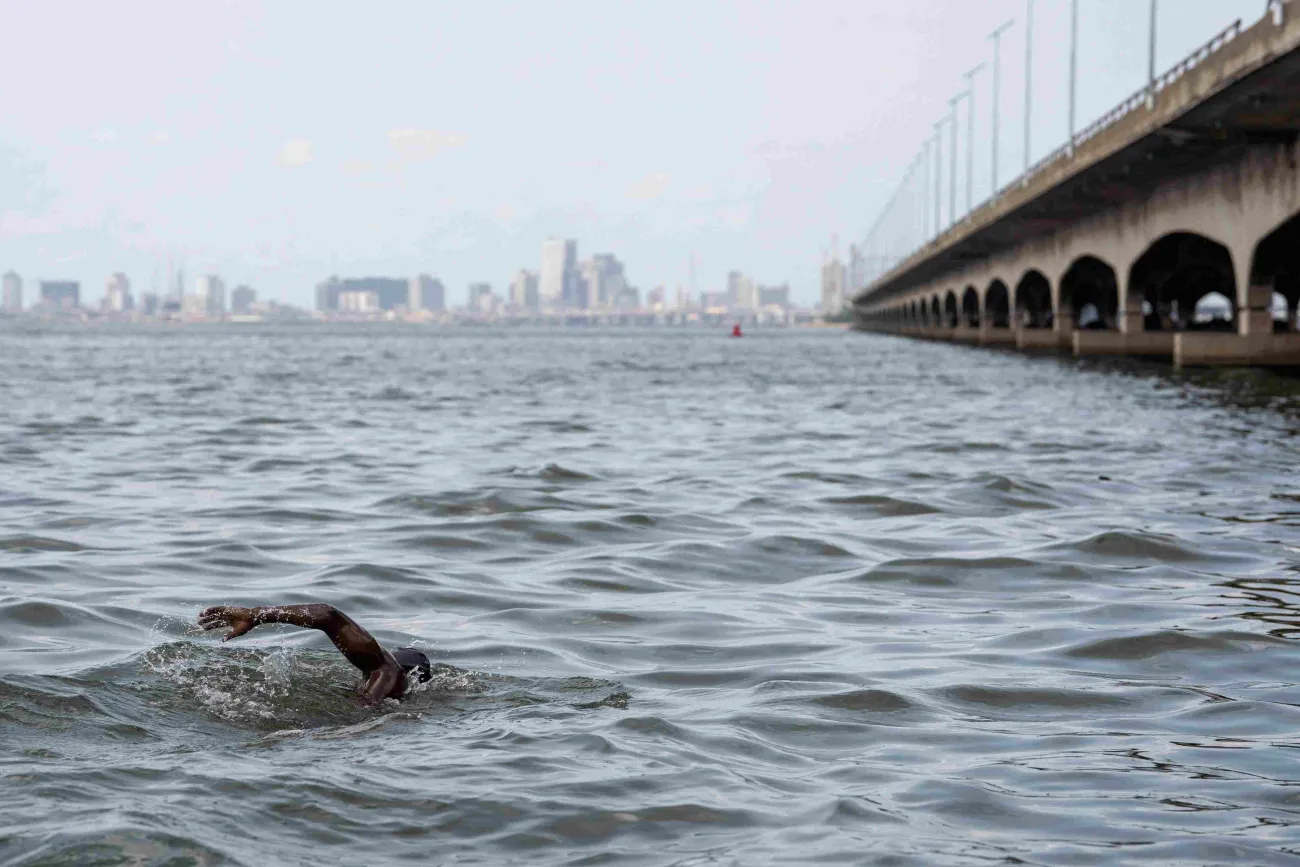
Akinrodoye Samuel during his "Swim Against Suicide And Depression" in Lagos, Nigeria, March 30, 2024. REUTERS/Marvellous Durowaiye
In October 2025, Kimani Mbugua, a former Kenyan television reporter, died by suicide at a rehabilitation centre. He was 29.
Months earlier, Mbugua had posted a video on TikTok and Instagram asking for help as he struggled with bipolar disorder.
His case was not an outlier. A 2021 survey by the Media Council of Kenya found that 62% of respondents knew a colleague who had experienced mental health issues related to their work as a journalist. Across Kenya’s newsrooms, journalists are breaking under pressures both universal and local, from the trauma of covering death and disaster to the churn of deadlines and layoffs without a safety net, in a culture that prizes resilience and stigmatises vulnerability.
In the years before Mbugua’s death, other cases had surfaced: from an award-winning journalist who fell into depression and at one point lived on the streets to a health reporter who was diagnosed with post-traumatic stress disorder and bipolar disorder and contemplated suicide.
For years, conversations about mental health in Kenyan media were confined to whispers and occasional public pleas. The death of Mbugua, young, talented and visibly struggling, forced a reckoning.
The question now is not whether journalists across Africa are suffering, but what newsrooms intend to do about it. I spoke to journalists from Kenya, Uganda, Nigeria and Zimbabwe about their own experiences and struggles with mental health and asked them what changes they want their newsrooms and societies to make to better support them.
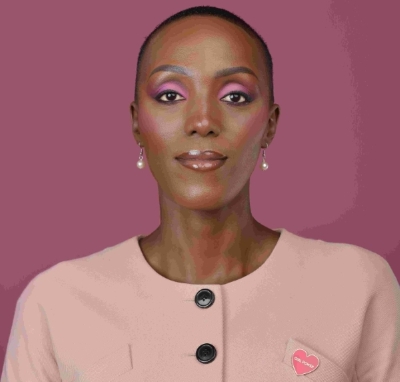
Brygettes Ngana interviewed Mbugua’s family after his breakdown became national news, tracing his decline through hospitalisations and brief returns to public life.
“I was rooting for him,” she recalled. “He had a lot of potential.”
Over time, she built a portrait of a young journalist fighting for his life in full public view, part of a broader project on newsroom mental health. The reporting won her team Kenya’s Journalist of the Year award, the country’s top journalism honour. It was, she said, the most painful prize she had ever received.
“We failed him. Society failed him,” Ngana said.
A regional editor at Nation Media Group and a leading health and science journalist, Ngana said the award was also “a moment of reckoning,” reflecting how “newsrooms are coming alive to the reality that there’s a mental health crisis.”
Ngana’s experience reflects a broader silence across African newsrooms, where mental strain is rarely named and even less often addressed.
In Nigeria, Pelumi Salako, a journalist and documentary photographer who has contributed to Al Jazeera and the Associated Press, has spent much of his career reporting from the edges of crisis.
This year, he interviewed survivors of abductions and travelled to villages where militants called residents to prayer and then opened fire. There are costs to covering distressing stories, he said.
“The most emotional stories are always the ones that involve people,” he said. “Security attacks, mass killings. Those ones tend to stick with you longer.” When he returns home, fragments of what he has witnessed resurface.
Like many peers, he works without formal institutional support. Journalists lean on one another through WhatsApp groups and calls after difficult assignments. “Sometimes we talk about it between ourselves,” Salako noted. “It’s not therapy, but it helps.”
Salako has built his own routines: late-night runs, video games, and regular calls home. “I’ve never fully walked away from a story,” he said. However, he told me he has learned to slow down, sometimes rescheduling interviews.

Like Salako, many journalists covering difficult stories work without the institutional support available to staff reporters. For Linda Mujuru, an investigative journalist from Zimbabwe, that isolation is constant. After losing her staff position amid funding cuts, she joined the growing ranks of African freelancers chasing stories one pitch at a time.
“You only get paid for what you kill,” she said, a hunter’s metaphor that takes on a different weight when applied to human suffering. She described the particular loneliness of pitching stories and facing rejection, of hearing her sources’ trauma and having no institutional support to process it. At first, the rejection letters were crushing.
“That rejection alone is depressing,” Mujuru said.
Her reporting often uncovers the intimate aftershocks of state failure and economic collapse. She has traced lithium smuggling through Zimbabwe’s mining sector, reported on how families navigating a strained health system are burdened even by death, and documented how access to basic public services increasingly depends on informal payments. Again and again, her work returns to people on the margins.
One story, involving a young girl abused by a guardian while her mother worked abroad, stayed with Mujuru long after it was filed. She followed up, checking whether the girl was safe, even asking about her school fees. But she stopped short of intervening. She still thinks about that girl.
“I really questioned my ethics and ethical guidelines when it came to that story,” she said. “If I came across such a story again, am I going to act on it?” she asked herself.
The emotional exposure is matched by professional isolation. Without colleagues, supervisors or institutional support, freelancers are largely left to manage the weight of such reporting on their own.
“You have no one to turn to,” Mujuru said.
Even within structured organisations, mental health efforts can feel limited. In a previous job, counselling was available, but she rarely used it. The therapist was based outside her cultural context, she said, which made it harder to speak freely. She also had concerns about confidentiality, since the therapist was employed by the organisation.
“How do I know what I share isn’t passed on to my bosses?” she asked.
In Zimbabwe, she conceded, the subject barely surfaces at all. “Talking about your feelings is considered weak,” Mujuru said.
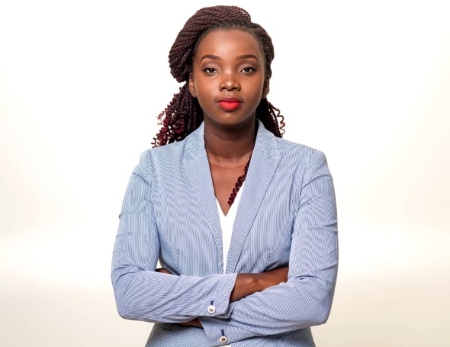
For the journalists who are also mothers, there are additional challenges. Ngana, the Nation Media regional editor, entered journalism more than a decade ago, part of a rising class of Kenyan women pushing into hard-news spaces long dominated by men. Over the years, she covered health and science, beats that introduced her to the personal devastation behind national statistics.
She reported from northern Kenya, where a year-long drought has killed livestock and pushed families toward hunger, capturing the strain on pastoral communities as rains fail. In another documentary, she highlighted female genital schistosomiasis, a neglected parasitic disease that often goes undiagnosed, leaving women treated for the wrong conditions. She also documented the mental health toll on caregivers, an often overlooked burden within Kenya’s health system.
But she told me the hardest story was her own. During the pandemic, while pregnant and juggling assignments, the strain became unbearable. “At some point, I just broke,” she remembered. The breakdowns, she said, happened outside the office, where she felt safe. Only later, in therapy, did she understand it as postpartum depression.
Returning from maternity leave brought new strain. Offhand comments and doubts about whether she could keep pace, and a dismissive attitude toward the demands of motherhood, she noted, slowly hardened into a more isolating sense that her place was no longer secure. Over time, she came to feel that stepping away, even briefly, could alter how a woman was perceived in the newsroom.
“It felt like motherhood had become a disability,” she said.
She did not tell colleagues, fearing vulnerability would be read as weakness, and sought help privately while continuing to file stories. That experience pushed her to report more on mental health, even as she faced scepticism. Now, she approaches mental health coverage less as an occasional assignment than as a sustained focus.
“I fight for these stories to air,” said Ngana.
She is measured in her assessment of the support now on offer. After another former Nation Media journalist experienced a highly public mental health crisis, the company expanded medical cover to include mental health care, a step Ngana described as meaningful progress.
What she envisions is less about policy than practice: a newsroom where trauma is acknowledged, debriefing after difficult assignments is routine, and mental health support is treated as part of the job.
“The way we now have lactation rooms for mothers,” she said, “we should have decompression rooms for journalists who’ve seen too much.”
Ngana’s experience reflects the additional pressures facing women journalists as they navigate the demands of reporting and motherhood. In Uganda, Ruth Adong, the content lead for the Good Morning Africa podcast and head of the business desk at Sanyu FM, came to journalism through community activism and spent years on the crime and constitutional affairs beats before moving, deliberately, to the business desk. Part of that decision, she said, was self-preservation.
“I felt business had a less emotional toll on me,” she reflected. The cycle had been relentless, moving from the field to the desk, filing story after story, until Adong arrived home already emotionally tired.
Motherhood sharpened everything. “It made me more attached to stories, more feeling,” she said. “You carry them home.”
Burned-out reporters rarely take time off, Adong said, fearing they will be replaced. Some have quietly left the profession after health scares or struggles with alcohol. Her network’s insurance plan recently began covering a handful of mental health sessions, but uptake is not good.
“People fear it will brand them unstable,” Adong said.
The weight she described became impossible to ignore on 2 April, when a man walked into a nursery school in Kampala and attacked toddlers with knives. Four children, all under three, were killed.
For Adong, a mother who had spent years reporting on crime, the story was impossible to hold at a distance. It brought back the frustration she associated with such reporting: witnessing suffering, returning to the same cycles of violence and feeling unable to do anything beyond tell the story.
She found herself moving between professional obligation and private revulsion, verifying facts while trying to make sense of something that resisted explanation.
“You try to understand it,” she said. “But you can’t.”
There is no training for it, she said. “You just suck it up and go on air.” Each update that followed added something. The shock dulled but did not disappear.
“There is this idea that you have to be unfeeling,” Adong said. “But days like this remind you that you are human first.”
She and a small group of friends now meet monthly in Kampala cafes to talk about work, family and fatigue, an informal substitute for the structured support most newsrooms do not offer.
Some colleagues have left for communications jobs, still telling stories but away from the daily uncertainty. Adong understands the impulse, even as she resists it. If trained journalists walk away, she said, the work falls to those without the same standards or restraint.
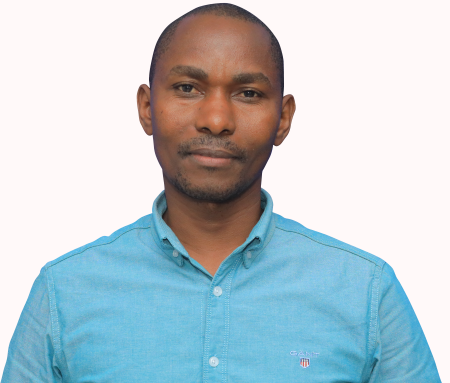
The broader newsroom culture, Adong said, still treats exhaustion as weakness.
“When you say you want therapy, people think you’re looking for a cop-out.” Men, she added, face an even narrower script. “They’ll say you’re soft.”
Across newsrooms, that stigma follows a familiar pattern. Women are often more willing to name distress, or at least seek informal support. Men, several journalists said, are more likely to bury it, in silence, in alcohol, in the performance of toughness.
Ronald Musoke, a senior journalist at The Independent in Kampala, said the pressures are rarely discussed openly. He has spent more than 15 years in the profession and watched his newsroom shrink from 12 full-time staff to four since the pandemic. In December 2025, he said, the magazine’s editor left abruptly after years of recurring burnout.
“There’s a way of thinking,” Musoke said. “You’re African, just keep going. Mental health is seen as something for weak people.” In the newsroom, he added, such concerns are often brushed aside.
Journalists like Musoke spend their days documenting broken systems and pointing others toward help. Yet when the strain turns inward, many struggle to recognise it in themselves, much less respond to it.
“Even when we know where to seek help, we don’t actually find ourselves being helped,” he said. “It’s a bit ironic.”
Alcohol can become a way of managing pressures that journalists do not feel able to name. Adong said men often turn to alcohol or drugs to deal with their mental load, while women are more likely to build support networks. She had also seen a colleague leave journalism after work pressure contributed to alcohol problems and liver illness.
“It had become a life-or-death sort of situation,” Adong said. Among Nigerian journalists too, “there’s a lot of drinking,” Salako said.
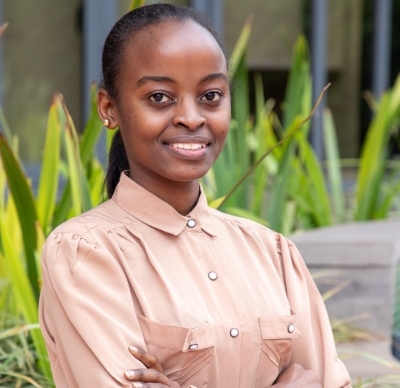
Jackline Macharia, a data journalist and researcher at Nation Media Group in Nairobi, spends much of her time on open-source investigations, a field often seen as removed from the physical dangers of reporting. The reality, she said, is different.
Open-source work requires watching graphic footage repeatedly – killings, beatings, evidence of abuse – slowing it down and replaying it frame by frame in search of verifiable detail.
On social media, Macharia said, most people encounter such videos only once before moving on. For journalists, the experience is different. What lingers, she said, is not a single image but the accumulation.
“After you do the story, you think you’ll forget it,” Macharia said. “But it keeps playing over and over in your mind, even when you go to sleep.”
Over time, the distance between screen and real life begins to collapse. Her newsroom has begun to acknowledge that toll. After major investigations, journalists are sometimes offered debrief sessions to process any issues and access to company-paid therapists.
Even so, she described the support as uneven, both within her organisation and across the industry. Newsrooms with fewer resources, or less awareness of the risks, often offer nothing at all. There has been some cultural shift. But mental health support, Macharia observed, should be treated as essential, not optional. Her work may be done at a desk, but the exposure is constant.
In the months since Kimani Mbugua’s death, his name has lingered in Kenyan newsrooms, a warning many recognise but few have fully reckoned with. He had asked for help in a video posted online. His struggle unfolded in public. His case was not an exception.
For Ngana, the lesson is not about individual failure but something more systemic. “Tomorrow, it could be me,” she said. “No one is immune.”
In her ideal newsroom, coverage of traumatic events would trigger an automatic response, not only physical protection but time away, structured debriefing, and access to care. “The only way people currently cope,” she said, “is alcohol and drugs. Then they deteriorate and become the story.”
Likewise, Mujuru envisions independent counselling within Africa, staffed by practitioners who understand local realities. Others describe the same insufficiency in simpler terms. For Musoke, what is often missing is not policy but recognition.
“I would want editors and seniors to treat journalists humanely,” he said. “Just talk to me as a person.” Another problem is pace, work moving like a conveyor belt: “That is not a good thing.”
For Adong, the failure begins in journalism school, where reporters are trained to cover difficult stories but rarely taught how to cope with their emotional impact.
“We know now you cannot be unfeeling,” she said. “So what happens after I have covered the story? You build a kind of resistance,” she added. “But you’re just one ticking clock away from the dam bursting.”
Even modest efforts to address the problem – confidential counselling, decompression leave, peer support – remain uneven, especially for freelancers and stringers who often do the most dangerous work with the least protection.
“As a freelance journalist, you rely on the people around you. Sometimes I open up to friends. Sometimes I keep it to myself,” said Mujuru.
Journalists cannot wait for every newsroom to establish formal support. John-Allan Namu, co-founder of Kenyan investigative outlet Africa Uncensored, said reporters need to recognise their own triggers and find ways to care for themselves after difficult work. Speaking to someone, whether a therapist, a family member or another trusted person, can help make traumatic experiences more manageable, he said.
In a 2022 talk at the Reuters Institute, Namu urged journalists to identify the people they can lean on when their “well is empty,” build relationships with peers who understand the pressures of the work, and assess the risks before taking on dangerous assignments.
Namu rejected the idea that journalists should simply detach from what they witness. “After the story is done, your emotions become the story,” he said.
In every email we send you'll find original reporting, evidence-based insights, online seminars and readings curated from 100s of sources - all in 5 minutes.