



Inside the news industry’s efforts to join forces to defend its journalism from AI companies
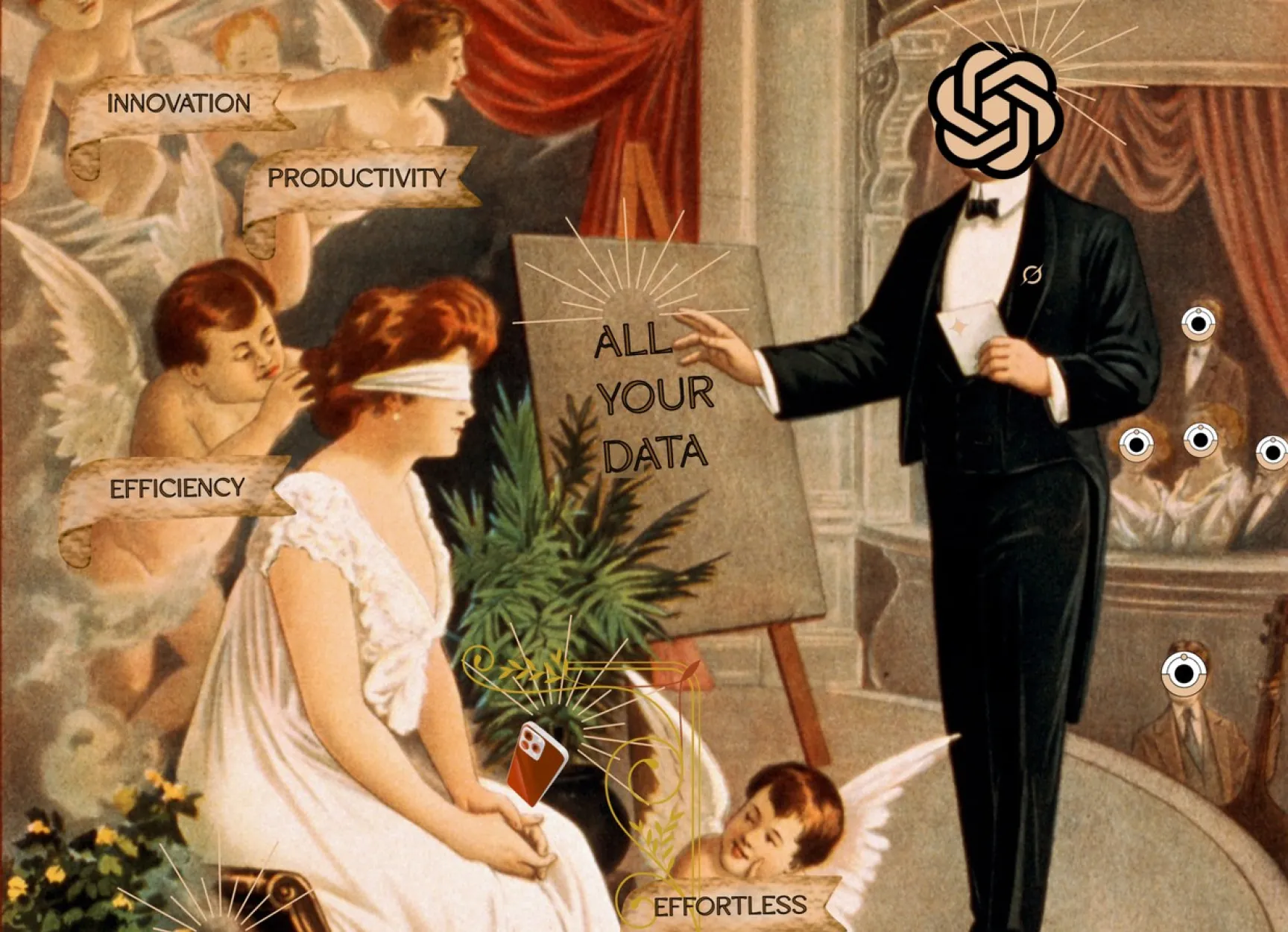
When it comes to AI companies, publishers have been picking one of two options: sign or sue. Or, occasionally, both.
Licensing announcements accumulate, with individual deals often cut by large publishers, like the US’s Associated Press, Germany’s Axel Springer, Spain’s Prisa Media and France’s Le Monde. But lawsuits are also growing, although at a slower pace, with news companies accusing platforms of unauthorised use of copyrighted material.
Yet a third way has recently emerged: publishers are banding together to negotiate with AI companies rather than facing them alone. This is reflected in initiatives ranging from global standards-setting coalitions to national bargaining organisations.
I spoke to representatives of some of these initiatives, as well as technology experts, to identify what problems the news industry is facing when it comes to dealing with AI companies, and what potential solutions are being developed to protect and monetise journalistic content in the age of AI.
1. The threat posed by AI
As generative AI tools grow in popularity, many publishers suspect they were trained on their content. They are also concerned about losing traffic (and advertising revenue) if people get the information they need from a chatbot without needing to click through to the article the chatbot’s response was based on.
According to our 2025 research on generative AI, based on survey data collected in six countries, more people use AI to find information than to create content. Only a small minority ask chatbots about the news. But many queries, from travel tips to context on world events, are starting to replace a Google search that might lead to a click on a news publisher’s website.
Chatbots aren’t the only threat to news publishers. Many are even more concerned about AI-generated summaries, such as Google’s AI Overviews, which allow users to view information drawn from websites without having to click through.
In the year after Google launched Overviews in May 2024, the percentage of search results ending with no clicks through to websites increased and organic traffic to news publishers declined, according to US data collected by software development and data aggregation company Similarweb.
Our own research finds only one third of users say they consistently click through to source links on AI-generated search answers, while 28% rarely or never do so.
“The implied contract [of the internet] was, we’ll take a little bit of your content (for example, for search) and we’ll create search results, but the idea is to send traffic back to your website and then you can monetise that however you want to, whether that's through subscriptions or advertising or e-commerce on your site,” said Doug Leeds, co-founder of Really Simple Licensing, a nonprofit collective rights organisation. Really Simple Licensing (RSL) has two main offerings: an open web standard for machine-readable licensing terms, and a collective management organisation for AI licensing.
With AI, Leeds stressed, the contract the internet had long assumed no longer holds up.
This assessment was echoed by Madhav Chinnappa, a senior consultant who spent over a decade at Google and now serves as a member of the Future Insights Board of European publisher Mediahuis.
“In the GenAI era, it’s unclear to me what the value exchange is, and it can be deeply worrying for what it does for legitimate content creation,” said Chinnappa, who recently spent one term as a Visiting Fellow at the Reuters Institute studying these issues. When I asked him about the news industry’s reaction, he told me: “It's almost like the human response to fear. It's like fight, flight or freeze. Where flight is desparately chasing after illusory one-off Open AI deals."
2. Time to learn from the music industry
Publishers need to be better at securing their intellectual property and not allowing it to be used to create products that will then take away from their audience, said David Buttle, a consultant who used to work for the Financial Times. He is now a project lead for the Standards for Publisher Usage Rights coalition (SPUR), but spoke to me in a personal capacity and not as a representative of the organisation.
Buttle compared news publishers with the music industry, which made it more difficult to use their content without payment.
“The industry should move from a permissive access model in which it wasn’t hard to get around paywalls, and to one in which their IP is far better protected,” he said, before pointing to the broader strategic issue of what role news publishers will play in the age of AI.
This is where licensing comes in. According to Buttle, GenAI will push media owners to value licensing as an important revenue stream, perhaps even to the point of impacting their existing core business.
A news publisher negotiating alone will always be at a disadvantage when dealing with the much more rich and powerful AI companies.
“The new industry is fragmented, and this puts us in a difficult position when influencing things like standards,” Buttle said. “The other side of the market isn’t fragmented. It’s a handful of players with endless resources that can try and shape how these markets form in their interests.”
But not every tech company is acting in the same way, Chinnappa told me. For example, OpenAI appears to be signing one licensing deal per country (usually with the largest publisher) while Google is signing a handful more deals, and Amazon and Microsoft are trying a marketplace approach.
“My dream is that we have a collective approach on both sides so that all the AI companies engage, at least at a base layer, with all the publishers in the news ecosystem,” Chinnappa told me. "But you need structures and incentives on both sides to make this work."
3. How publishers can work together
For news publishers, teaming up with your closest rivals may seem like a radical choice. But this is what some are starting to do in order to tackle the threat posed by AI.
This is the idea behind SPUR, the group Buttle is working to develop. SPUR was founded by major British media brands, including the BBC, Financial Times, and The Guardian, and recently welcomed as a new member the European publisher Mediahuis, which owns media brands in Ireland, Belgium, Germany, Luxemburg and the Netherlands.
SPUR’s mission is to build shared technical standards and a licensing framework for news organisations to use in their dealings with AI companies. Its goal is to “shape a market” that will provide its members with a fair valuation for their journalism. But SPUR is not a collective licensing body, and its members are free to pursue their own deals.
Some voices think the news industry should go even further and commit to collective management. A concept born in the arts world, collective management involves a central organisation negotiating and administering copyright protections on behalf of its members, as well as collecting and distributing royalties.
The problem that collective management organisations, also known as CMOs, try to solve is the inefficiency of licensing – a few AI developers having to sign hundreds of thousands of deals with individual publishers.
Creating a CMO on behalf of news organisations worldwide is an ambitious goal. But that’s what Really Simple Licensing (RSL) Collective is trying to do. RSL started out with a nonprofit open web standard for machine-readable website terms of access. When added to a website, it notifies visiting bots of any rules the website owner sets for content use.
Developers often use bots to scrape copyrighted content from news websites, and then use it to feed AI products. “They cannot claim that, because it’s on the web, it is available for them to retrieve, to train on, to basically substitute their own content for yours, and to take your traffic and your monetisation,” said Doug Leeds, co-founder of RSL.
What distinguishes the RSL standard from other bot-blocking systems, he explained, is that it’s not a binary. It doesn’t force website owners to opt between letting a bot in or keeping it off your website, but allows them to set specific terms the bots must adhere to.
When a publisher posts an RSL file, they can choose to declare they’re also opting into the RSL Collective. This CMO, which was also launched in September 2025, provides a blanket license for AI companies to access all of its members’ content for a single price.
Publishers would be able to opt certain content in and out of the agreement in real time, and also opt in and out of specific licenses with AI companies. But they would be spared the trouble of negotiating agreements themselves.
At the time of this writing and according to Leeds, RSL Collective has about 1,500 media members, including news publishers such as the Guardian, Associated Press, USA Today, and People Inc., but also organisations representing the broader digital media ecosystem, such as Reddit and Wikipedia. The organisations involved are currently reviewing RSL Collective’s licensing plan, which is not yet active.
4. Danish publishers’ joint effort
While RSL is set up to operate at the global level, there are also national CMOs representing publishers in one country. Leeds said RSL is seeking to partner with national CMOs similarly to how these partner with one another, setting up reciprocal arrangements for their national repertoires to be licensed abroad.
One of those national CMOs is the Danish Press Publications Collective Management Organisation (DPCMO). Set up in 2021, it represents almost the entire Danish news industry and it’s the only industry CMO in Europe to include both privately owned outlets and the public service broadcaster.
At the time of its founding, DPCMO worked on licensing publisher content to social media, news apps and search. After the launch of ChatGPT, its mandate was expanded to also cover licensing for generative AI, text and data mining.
In practice, this means the entire Danish news industry negotiates as one with Big Tech.
DPCMO has entered into interim agreements with search engines - Google, Bing, DuckDuckGo, Ecosia and Qwant - to license the snippets appearing in search results pages. These agreements are not final because of an ongoing disagreement with Google over the final valuation of DPCMO members’ content, which is still being negotiated.
However, DPCMO has not signed deals with most social media or major GenAI companies. This means no Danish news organisation has yet cut a deal with OpenAI, unlike many of their European counterparts.
DPCMO is partnering up with Cloudflare and Tollbit to allow its members an easy opt-in to their services to check and manage AI usage of their content. It also signed a deal with AI company ProRata to create a Danish chatbot drawing only from licensed content.
“We have had long legal exchanges with OpenAI and Gemini and they do not dispute they have trained [their models] on our content, but they will not pay for it,” said lawyer Karen Rønde, the CEO of DPCMO.
Asked about why competing outlets came together and stuck to this collective approach, Rønde said they realised the entire industry needed to stand united to protect the information ecosystem.
“This is not just about fair remuneration. It’s about democracy,” she told me. “It’s about ensuring reliable, trustworthy information [reaches] people. It’s also about accessibility and discoverability. It’s about cultural and linguistic diversity – everything that creates social cohesion, engaged, informed and empowered citizens.”
DPCMO would prefer to sign commercial deals, Rønde said. But as the group has found this difficult to do, it has reached for legal tools, including mediation or arbitration with companies such as Meta, TikTok and OpenAI. Many of these companies are opting not to participate in these voluntary processes, Rønde said. The next step is a lawsuit.
DPCMO is the first united publishers group in Europe to sue OpenAI, with another open court case against LinkedIn. The cases were both announced in February 2026. DPCMO’s argument against OpenAI alleges the company trained its models on Danish publishers’ content at least until the summer of 2024, and without allowing them to opt out until at least the summer of 2023.
5. A different type of AI company
ProRata is not a big frontier AI developer like OpenAI and it’s also not trying to create a direct-to-consumer product. Its scope is much narrower: building an AI search widget to be embedded in existing publisher websites.
ProRata is betting on its ability to provide conversational answers based entirely on licensed content, drawn from a large variety of publishers with which ProRata has struck deals.
ProRata’s widget could look like a chat box placed at the bottom of an article which a reader could use to ask a question about the piece. For its response, the widget would draw not only on the content of the article, but also on licensed content from other publishers. In this example, the widget’s search bar could be pre-populated with suggested questions generated from the context of the article, but the user could theoretically ask about an unrelated topic, and they would still get a response.
ProRata has signed agreements with over 200 content partners with almost 1,500 publications (some publishers own more than one title), said Annelies Jansen, the company’s chief business officer. ProRata’s search unit is now integrated in over 150 of these titles, she explained. These aren’t limited to news, but span from magazines like the UK’s Hello! to sports, tech and consumer insights publications.
Monetisation comes from advertising embedded into the search unit itself. Powered by GenAI, this uses the context, the conversation and the advertiser content to generate an ad.
The ad is clearly labelled as such to distinguish it from the main body of the answer, Jansen said. Half of any revenue generated will be redistributed to the publishers whose content was used for the answer through an attribution system which calculates the share of the answer that was drawn from different publishers and uses that as a way to split the proceeds.
“If your content is used, you will get paid for it, wherever your content is used and wherever the answer is being generated,” Jansen said.
Content producers will get a share even if the widget is hosted on a different publication’s website. They can also make money from hosting the ad on their website (similarly to how a billboard works) and by selling the ad themselves.
Jansen said that the potential of the widget to facilitate revenue for a competitor on a publisher’s own website hasn’t been a hard sell. “The moment you start to work with SEO [search engine optimisation] and SEM [search engine marketing], you live in an environment next to your competitor, so publishers totally understand that,” she said. “Depending on the question, they may not be able to provide 100% of the content to generate that answer, so they’d rather have that user stay on their platform than sending them off to ChatGPT.”
6. So what does this mean for journalism?
Chinnappa doesn’t think the news industry will be saved by the actions of regulators. He thinks the focus should be on the product side, and in an honest evaluation of what content is useful and valuable.
“The internet brought us infinite content, and generative AI can make infinitely more,” he told me. “The only thing that is finite is human attention, and therefore the gap or the interlocutor between that finite attention and the infinite content is the one who has a lot of power.”
According to Buttle, creating distinct value in the age of AI means to opt for “inherently human content”. To him, that means more analysis, opinion, greater prominence to faces and voices and multimedia content, and perhaps less straightforward reporting of events, the demand for which Buttle thinks will be satisfied by intermediary systems fed on licensed content by newswires.
Changes to how the internet works are not inherently bad, some of my interviewees said. It’s not hard to see why audiences might prefer receiving an answer to specific questions instead of a list of links that they have to manually look through.
“In many ways it's a much better user experience,” Leeds said. Chinnappa agrees: “Imagine you tell a nine-year-old kid in a couple of years, ‘We used to type words into a search bar and then get a bunch of links and then click on some and hope we got what we wanted.’ They’ll look at you like my kids look at me when I talk about a fax machine.”
But will this new model allow for the survival of public interest journalism and for the integrity of the information ecosystem? Drawing again on the evolution of the music industry, Leeds compared the bots now scraping news websites to Napster. This was a peer-to-peer file-sharing system that allowed people to send each other digital music for free for a couple of years (1999-2001) before shutting down after facing copyright lawsuits.
Napster wasn’t paying musicians for music, but it was allowing users to do something new: downloading any individual songs they liked, instead of having to buy entire albums. This is the user experience later adopted by Apple Music and Spotify. But by depriving musicians, record labels and producers of income, Napster would eventually have bankrupted them, Leeds explained.
“As good as the product might have been, especially in relation to the previous product, it wasn’t going to last because it was a parasite on the industry and it was going to kill the host,” Leeds said.
For him, the takeaway for publishers and AI companies is to learn from innovations that provide a better user experience, but also to implement them in a way that is sustainable and keeps the producers of quality content alive.