

News
Anatomía de una campaña de odio: Así fue la ofensiva en redes contra José Rubén Zamora y su familia

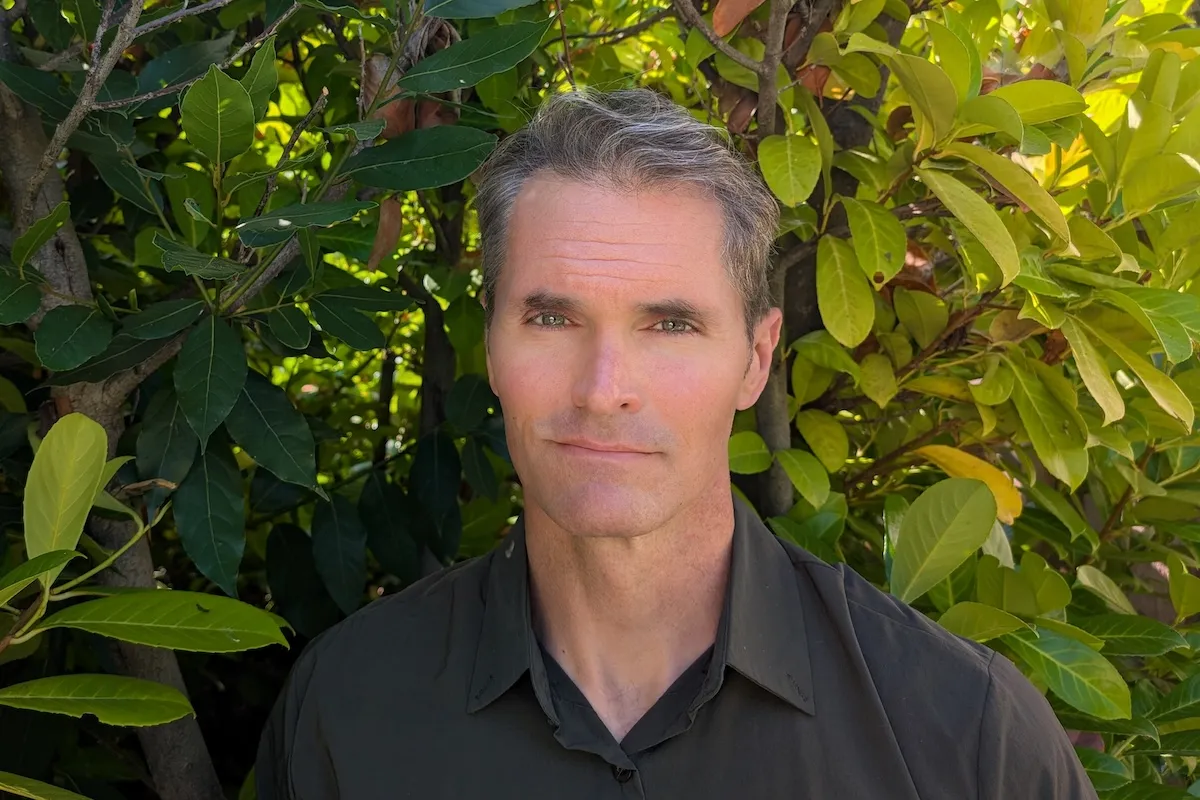
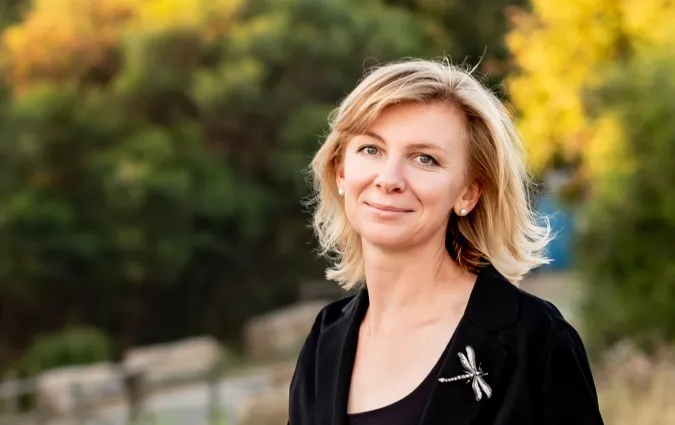
Mongabay founder Rhett Butler. | Credit: Ronan Butler
When Rhett Butler was 12 years old, he took a trip to Ecuador’s rainforests, fragile ecosystems under constant threat by human activity. Back home, he read about an oil spill upriver from the place he had just visited.
Years later, as Butler explored Borneo, he learned after visiting a tract of rainforest that it had just been cleared for wood pulp.
While still in college, Butler began writing a book on tropical rainforests, immersing himself in research despite having no formal training in journalism or environmental science. When a publisher declined to invest in quality photographs, he chose reach over revenue, posting the work online for free.
That decision laid the foundation for Mongabay, an independent media organisation Butler founded and named after Nosy Mangabe, a biodiverse island in Madagascar.
The outlet was initially a personal effort to make environmental information accessible to a global audience. But what began as a small, independent project has since grown into one of the world’s most influential environmental news organisations, with its websites attracting more than 111 million unique visitors in 2025, a 46% increase from the previous year, and an even wider reach through social media and partnerships, alongside a multilingual newsroom that publishes in English, Spanish, French, Bahasa Indonesia, Portuguese, Hindi, Bengali, and Swahili.
Mongabay has evolved into a global nonprofit with regional bureaus across Latin America, Africa and Asia, and a vast network of reporters producing accountability journalism. This reach enables investigations impossible without sustained, on-the-ground reporting, repeatedly demonstrating real-world impact.
In 2025, Mongabay’s Latin America bureau conducted a year-long investigation into illegal drug-trafficking airstrips in the Peruvian Amazon, using satellite imagery and artificial intelligence to identify dozens of clandestine runways in areas where Indigenous leaders faced killings and threats. The investigation fueled national debate, drew the attention of authorities, and earned the Global Shining Light Award.
These investigations are part of a broader body of work that includes reporting on shark meat served in Brazil’s public schools and prisons despite conservation concerns and labor abuses aboard industrial fishing vessels in Indonesia. These reports have prompted parliamentary hearings, policy reviews, and international scrutiny across multiple regions.
Today, Butler oversees Mongabay’s strategy, fundraising, and partnerships, while continuing to write analytical and reflective pieces, including his Founder’s Briefs. A prolific photographer and frequent lecturer, he remains deeply engaged in the evolving role of environmental journalism, not only in documenting crises, but in shaping accountability, policy, and public conversation.
I recently spoke to Butler about the past, the present and the future of Mongabay. He discussed the challenges of sustaining impact-driven journalism and what it takes to report on the planet’s most urgent stories. Our conversation has been lightly edited for clarity and length.
Q. You started the publication as a personal blog in the late 1990s. When did you realise it needed to evolve into a structured newsroom?
A. The turning point came when I decided to transition from a for-profit model to a nonprofit. That multi-step process marked a shift in how I thought about the organization. For years, it was essentially just me, then one additional writer.
At the same time, I had ideas I wanted to pursue that simply didn’t fit an advertising-based business model. One of those was launching an Indonesian-language news service. To make that possible, I created a nonprofit entity. That decision marked the beginning of Mongabay becoming a structured newsroom, and it grew from there. Eventually, I converted all of Mongabay into a nonprofit and donated all the articles produced under the for-profit entity to the nonprofit.
Q. As Mongabay grew, how did you navigate the shift from founder-led editorial control to a more distributed leadership model?
A. I have always been about handing off as much responsibility as possible. I really believe in autonomy. Mongabay Indonesia was the first initiative which had its own structure from the beginning.
We eventually brought that same model to Mongabay Global, the English-language operation. As we grew, I started hiring people to take over things I had been doing myself. As time went on, we replicated that model in different regions. We launched Mongabay Latam for Spanish, Mongabay India, Mongabay Africa, and others. Each of those was built around the same idea of autonomy.
At the global level, meaning work that is not part of an independent bureau, I gradually hired more leadership to focus on specific aspects of running Mongabay. We also have an independent board that provides oversight.

Q. How do you decide when to establish a bureau versus relying on freelancers or partner organisations?
A. We look at regions where we see a gap and where we think we can add marginal value by having more journalists covering the kinds of issues Mongabay focuses on. These are often places with high biodiversity and rapid change, such as land use or ocean change, where the stakes are high for climate and conservation.
There also have to be basic conditions that make journalism possible, including some level of press freedom and an audience that actually consumes news. Beyond that, we have to be able to find the resources to support the work.
Brazil is a good example. It has always been a high priority for us, but for a long time we didn’t have the resources to establish a full bureau. Even so, we partnered with local organisations and have been producing original reporting in Brazilian Portuguese for about a decade. That work started through syndication and collaboration with local media, and the team has scaled up over time.
Whether we establish a bureau or not depends on a unique set of circumstances rather than a fixed rubric. That said, partnerships are central to our model everywhere we work. In Latin America, for example, we partner with close to 100 mainstream media outlets across our Spanish-language coverage, regardless of the fact there is a full bureau in place.
Q. Environmental journalism often involves real physical and legal risk. How does Mongabay protect reporters working on sensitive or dangerous stories?
A. Safety is a major concern for us. Our thinking around this applies not only to staff and contributors, but also to sources, because sources don’t have the luxury of being able to leave their community if a problem arises from the journalism.
There’s a certain class of stories with triggers that raise the bar of that level of due diligence at the outset. The safety committee does the evaluation. That’s a group of people from a range of roles at Mongabay in a variety of geographies. If journalists go into the field, they have to disclose risk and have a check-in plan with their editor. This doesn’t apply to every story, because some stories are low-risk, but typically to stories involving sensitive issues or sensitive people, or involving travel.
We have had a situation where we had to offer protection to a journalist because of our concern about the political sensitivity of the reporting. This was in Africa and we arranged a safe house for them for a period of time after the reporting came out. There were no incidents, but we did this because we were concerned about the risks.
Q. What other forms of support have been most important in sustaining Mongabay’s network of local journalists, particularly in the Global South?
A. About 80% of our journalists are based in the Global South, including both staff and contributors, which roughly aligns with where most of our coverage is. While we’re headquartered in the US, we’re primarily a Global South organisation in terms of our focus and orientation. One reason we’re based in the Global North is access to resources – a major part of my role is fundraising and allocating those resources to our teams.
Our contributors are paid per story or per project. No one is working for free. Commentary is different, but journalists reporting are paid. We also run a paid fellowship programme designed to help journalists in the Global South build skills in environmental reporting while publishing stories that strengthen their portfolios. The programme is open to anyone, with no education requirement, because those can be a barrier to participation. It includes both emerging journalists and those transitioning from other beats. At its core, it’s about expanding opportunities for journalists to cover these issues.

Q. Climate and conservation journalism can sometimes be accused of crossing into advocacy. How does Mongabay define and maintain the boundary between both?
A. That’s always an issue, and it’s one of the important roles of the editor to maintain that line. The boundary means different things for different people and different outlets. But I started Mongabay around the philosophy of not telling people what to do or think, but providing information that enables decision-making based on facts.
I saw a gap between advocacy publications from environmental groups that had specific agendas embedded in their work, and mainstream media, which just didn’t cover these issues that well or that much. They could do great stories, but they didn’t regularly cover tropical forests, for example. That’s the gap Mongabay tried to fill.
For any given story, you’ll probably have some people who say it feels like advocacy and others who say it doesn’t go far enough. But the basis is factual information. We take a rigorous approach in terms of correcting errors and citing sources. Credibility and objectivity are absolutely critical to what we do.
One area where you could debate this is in choosing the topics we cover – is that a form of advocacy? For example, if we’re deciding to cover illegal deforestation in Bolivia, shining a light on that issue can drive outcomes, but we’re not trying to do that. We’re trying to provide information, which could lead to things happening. But there is a choice to cover that issue rather than ignore it.
Q. What revenue streams have proven most reliable, and how has your funding mix evolved as the organization scaled?
A. Mongabay is a nonprofit and we’re dependent on philanthropy. We have two main buckets: donations from individuals (that’s anything from $1 to much larger amounts) and then institutional funders, primarily philanthropic foundations in a few countries. We also have one government grant.
I don’t have any background in fundraising and didn’t have any connections to wealth or philanthropy when I started this, so I wasn’t following a playbook. I just went with what was working. Initially, it was foundations that I had success with, and that’s the primary reason why the majority of our funding now comes from foundations.
But I’ve always taken a diversified approach. I didn’t want to be dependent on any one funder because there’s an inherent imbalance in how philanthropy works – one entity gives money to another, so the recipient is dependent on that funding. I wanted to have a large number of different funders so I could walk away from any if necessary. If a funder tried to cross a red line by influencing our coverage or something like that, I could say it's not worth it and leave the money on the table, which we’ve done before.
This diversification has enabled us to weather ups and downs over the years and consistently continue to expand. Earned income is a negligible amount of revenue for us, which is very much in contrast to what we started with in terms of business model, which was 100% advertising and affiliate sales.
Q. How do you safeguard independence while pursuing grant-based support?
A. Most of our funding is restricted, which means it’s for a specific project, topic, geography, or a combination of those things. We have a huge list of editorial priorities, and we break these down into fundable projects. So if there’s a funder interested in the intersection of climate and agriculture, we might pitch a reporting project on the palm oil sector. We’ll say, over the next three years, we’ll produce 500 stories in three languages on palm oil. We have 70 or 80 projects like that, which rounds out our portfolio, but it means we’re always chasing funding and generating grant reports.
But we maintain independence and we’re not taking direction from a funder. We pitch them on what we plan to cover within these topics. We have a firewall between editorial and fundraising, so funders don’t interact with the newsroom, reporters, or editors. That’s different from a lot of newsrooms, but I’ve always felt it’s very fundamental because even the perception matters. If an editor or writer interacts with a funder, it creates a different dynamic, even if there isn’t actual pressure. A journalist may feel like they can or cannot cover an issue because they’ve talked to a funder.
We also publish all of our financials. So if one of our journalists wants to dig into the funders, they can probably guess who’s funding what project. It’s not a secret, but we try to maintain a separation so there is no pressure one way or the other. We are disclosing everything; we just don’t bring that funding conversation into the journalistic realm.
Q. For journalists and editors hoping to build or scale mission-driven newsrooms today, what common mistakes do you see, and what would you advise them to prioritize early on?
A. I think one common mistake is not thinking about the audience – who are you trying to reach? People often undervalue the importance of really thinking about who your audience is: their job, how they’re influenced, what kind of information they use, how they make decisions.
Beyond that, what gap are you filling? What marginal value are you adding to the space? If there are already a bunch of outlets doing what you’re planning to do, how can you distinguish yourself?
Another is resources. How are you going to fund what you’re doing? The thing about being a nonprofit, at least from my experience, is you can never stop fundraising. If you get a windfall grant, what happens after that goes away? I’ve seen this happen a lot in our space, where a new nonprofit media outlet starts up, they get funding from an individual who’s interested, but they don’t have a long-term strategy. When that individual changes their mind, they’re in trouble and they go under. That’s why I think having a diversified approach is really critical. Never stop fundraising.
In every email we send you'll find original reporting, evidence-based insights, online seminars and readings curated from 100s of sources - all in 5 minutes.