



What fact-checkers in Central and Eastern Europe learnt from covering dozens of high-stakes elections
Countries in Central and Eastern Europe have gone to the polls dozens of times in the past decade. Bulgaria has held eight general elections between 2021 and 2026. The Czech Republic recently introduced postal voting. Romania and Moldova elected presidents, parliamentarians and local representatives. My own country, Hungary, recently held arguably the country’s most important election of the past two decades.
Election campaigns in this region are often marked by domestic disinformation and foreign interference and fact-checkers play a crucial role in exposing false narratives and providing audiences with accurate content. So what have they learnt from debunking falsehoods before people head to the polls? Can their experience be useful for colleagues in other regions?
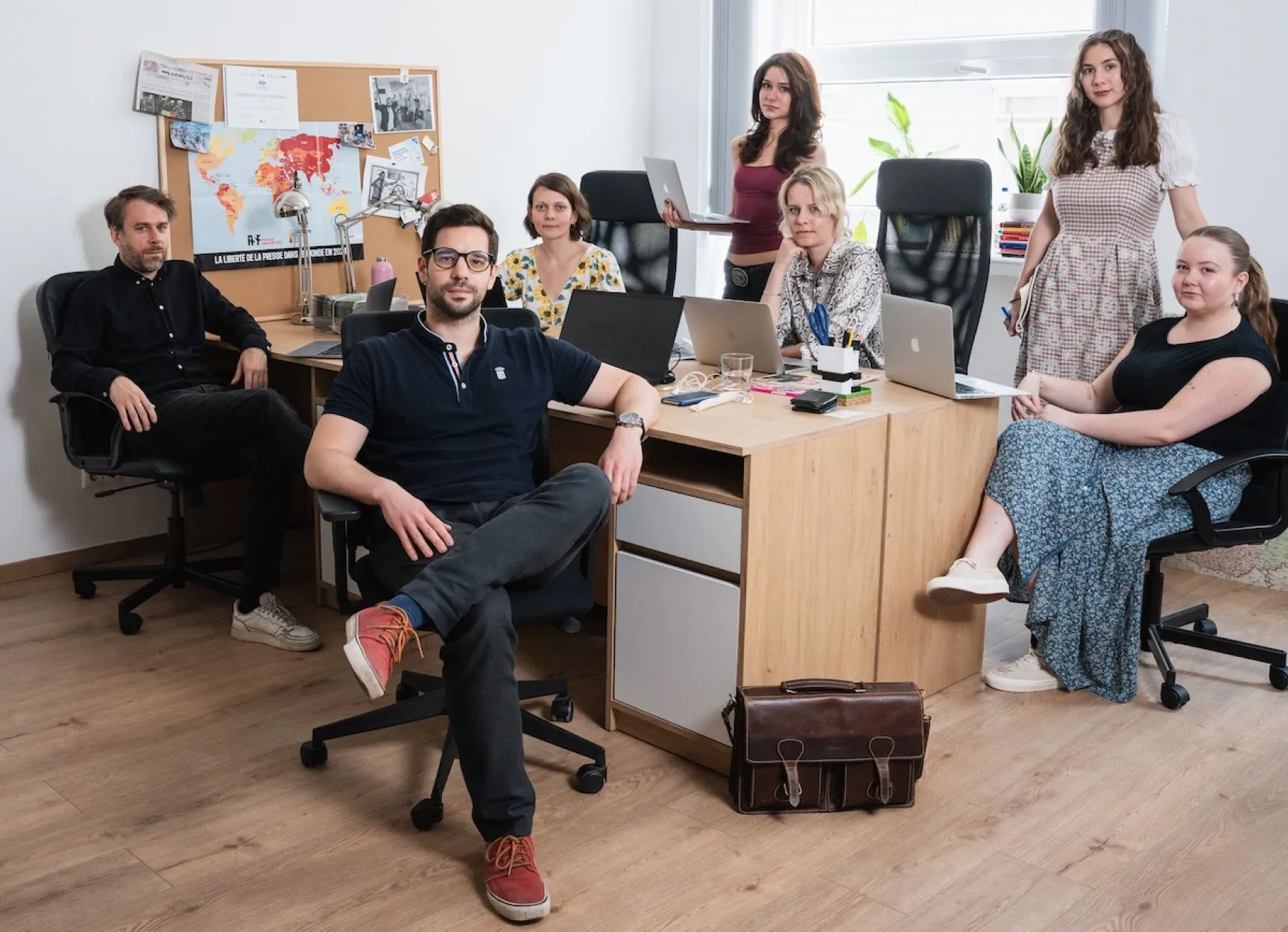
These are the questions I posed to five fact-checking organisations operating in Central and Eastern Europe, including the one I am currently working at. Here are five key takeaways from those conversations.
1. Think of the unthinkable and prepare explainers on contentious issues
Journalist Horatiu Bontea, who works at Romanian fact-checking site Factual, regrets not taking far-right candidate Calin Georgescu more seriously as he ended up winning the first round of the 2024 presidential election. “Georgescu seemed quite random and not so popular. We assumed that not a lot of people would vote for him and that we didn’t have to bother fact-checking him. We were wrong”, said Bontea, whose organisation was launched by the watchdog organisation Funky Citizens in 2014.
2024 was a big year for Romania. The country held local, parliamentary, EU and presidential elections. Then the presidential election was annulled after the first round because intelligence documents suggested that Georgescu was supported by a foreign influence operation – through dubious TikTok accounts and secret payments to influencers. In May 2025 Romanians went to the polls again and elected as president liberal Nicusor Dan, a former mayor of Bucharest.
Romania was not the only country holding messy elections in the region. In the eighth general election since 2021, Bulgaria elected pro-Russian candidate Rumen Radev as prime minister.
Vassilena Dotkova, a journalist at the Bulgarian Factcheck.bg, told me they had to reconsider what election-related content they debunk. “Usually we don’t fact-check satire, but in the latest campaign we’ve witnessed a lot of AI-generated satirical images which were often perceived as real and not as jokes. We had to explain this to our readers”, she said.
At Hungarian fact-checker Lakmusz, we faced similar dilemmas. It was hard to decide whether we should write about these AI-generated satirical images. But we think analysing them as a phenomenon was the right decision because doing it was in the public interest.
We took the same approach when reviewing the parties’ manifestos, and when we wrote in detail about issues related to the electoral process, such as postal voting or opinion polls. These explainers served as pre-bunking pieces, allowing us to touch on topics which would end up being the subject of false claims.
“It’s always good to prepare ahead of time and write about themes we can predict to be of high interest”, said Jan Fridrichovský, editor-in-chief of the Czech fact-checking site Demagog. Postal voting was introduced for the first time in the Czech Republic in 2025, when former prime minister and billionaire Andrej Babis made a comeback. The Demagog team suspected that there would be a lot of disinformation around postal voting, so they wrote pre-bunking explainers to stay one step ahead of misleading claims.
2. Experiment with new formats and partner with trusted voices
Fact-checking live blogs have proved very successful, especially during TV debates. For example, Romania’s Factual launched in 2014 with a live fact-check, a format they replicated in 2025. “We organised a live fact-check with our journalists, editors and external experts during the Romanian presidential debate,” Factual’s Bontea told me. “It meant that statements of the debate could be debunked very fast, in an hour. That was our most successful format during the election period.”
Factual has recently paid special attention to new formats. They started cooperating with popular Gen Z influencers, created short vertical videos, and posted Instagram carousels about their articles. The election period, Bontea said, was a great time to experiment with these new formats, and they’re trying to keep them as part of their workflows going forward.
Most of the fact-checkers I spoke with have used elections to try new things. At Lakmusz, we started producing one-minute videos with summaries of key fact-checks which reached more people than any of our articles. We also composed summaries in English about the Hungarian disinformation ecosystem, as the election attracted interest from audiences outside the country.
Demagog pioneered short vertical videos before the latest Czech election. But this time they produced short media literacy-focused videos on TikTok as part of a special collaboration with the platform during the campaign. With support from TikTok, Demagog published the videos on their own account but they were prominently featured on TikTok’s election landing page too. The videos were also promoted by ads. Through this collaboration, videos managed to reach millions of users.
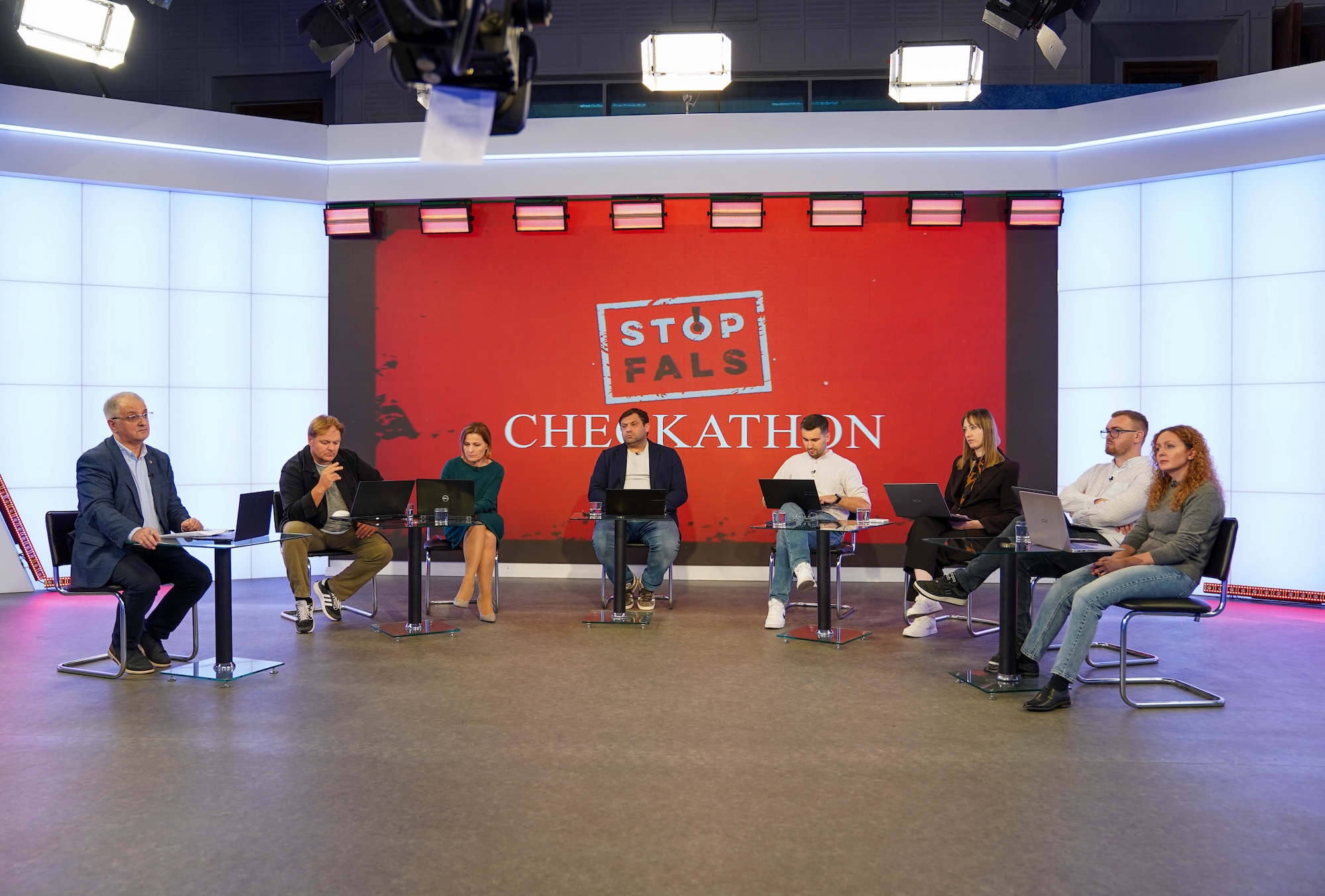
Moldovan fact-checking site Stop Fals’ started posting short videos on Facebook, Instagram and TikTok. It was not their only experiment. They partnered with the public broadcaster to analyse statements from candidates and even worked together with news creators. They also spread their fact-checks with humour. For example, they worked with one of the most appreciated cartoonists in Moldova, Alex Buretz, to display the most viral and absurd false claims, like when Moldovan president Maia Sandu was accused by pro-Kremlin sources of buying sperm of gay celebrities, such as Elton John.
Stop Fals’ was launched by the Association of Independent Press (API) in 2015 and got a dedicated site in 2017. API’s executive director Petru Macovei firmly believes it’s important for fact-checkers to work with people who hold the trust of their communities. “We have cooperated with popular faces in social media but also with local influencers, such as social workers or postmen. These are the people citizens in rural areas or people from older generations trust”, he said.
3. Educate audiences – especially senior audiences
All five fact-checking organisations featured in this piece offer media literacy workshops. Election periods are good for this type of activities, but they host workshops in quieter periods as well. At Lakmusz, during the 2026 election, we went to Hungarian high schools and civic organisations to talk about disinformation and how to spot fake news.
The most interesting experience for me was visiting a tiny village near the Romanian border. Most of its 300 residents were of Roma background and got their news almost exclusively from Facebook and from the public broadcaster, where they were exposed to relentless propaganda from Viktor Orbán’s regime. Our goal was not to persuade them to stop consuming news from the public broadcaster. Rather, we wanted to teach them to think critically, and be more sceptical about what they saw.
Fact-checking sites in Moldova, Romania and Bulgaria have media literacy projects devoted to senior citizens. These age groups are the most vulnerable to disinformation campaigns as they spend a lot of time scrolling on the internet and social media and they are also subjected to scams.
Vassilena Dotkova from Bulgaria’s Factcheck.bg told me that they have a project which allows the elderly to send them posts they want to fact-check. This is useful for journalists too as a listening tool, as it’s impossible to know what algorithms are serving different audiences.
“Seniors are active during election periods”, said Macovei from Moldova’s API. “They engage a lot with news and the online sphere, so we must focus on them. Media literacy is a long-term investment in boosting critical thinking.” He also believes in creating synergies between generations. In 2024 and 2025, they piloted a project in several regions in Northern Moldova, under which young people and older citizens took part in training together and were supported to organise community activities and produce videos promoting critical thinking.
4. Russian interference is real but not almighty
In Central and Eastern Europe, the question is not whether there will be a Russian disinformation campaign during the next election, but rather how extensive it will be.
Russia’s most extensive influence operations took place during the Moldovan and Bulgarian elections, as both countries have pro-Russian parties in their parliaments.
The Bulgarian winning candidate, Rumen Radev, is aligned with Russia. As Vassilena Dotkova told me, certain Facebook groups shared and amplified Russian disinformation during the campaign while also supporting Radev. “It has never been easy to draw a precise line between Russian and domestic disinformation in Bulgaria, but the overlap we saw from these groups was kind of explicit”, she said.
The situation is even more severe in Moldova, with two territories in the country (Transnistria and Gagauzia) under enormous Russian influence and a few factors making things even more difficult: the influence of the Russian Orthodox church, the Kremlin’s influence on the Moldovan media ecosystem and a fake news network linked to Moldovan oligarch Ilan Shor, who has been sanctioned both by the US and the UK.
According to API’s Macovei, what really helped in opposing Russian influence operations were media literacy projects. “Russian influence doesn’t go away after the elections,” he said. “That’s why we should keep these initiatives. Bad actors will insist on pro-Russian propaganda.”
Journalists in the Czech Republic expected Russian interference before the 2025 election. In the end, however, domestic disinformation was way more significant, with no evidence found on coordinated large-scale foreign interference.
Demagog’s Fridrichovský told me they detected hundreds of fake TikTok accounts spreading pro-Russian and anti-establishment disinformation, but didn’t find any evidence of this network being operated from or by Russia.
In Hungary, several disinformation campaigns were linked to known Russian groups, like Storm-1516. These messages usually targeted challenger Péter Magyar, who became prime minister after the election, using fake websites as well as Facebook political ads, which were no longer allowed in the European Union in October 2025.
However, the campaign’s reach and impact remained limited compared to disinformation spread by domestic actors. A Russian disinformation campaign against Ágnes Forsthoffer of Magyar’s Party, for example, claiming that she was part of Jeffrey Epstein’s trafficking network, reached only a few hundred Hungarian Facebook users, while the fearmongering AI war videos spread by Fidesz and Facebook pages aligned with them, suggesting Hungarian soldiers would have to fight in Ukraine after Magyar’s victory, were viewed hundreds of thousands of times.
5. Fact-checkers are often labelled as censors and this makes it tougher to do their job
Fact-checkers in Central and Eastern Europe are used to receiving insults and offensive messages from people aiming to discredit their work.
Both the Czech Republic’s Demagog and Hungary’s Lakmusz were part of the EU’s Rapid Response System (RRS), an initiative that allows participants to understand the disinformation landscape, the actors spreading falsehoods and the platforms’ response to these issues ahead of EU electoral processes.
The organisations involved in RRS monitor the digital public sphere and report violations to the platforms, which can take action after reviewing them. “Both RRS and our role in it were discussed ahead of the elections”, said Fridrichovský from Demagog. “We were labelled as the organisation that censors the internet and that has a large influence on the outcome of the elections.”
The attacks petered out in the Czech Republic after the elections, but fact-checkers shouldn’t take these actions lightly. Hate and discontent directed to the press intensified in every election campaign. All the fact-checkers I spoke with for this piece experienced this wave of harassment and told me that attacks often came from political actors.
These attacks suggest our work does matter, but this realisation doesn’t make it easier to endure them. And there is always the dilemma of whether or not to respond to the allegations. As API’s Macovei explained, in serious cases they notify the police about the online attacks. “But usually,” he said, “we choose to ignore the harassment, simply because we do not want to give false accusations any more space and attention.”